

At the InsidEtna tasting event in London, the focus was on clarification rather than discovery.

Etna is already a well-known name in the world of fine wine. The question is no longer whether the region is important, but how to properly understand it.
What often appears as stylistic diversity is, in fact, structural complexity. The differences between wines are not random and are not primarily driven by winemaking choices. They are the result of a highly fragmented system shaped by geology, altitude, exposure and time.
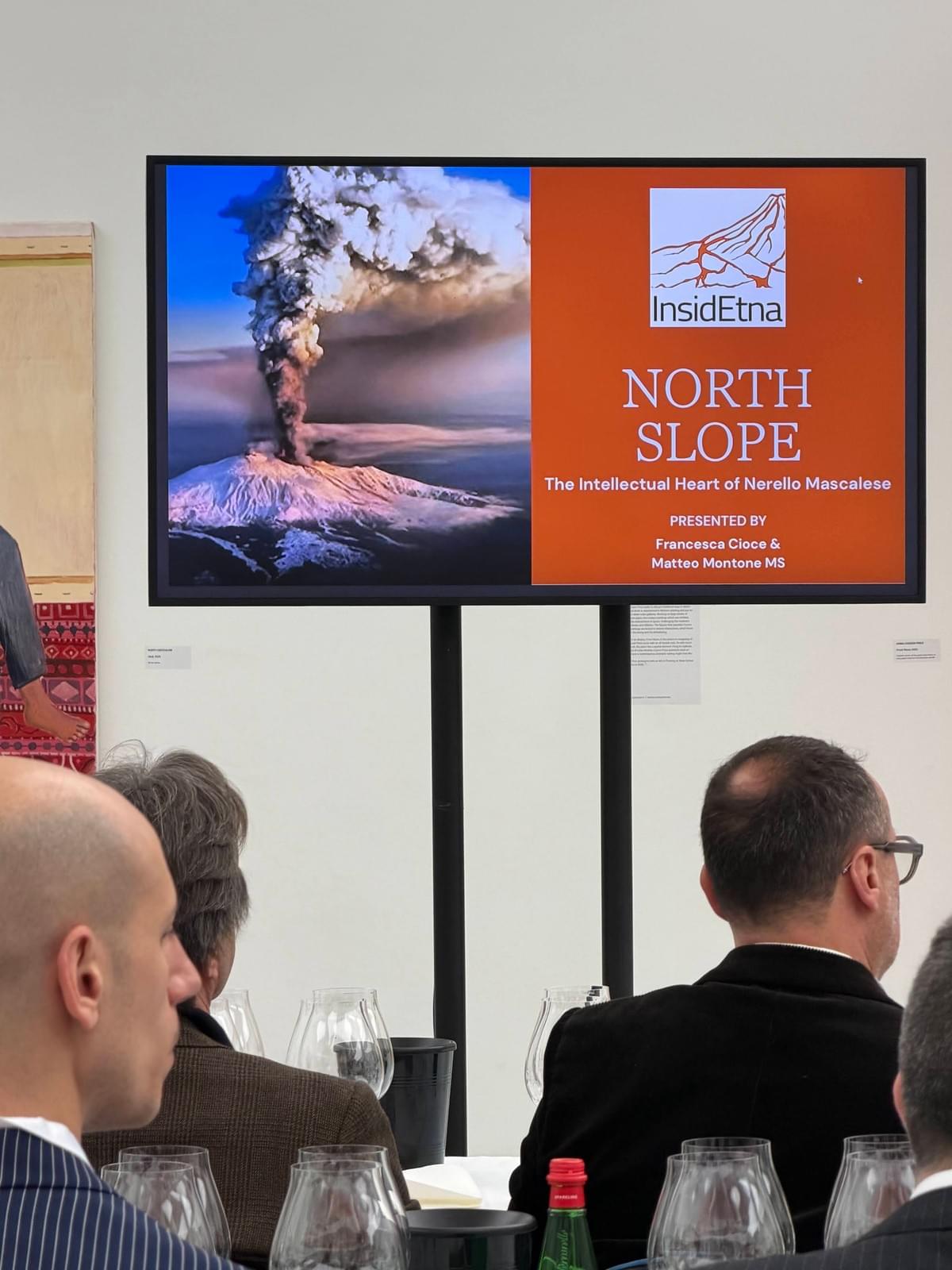
In this masterclass, led by Francesca Cioce and Matteo Montone MS, Etna was approached through one of its most precise lenses: the north slope and its interpretation of Nerello Mascalese. Rather than providing a general overview, the focus was on how slight variations in location translate into noticeable differences in the glass.
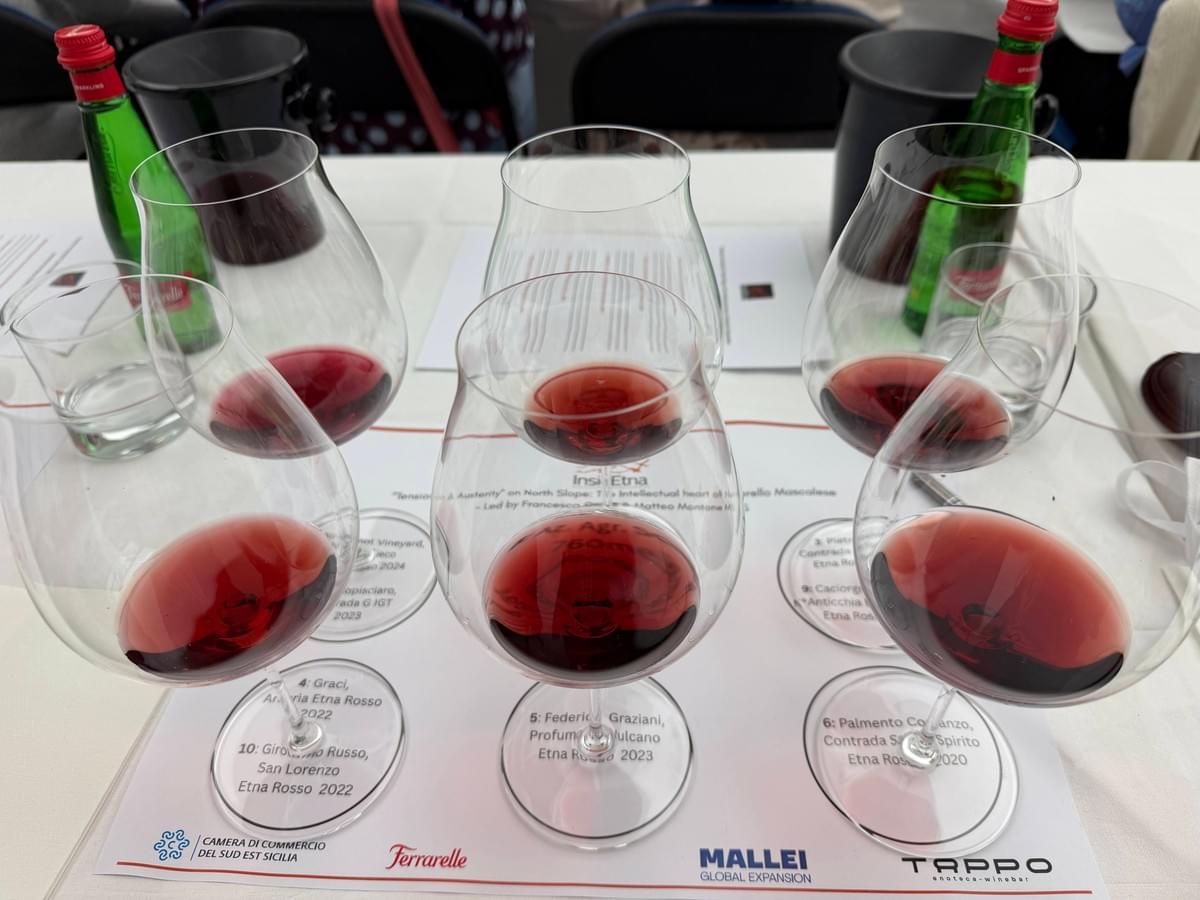
It is here that Etna is at its most convincing, not as a narrative of volcanic energy, but as a region where the structure can clearly be discerned, provided the framework is understood.
Geology as a structural driver
The defining factor of Etna is not simply that it is volcanic, but that it is active.
The current structure of the mountain is relatively recent in geological terms. Around 15,000 years ago, the collapse of the earlier Ellittico volcano led to the formation of what is now known as Mongibello. Since then, successive lava flows, ash deposits and volcanic material have shaped the surface over time.
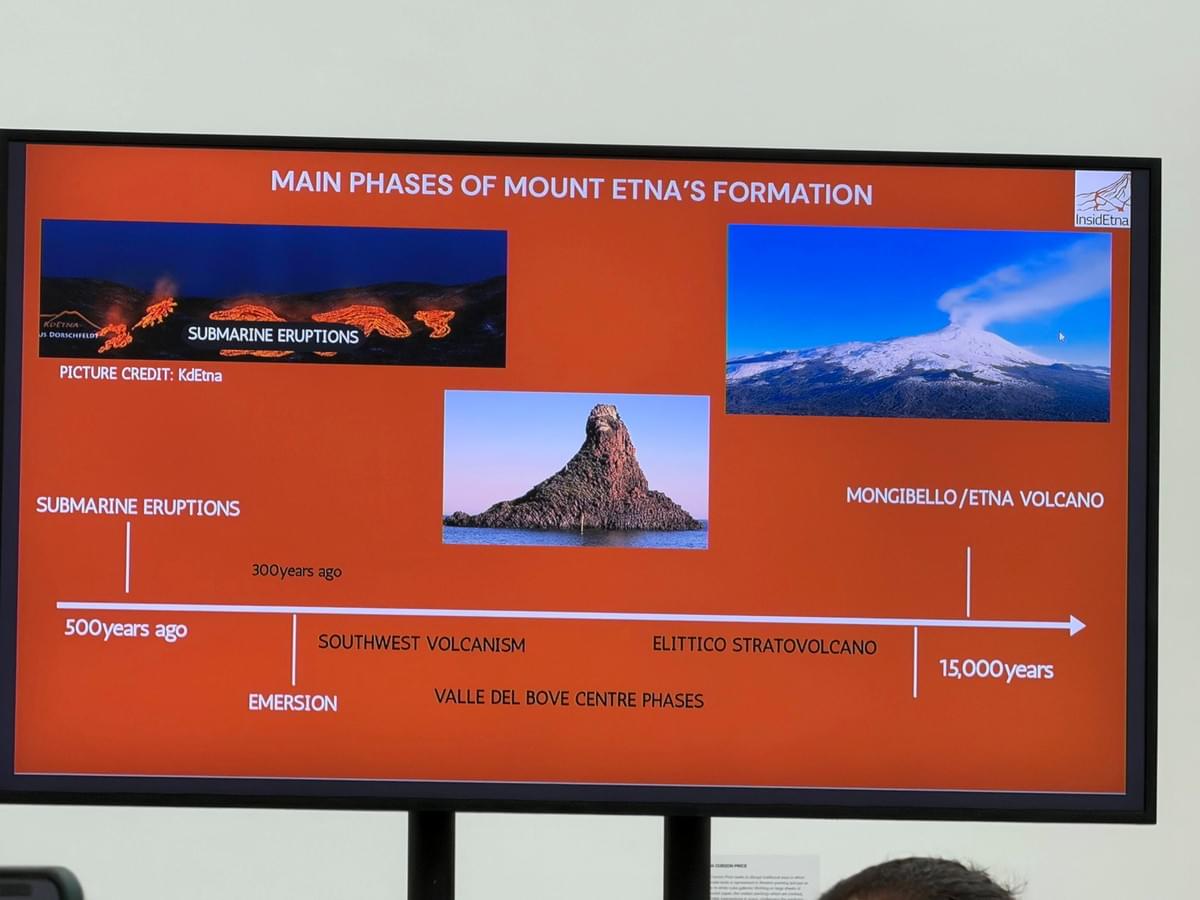
This process continues to this day. New material continues to be added, and in some areas, recent lava flows still define the landscape. Consequently, Etna does not have a single, uniform soil profile. Instead, it is composed of multiple layers of volcanic origin, each with a different age, structure and level of development.
Soils formed by more recent eruptions tend to be less evolved. They are often shallower and richer in minerals, which has a greater influence on vine growth. Older soils, by contrast, have undergone significant transformation. Basalt has broken down, organic matter has accumulated, and a more stable structure has formed.
This difference is not theoretical. It directly affects water retention, root penetration and nutrient availability, all of which shape vine behaviour and fruit composition.
A key element in this system is the presence of highly porous volcanic material, such as ash, sand and eroded basalt, which is often referred to locally as 'ripiddu'. These soils drain quickly, forcing vines to develop deep roots. This has often allowed vineyards to remain ungrafted, preserving old vines that would not survive in other regions.
From a tasting perspective, it is not the volcanic origin itself that matters, but the variability within it. It is not a single identity that defines Etna’s soils, but rather the variability between younger and older flows, between shallow and deep profiles, and between exposed and protected sites.
This internal variation is what underpins the differences observed across contrade and along the slope.
This spatial fragmentation is not only geological. It is also historical.
Etna is often presented as an ancient region, and this is factually correct. Viticulture here dates back more than 3,000 years, with a documented history from the time of the Greek settlements through to the refinement of the Romans. The Alberello system, which is still widely used today, is not a stylistic choice, but rather a structural adaptation involving low-trained bush vines that can survive wind exposure, poor soil quality and limited water availability.
More important than longevity is continuity of method. Unlike many regions where viticulture was periodically disrupted, Etna has maintained a relatively stable technical tradition. The Alberello system persisted through the medieval and early modern periods, supported by organised knowledge transfer, such as the Maestranza dei Vigneri, established in Catania in the 15th century. This is not just an anecdotal heritage — it is an early form of institutional viticulture.
By the 19th century, Etna was one of Sicily’s most important wine-producing areas, with up to 90,000 hectares of vines. Terraced vineyards, often constructed from volcanic stone, came to define the landscape and the region's economy. Wine production was not marginal – it was central.
A significant break occurred in the 20th century. Phylloxera, repeated volcanic eruptions and rural depopulation led to the vineyard area's structural collapse and economic irrelevance. This is important because Etna is often presented today as a rediscovered region. In reality, however, it is a region that has had to rebuild after losing both scale and continuity of production.
The current phase began in the late 20th century. Producers such as Benanti shifted the focus back to quality, emphasising site selection, indigenous varieties, and controlled yields. A second wave followed, including figures such as Andrea Franchetti, Marco de Grazia and Frank Cornelissen, who redefined Etna not as a historical curiosity, but as a site capable of producing internationally relevant wines.
The defining feature of the present is not revival in a romantic sense, but redefinition through precision. The historical framework remains, but is now filtered through modern viticultural decision-making and a clearer understanding of site variability.
Contrada and the problem of definition
On Etna, the concept of site is both essential and unstable.
The contrada system is often presented as a parallel to Burgundy, and at a superficial level, this comparison is useful. Contrada are clearly defined areas, often with a historical origin, and in many cases associated with consistent stylistic traits.
However, the similarity ends when we consider how these sites are formed.
Each contrada on Etna is the result of a specific sequence of lava flows. Different eruptions, sometimes separated by thousands of years, have created soils with distinct structures and compositions. This means that neighbouring parcels can behave very differently, not only because of exposure or altitude, but also because of the underlying soil.
At the same time, these boundaries are not absolute.
In some cases, vineyards of equal quality are located just outside the official Etna DOC boundaries. These sites may share the same altitude, soil type and exposure as neighbouring contrade. Yet they are classified as IGT or Sicilia DOC simply because they lie a few metres beyond the legal boundary.
There are also stylistic reasons for stepping outside the DOC framework. Regulations impose minimum percentage requirements for key varieties: 80% Nerello Mascalese for reds and 60% Carricante for whites. Producers who wish to experiment with different blends or non-traditional varieties often choose to market their wines outside the Etna DOC.
This creates a situation in which classification does not necessarily reflect quality or typicity.
From a technical perspective, the contrada remains the most useful unit for understanding the area, but it should not be treated as a fixed hierarchy. It is a functional tool rather than a definitive system.
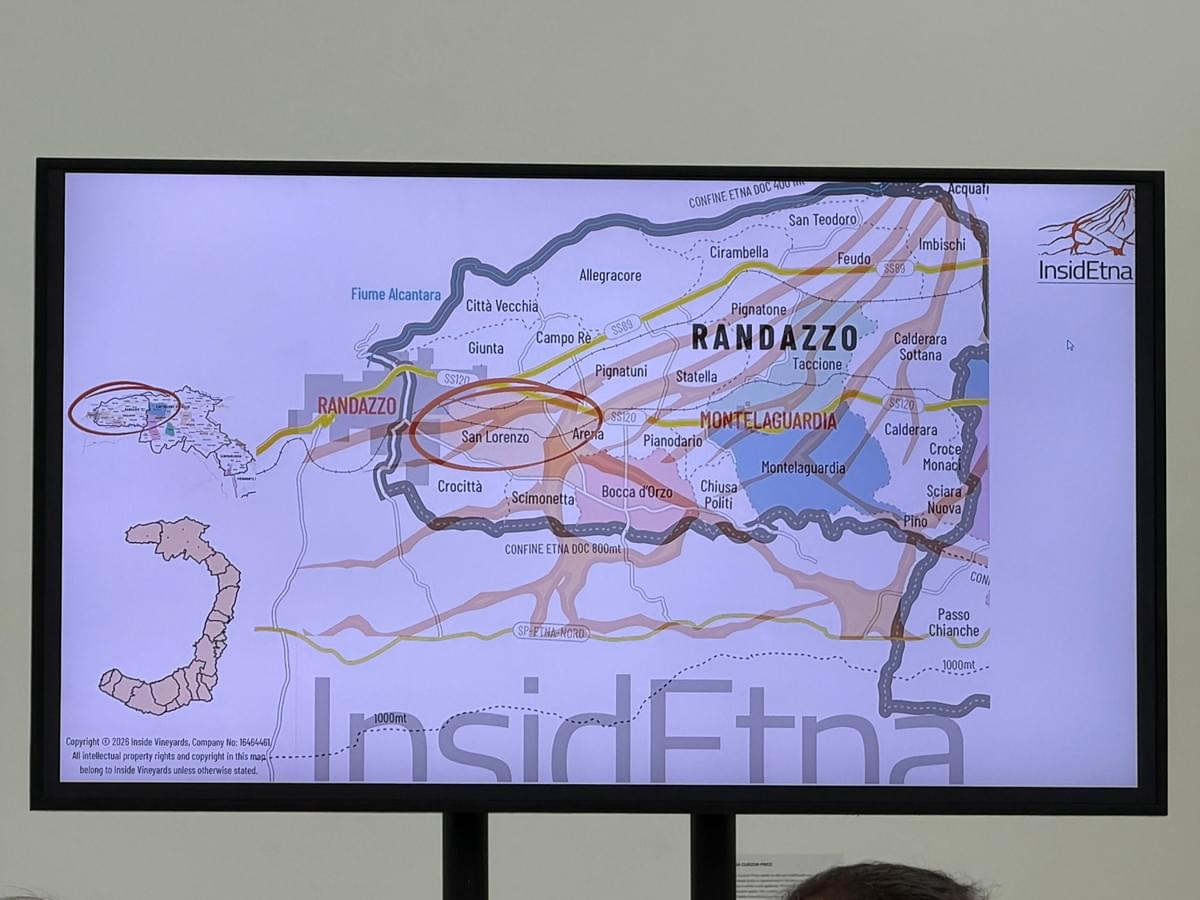
This is particularly relevant on the north slope, where small changes in soil age, altitude and exposure can significantly alter the Nerello Mascalese profile.
The north slope is a controlled framework of variation and is often described as the most precise expression of Nerello Mascalese on Etna. This is not because it is more expressive in an obvious way, but because the variables are more readable.
Geographically, it is a relatively narrow strip of land running from Linguaglossa in the northeast through Castiglione di Sicilia to Randazzo in the northwest. Within roughly 20 kilometres, the wines shift in a consistent, traceable way.
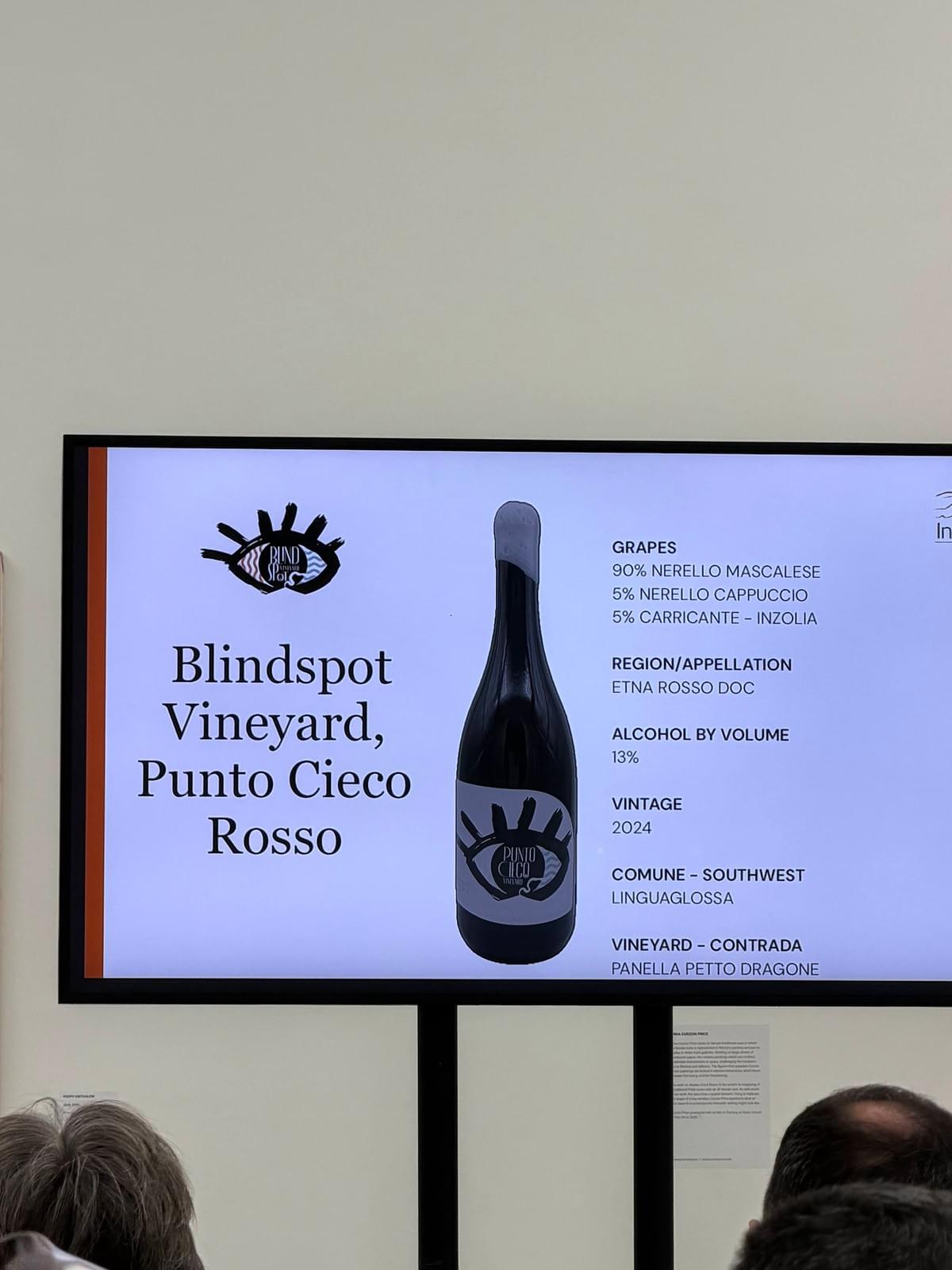
Linguaglossa sits closer to the sea and receives the morning light earlier. Ripening tends to be slightly faster here, and the wines often have a more open fruit profile. In the glass, this translates as brighter red fruits, a more immediate aromatic expression and a softer entry onto the palate, while retaining the underlying acidity typical of the region. The Blindspot Vineyard Punto Cieco is a good example of this, with lifted red fruits and a relatively light structure, finishing clearly and savourily.
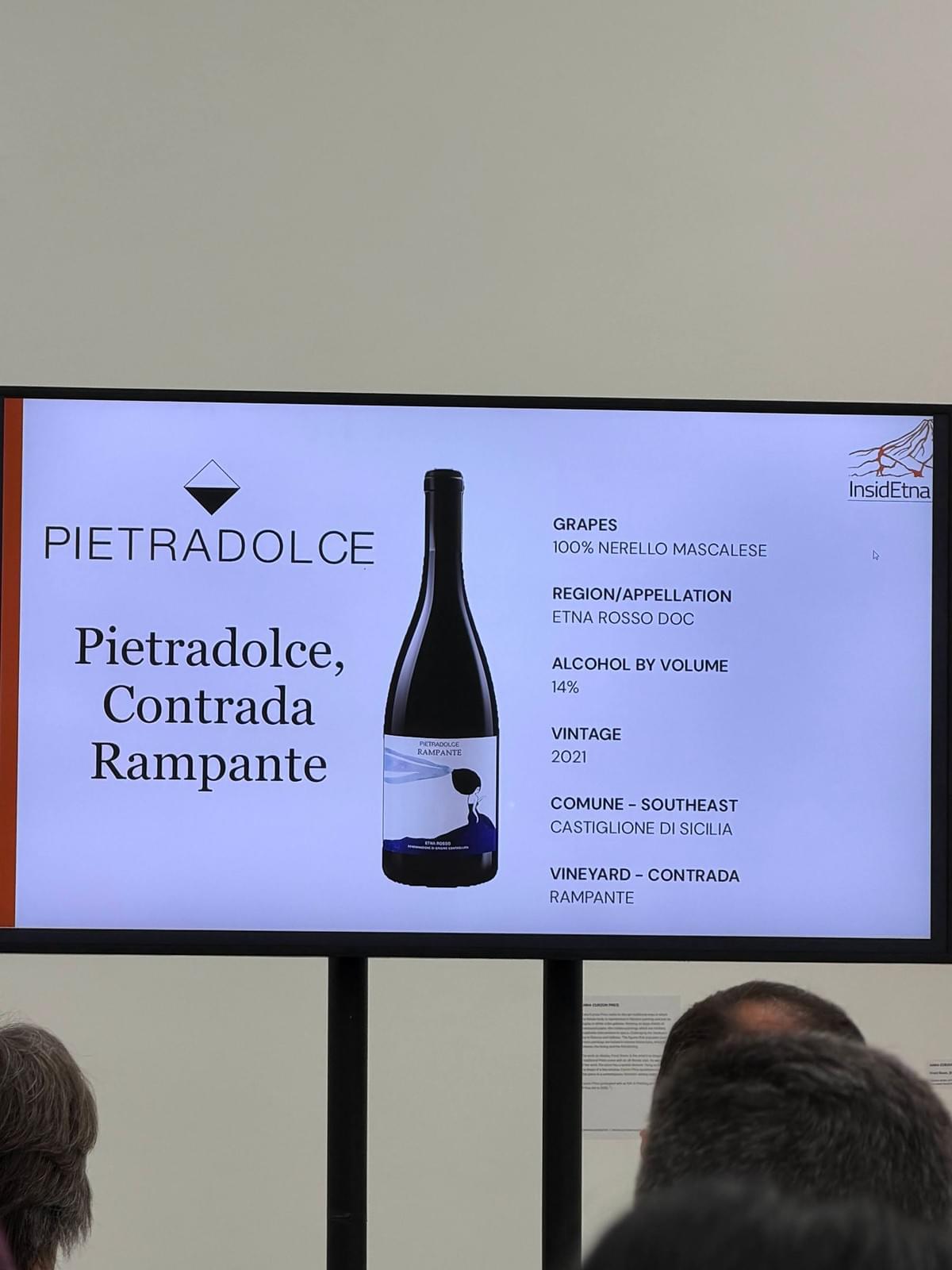
As the slope moves inland towards Castiglione di Sicilia, the wines' structure begins to tighten. The area is larger and more heterogeneous, but the wines overall gain tension and definition. Contrade such as Rampante and Arcuria illustrate this shift from different angles. Pietradolce’s Rampante has a more vertical profile with firmer tannins and a more pronounced mineral and spicy character. The wine is less about mid-palate weight and more about line and length.
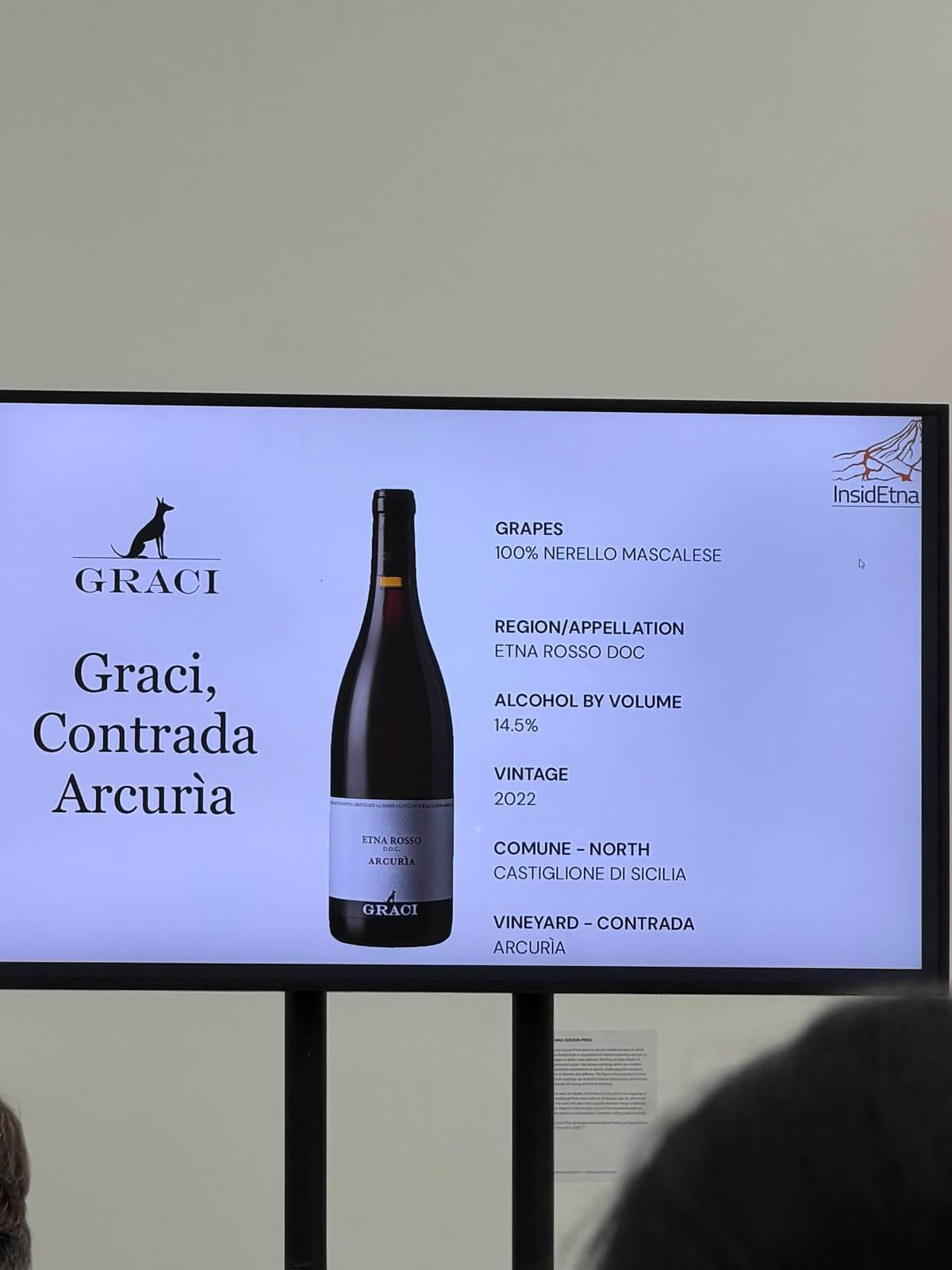
By contrast, Graci’s Arcuria has a broader mid-palate, with softer, more polished tannins and greater continuity across the palate while retaining freshness.
Further towards Randazzo, conditions become cooler and ripening slows significantly. The wines tend to be most restrained here. Typical characteristics include higher acidity, a tighter structure and a more austere profile.
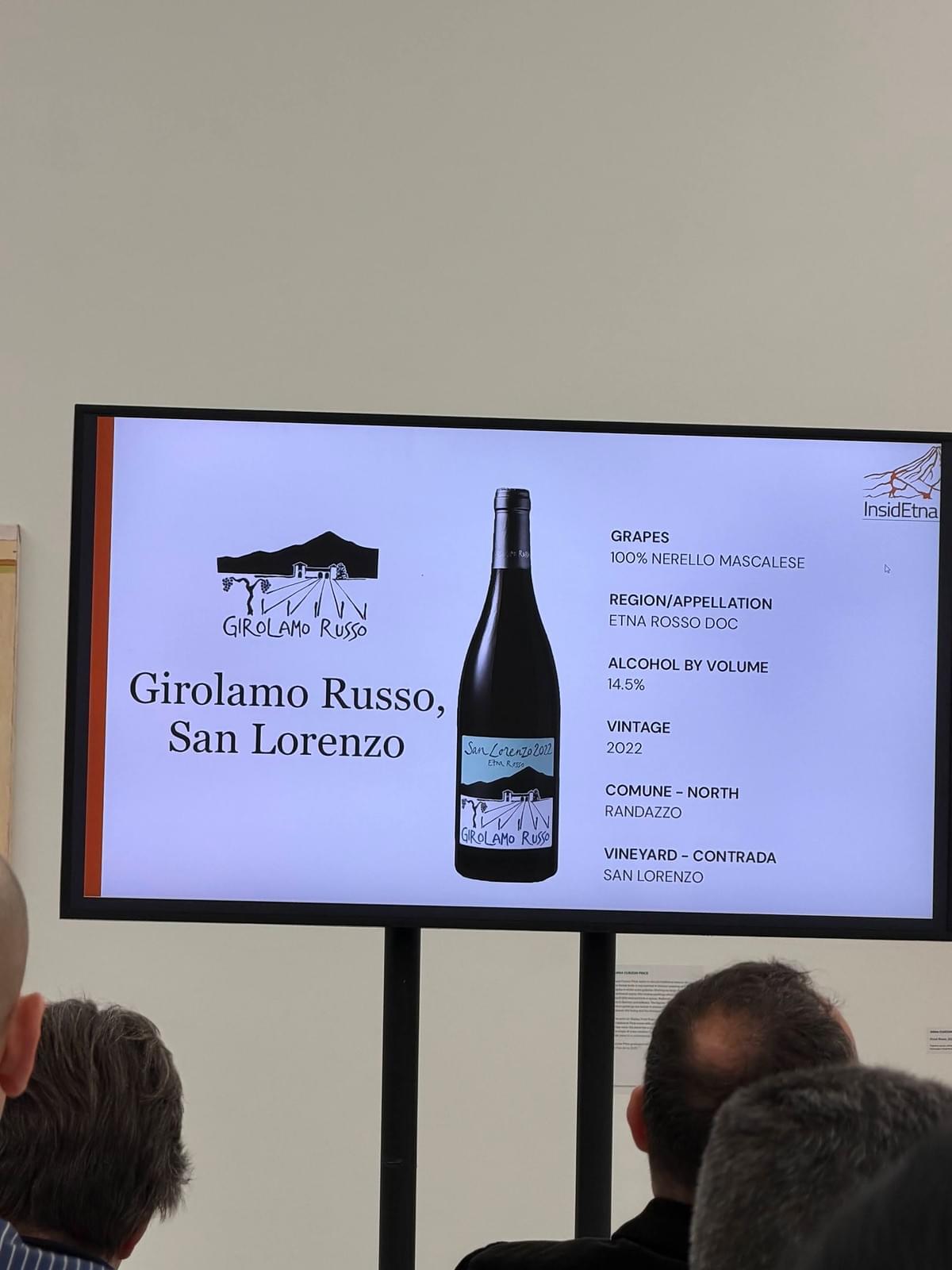
Girolamo Russo’s San Lorenzo and Caciorgna’s Bocca d’Orzo both fit into this category, though they express it in different ways. San Lorenzo shows more depth and layering, combining power and control, while Bocca d’Orzo, from a cooler site with significant diurnal range, emphasises acidity and aromatic precision.
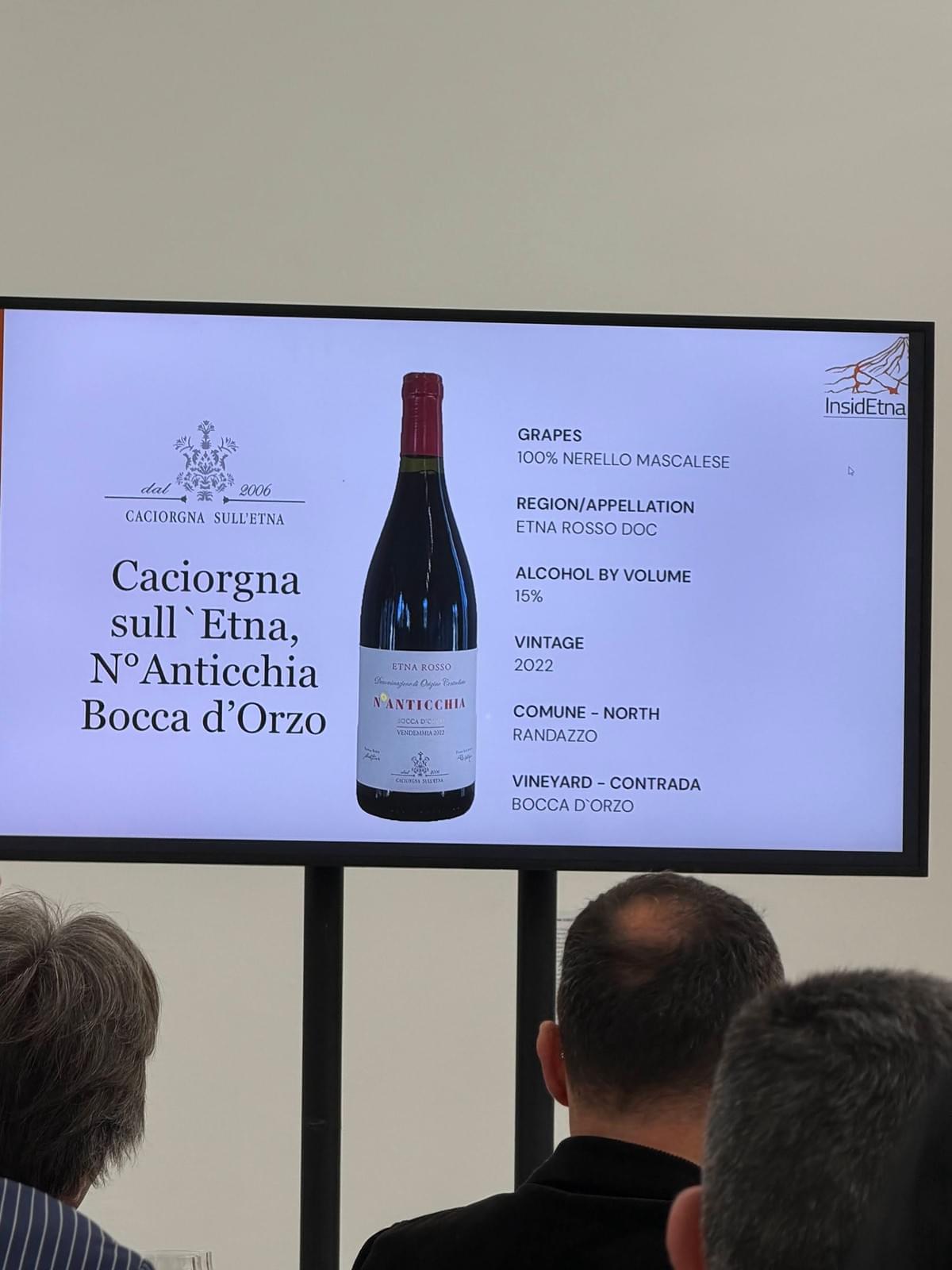
While the differences are not dramatic in isolation, they are consistent across this progression. The shift from fruit-driven wines to those that are more structured and then more austere follows a clear geographical logic.
Altitude as a second axis
However, what complicates this picture is that the north slope does not function along a single horizontal line.
Altitude introduces a second layer of variation that is equally important.
Vineyards range from around 400 metres to over 1,000 metres above sea level, and temperature, diurnal variation and ripening dynamics change significantly within this range. Higher sites experience greater differences in temperature between day and night, which slows sugar accumulation while preserving acidity and aromatic definition.
This is particularly evident in contrade such as Rampante and Guardiola, where elevation plays a central role. Wines from these areas tend to be more linear, with higher perceived acidity and a firmer tannic structure. Passopisciaro's Contrada G, from Guardiola, is a prime example, offering a blend of vibrant fruit, pronounced acidity and slightly more angular tannins.
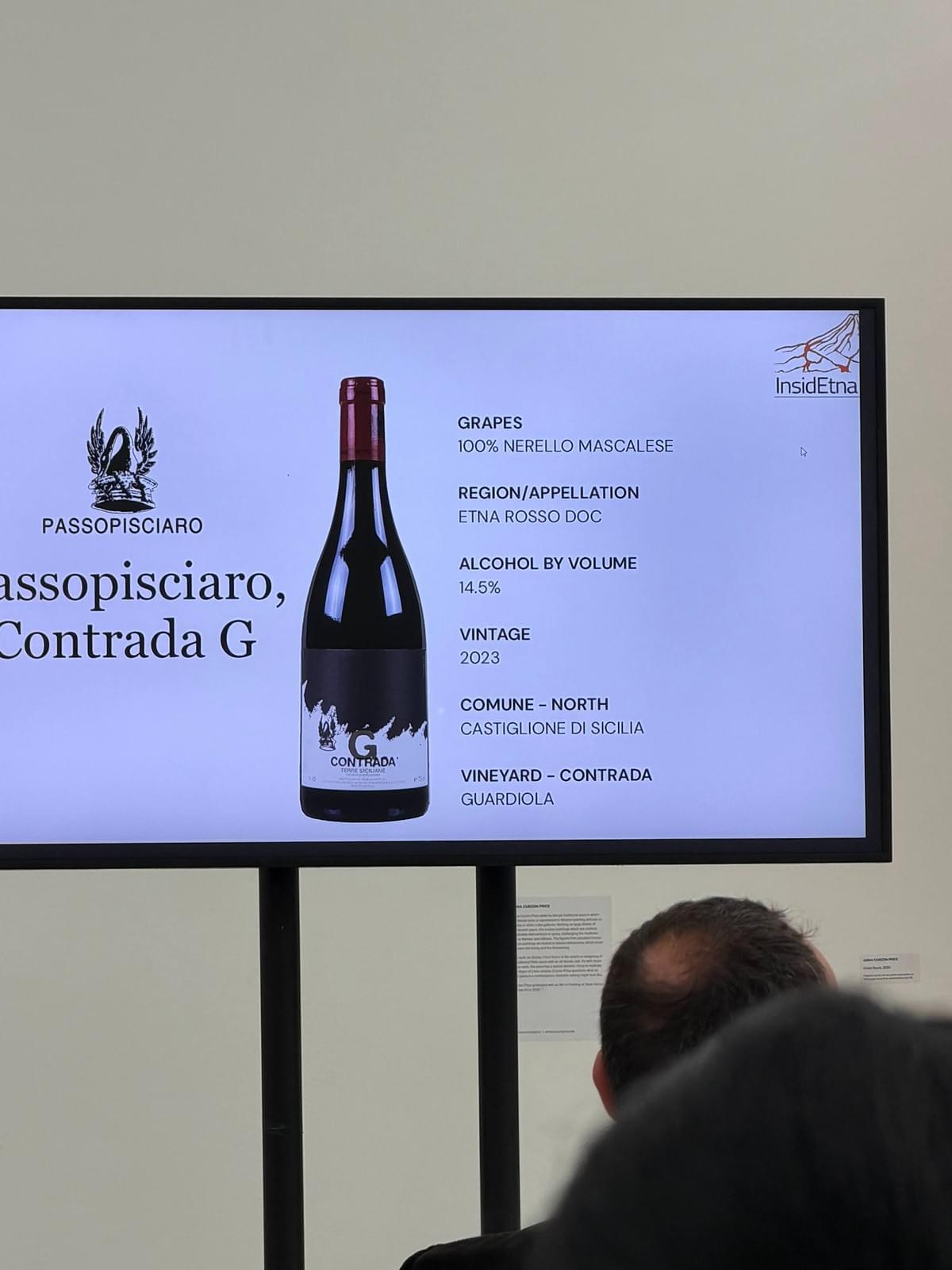
At slightly lower elevations, such as Feudo di Mezzo or parts of Arcuria, the wines retain freshness, but have more mid-palate weight and textural roundness. Federico Graziani’s Profumo di Vulcano, a blend of fruit from various sites including Feudo di Mezzo and higher vineyards, exemplifies the deliberate use of altitude to balance structure and fruit expression.
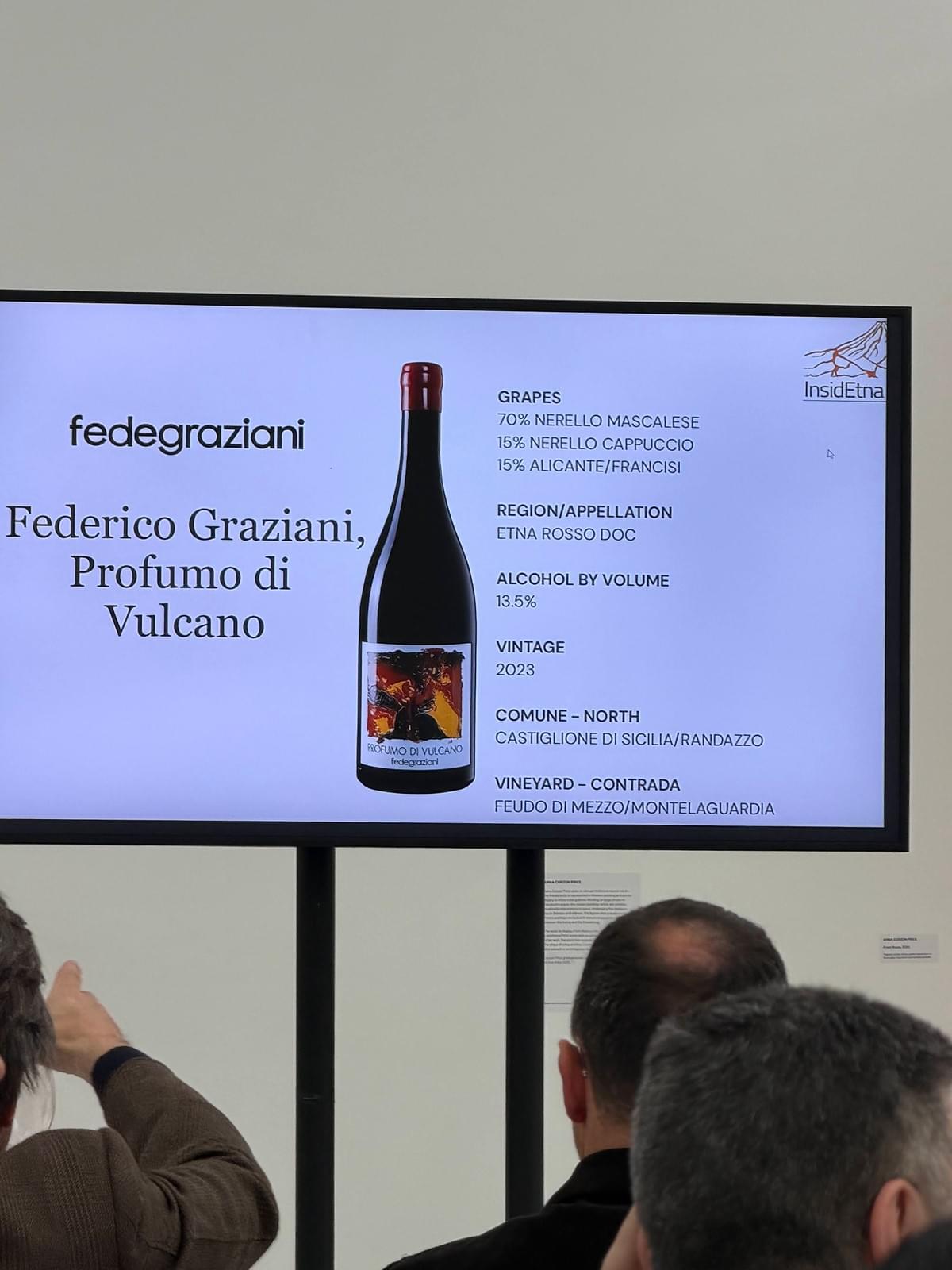
This vertical dimension means that two wines from the same commune can differ as much as wines from different parts of the slope.
Reading the wines: structure over style
Across the tasting, stylistic diversity was not evident, but rather a consistent structural framework within which variations occurred.
The wines do not differ randomly. They shift along identifiable parameters: fruit profile, acidity, tannin shape and mid-palate weight. These shifts correspond directly to site (contrada), altitude, and soil composition.
Aromatic profiles remain relatively consistent throughout the range. Red fruit dominates, with notes of sour cherry, cranberry and red plum, often accompanied by floral scents such as rose and violet. Secondary layers introduce spice, dried herbs and earthy tones, including mushroom and forest floor. While these elements are not unique to individual wines, their balance and intensity vary.
What changes more significantly is the structure.
Wines from higher and cooler sites, such as Rampante or Guardiola, tend to be more linear. Acidity is more pronounced, the palate is tighter and the tannins can have a slightly angular profile. Pietradolce’s Rampante and Passopisciaro’s Contrada G both follow this pattern, albeit to different degrees.
In contrast, wines from mid-slope sites, such as Arcuria and Feudo di Mezzo, tend to have a more pronounced mid-palate presence. Graci’s Arcuria is a clear example of this, with more polished tannins and a wine that develops more gradually across the palate. Federico Graziani’s Profumo di Vulcano, with its blend of sites, sits between these extremes, combining freshness with a generous fruit core.
In the cooler, more continental conditions of Randazzo, the wines become more restrained. Girolamo Russo’s San Lorenzo is a prime example of this, offering a combination of depth and control with a firm structure and no excess weight. Caciorgna’s Bocca d’Orzo, from a particularly cold contrada with significant diurnal variation, emphasises acidity and aromatic precision, resulting in a slightly narrower profile.
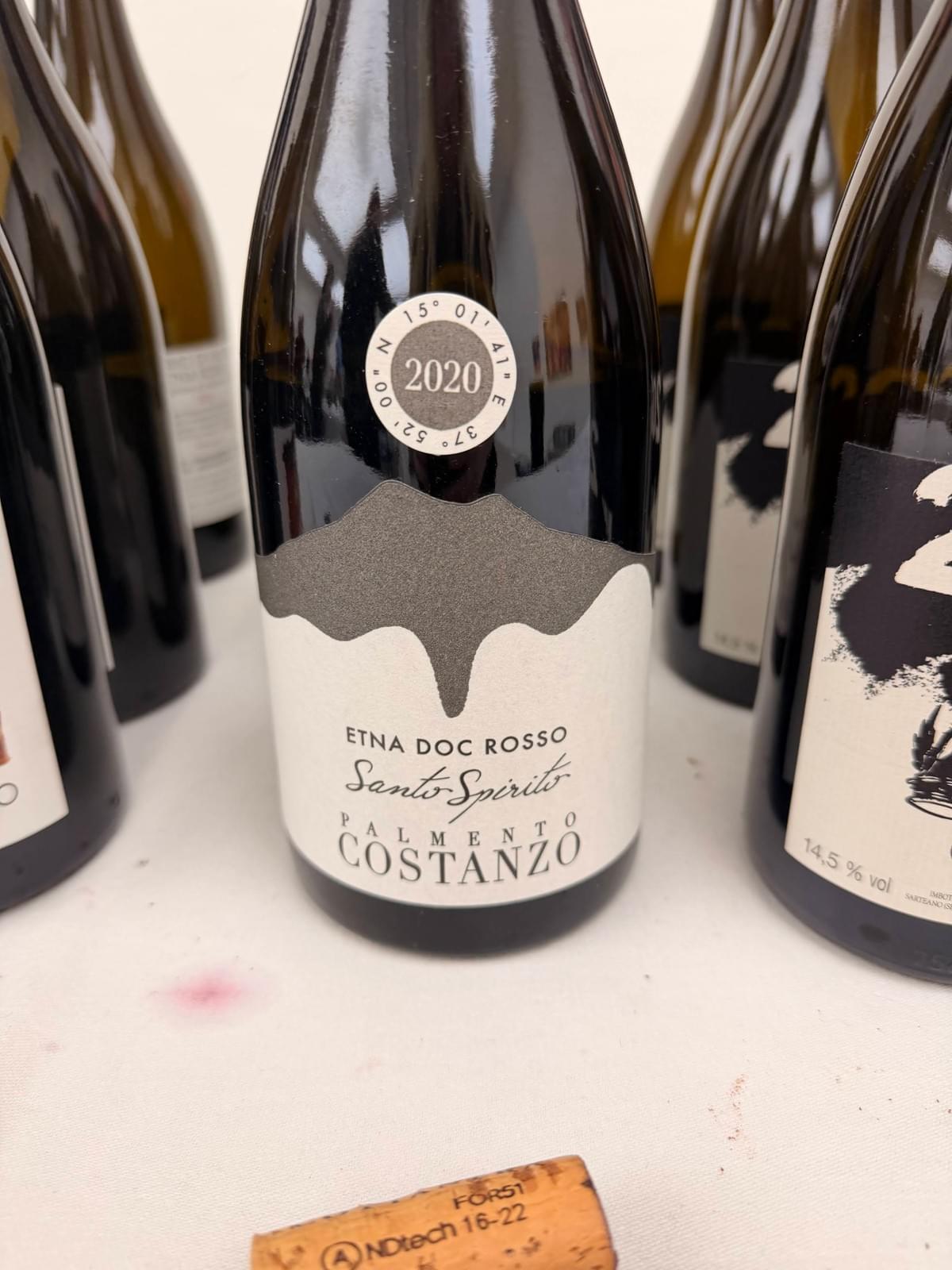
Palmento Costanzo’s Santo Spirito adds another dimension with firmer tannins and a more pronounced structural grip while maintaining the characteristic freshness of the north slope.
Acidity, tannins and weight
Acidity is one of the most consistent features across the wines.
Even at relatively high alcohol levels, often around 14% or higher, the wines rarely feel heavy. This is not due to lower extraction or lighter winemaking, but to the balance created by the interaction between acidity and tannin structure.
Tannins themselves vary significantly. In some cases, they are fine-grained and polished, as in Arcuria. In others, they are more assertive or slightly angular, as in Guardiola. Wines such as Santo Spirito and Rampante provide a clear structural backbone without overwhelming the palate.
Importantly, tannins on Etna rarely translate into weight. They define shape rather than density.
The finish of the wines tends to be long and savoury, often leaving a distinct saline or mineral impression. This is not a uniform 'volcanic' signature, but rather a recurring textural effect linked to soil composition and acidity.
Winemaking focuses on precision rather than intervention.
Although the tasting focused primarily on the site, some consistent winemaking approaches are worth noting.
Large-format oak is widely used, often with minimal or no new wood. Ageing periods can be extended, particularly for Riserva wines. For example, Cottanera wines are aged for multiple years before release.
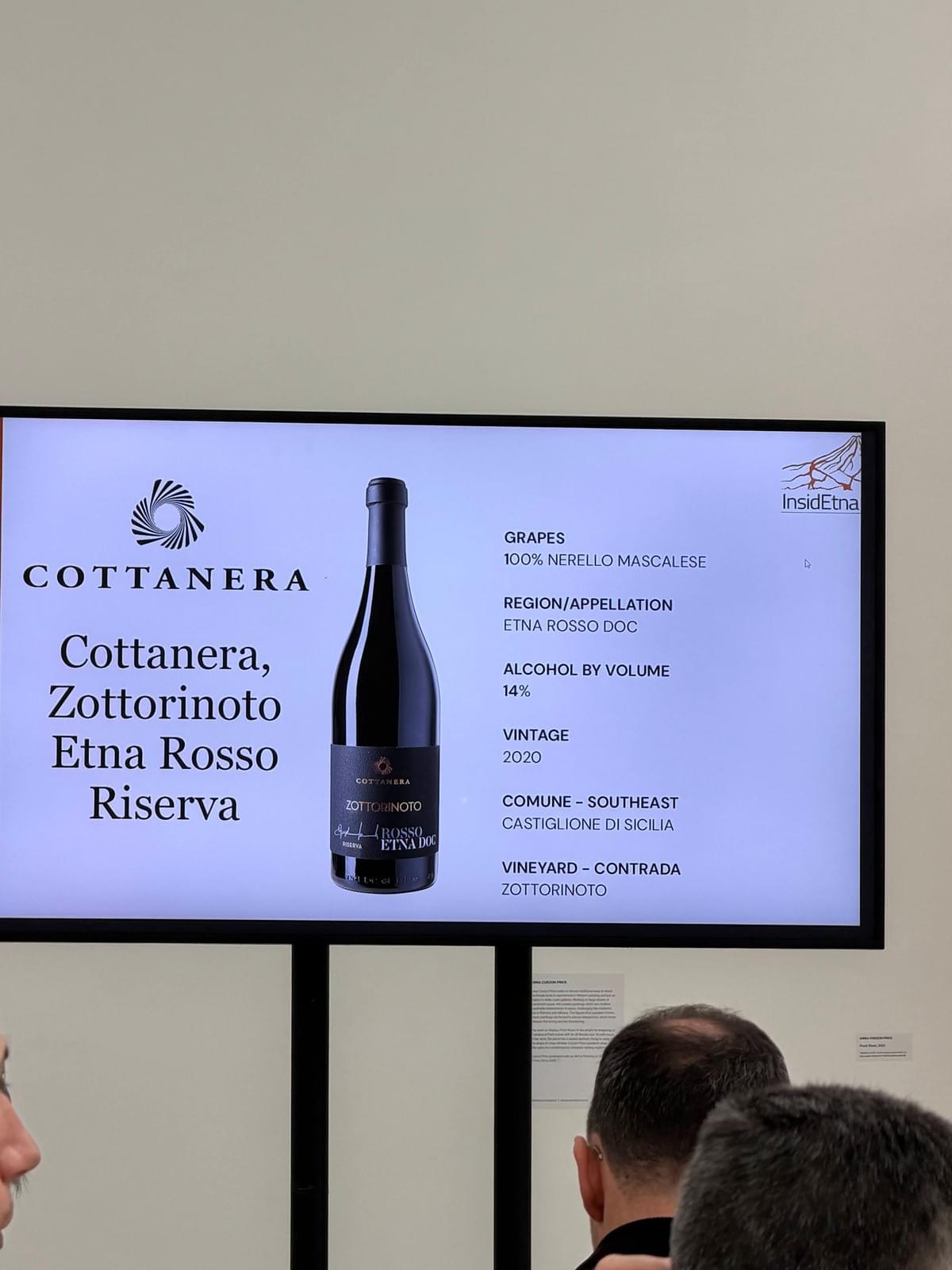
Extraction is generally moderate, with maceration times adapted to preserve structure without overemphasising tannin weight. Fermentation may take place in stainless steel or large wooden vessels, depending on the producer.
The result is not a uniform style, but a shared intention: to maintain clarity of site.
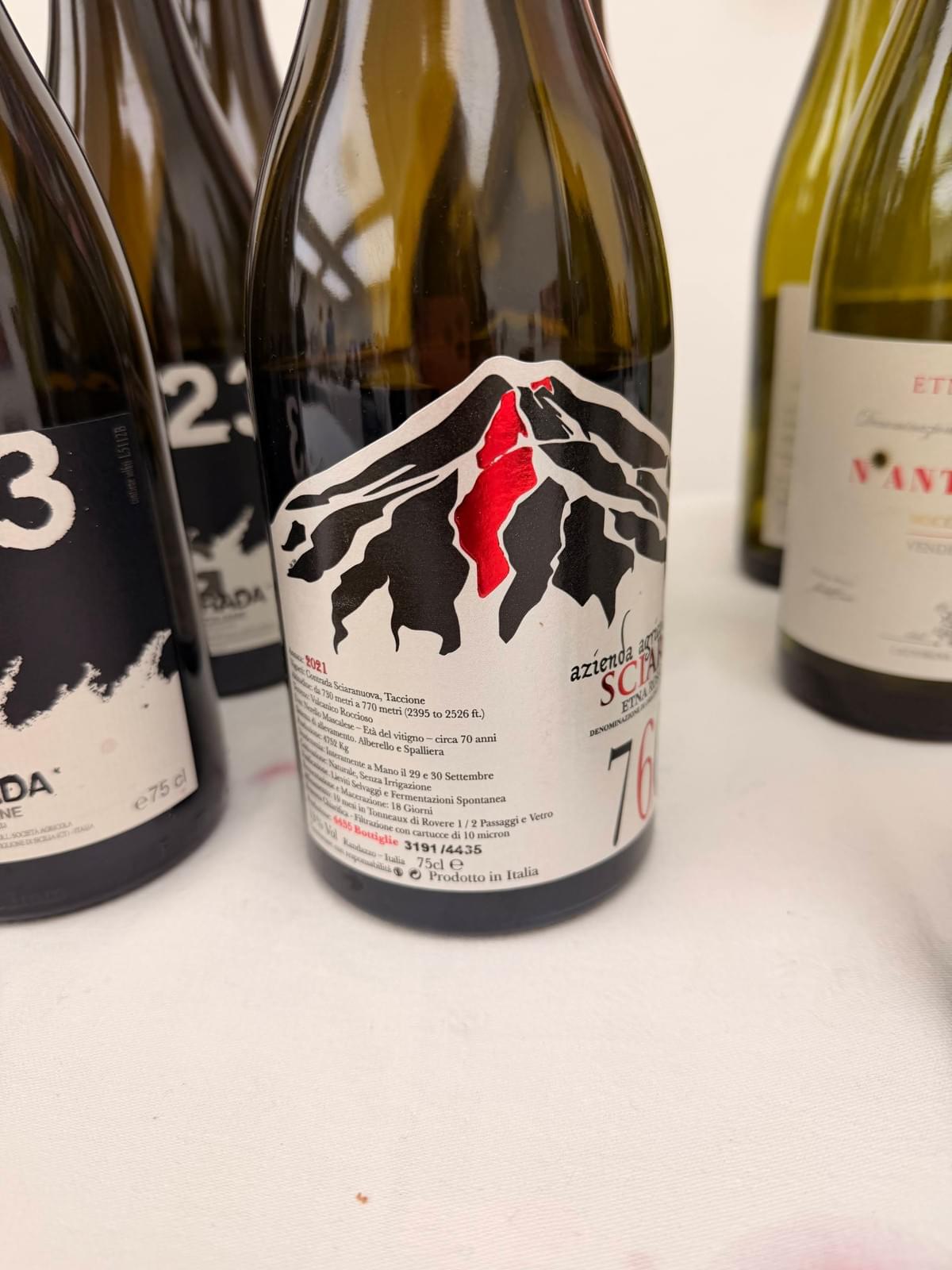
This is particularly evident among producers working with single contrada bottlings, for whom the objective is not to create a house style, but rather to articulate the differences between the various plots of land.
Conversely, some producers, such as Federico Graziani, adopt a more flexible approach, blending sites in order to respond to variations in the vintage and broader climatic shifts. This reflects a different interpretation of Etna, prioritising balance over strict site definition.
Ultimately, a tasting reveals that Etna cannot be reduced to a single narrative.
There is no unified style of Etna Rosso. There is no fixed expression of Nerello Mascalese. Instead, what exists is a framework of variables that interact in a consistent yet complex way.
Geology defines the base. Contrada refines the expression. Altitude adjusts the structure. Within this system, the producer's role is not to impose style, but to manage variation.
This is where Etna differs from many established wine regions. In more stable environments, classification systems tend to reflect long-term consistency. On Etna, however, classification lags behind reality. Boundaries do not always align with quality, and the most meaningful distinctions often exist at a level of detail that the DOC framework cannot capture.
At the same time, the region is no longer in an exploratory phase. There is already a clear group of producers working with precision and intent. The wines demonstrate consistency in terms of clarity rather than style.
The question of quality is not in doubt, but the question of definition remains.
As climatic conditions shift and viticultural practices continue to evolve, so too do approaches. Some producers focus on single contrada expressions, isolating site differences. Others work across parcels to achieve balance, particularly in more variable vintages. Both approaches are valid and reflect the same underlying challenge: how to translate a changing landscape into a consistent wine.
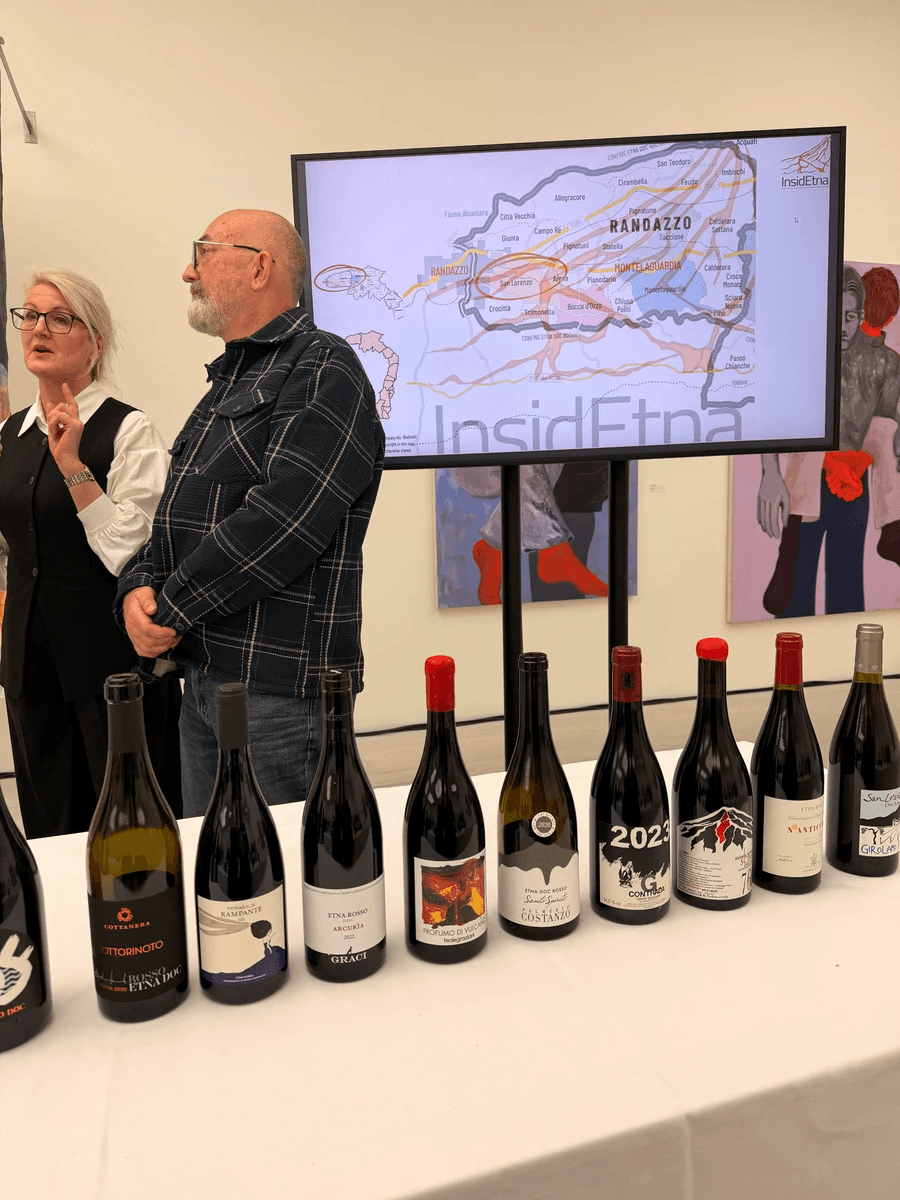
A special thank you to the InsidEtna team — Francesca Cioce, Effi Tsournava, Matteo Montone MS, Giovanni Ferlito, and Federico Latteri — for orchestrating a masterclass that traded marketing narratives for genuine structural insight.
Etna does not require abstract interpretation. It requires attention to detail.
When approached in this manner, the region becomes less about complexity for its own sake and more about achieving precision within complexity.