

In 2026, the “Judgement of Paris” turns 50.
That anniversary is often treated like a victory lap - a neat, cinematic headline: California beats France, history changes, the end. But the real legacy was never the scoreboard. The real legacy was the shock of competence.
As the story goes, France tried to dismiss the 1976 results. Two French newspapers went ahead and talked about it and called it “clearly a sham, clearly ridiculous,” because “there’s no way these could have been the results.” But then the tasting kept being revisited - not once, repeatedly, in different ways. France even redid their own tasting with the same California wines and what they saw as an even better set of French wines, and California still did just fine. Every decade anniversary, people revisited, and California continued to do very well.
That is the ongoing effect that made the Judgement of Paris such a big deal. Not a single afternoon in Paris - an echo that refused to die.
This year, Capstone California and the California Wine Institute chose to mark the 50th anniversary not by retelling the myth, but by doing something much more revealing: a historical excursus through the glass.
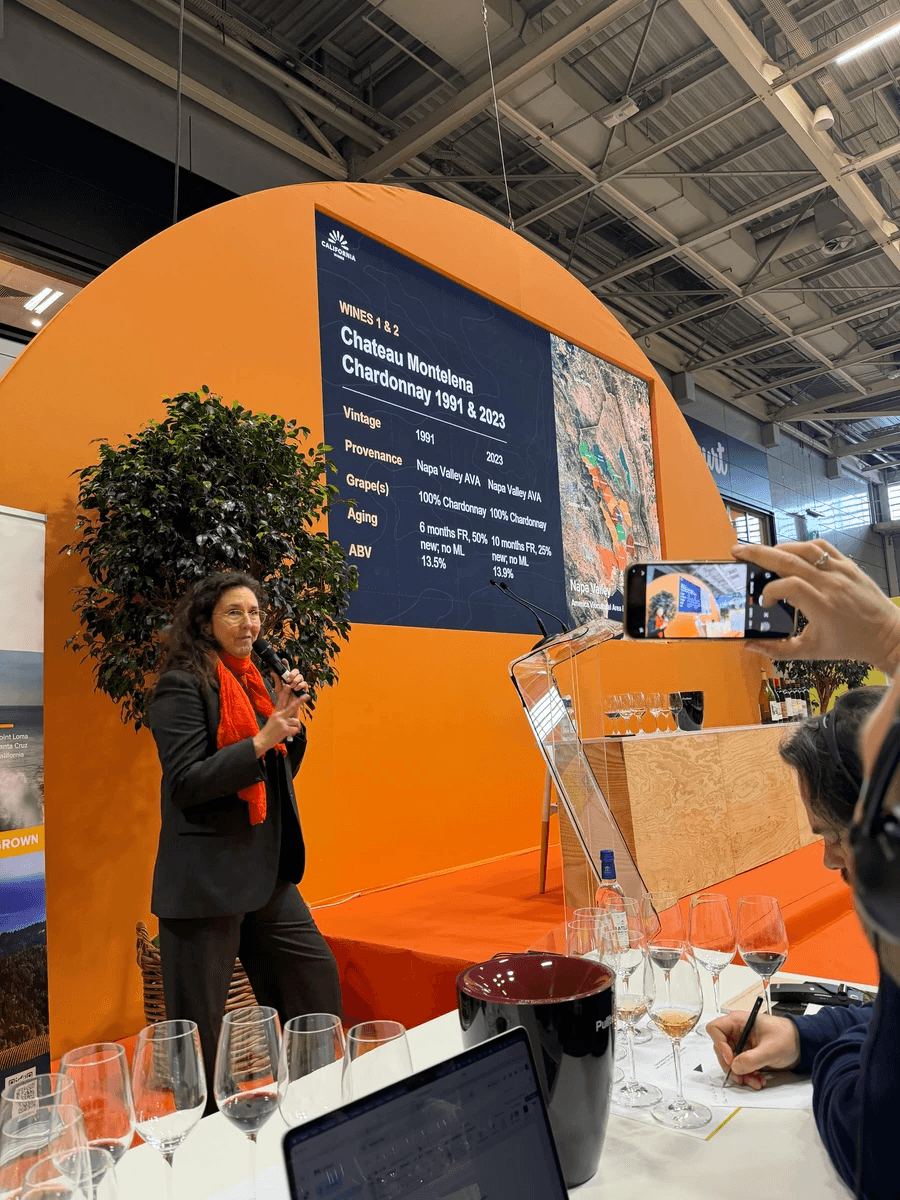
The tasting was led by Elaine Chukan Brown, author of The Wines of California and one of the most important voices shaping how California wine is understood today. They have a rare ability to connect history, people, and decisions without overcomplicating them - and, more importantly, to make you feel why those connections matter.
They brought together wineries connected to the original Paris line-up and asked for a split-screen of time: an older vintage from the 1990s and a current vintage. Then they poured them as a working argument - about technique, farming, confidence, climate, and the way California learned to see itself.

What made this format work in the room was how it was guided. Chukan Brown doesn’t push conclusions - they build them step by step, letting the wines and the context align. It turns a comparison into an argument you can follow, rather than a set of statements you’re asked to accept. To understand why this echo still matters, you have to return to the original setting and its strangely simple mechanics.
In 1976, a British wine merchant in Paris, Steven Spurrier, and his colleague Patricia Gallagher organised a blind tasting in the French capital. The idea sounded almost polite: line up top Bordeaux and Burgundies against a selection of Californian wines and let a panel of respected French tasters evaluate them blind. Nothing revolutionary on paper. And that was exactly the point. The power of the event came from its ordinariness - the fact that it used France’s own rituals of authority: blind tasting, French judges, French context, French confidence.
The line-up was equally deliberate. On the white side: Chardonnay, the variety through which Burgundy owned global prestige. On the red side: Cabernet Sauvignon-based wines, the language of Bordeaux. California wasn’t trying to be exotic. California was speaking in the most established dialects of fine wine, and the room expected it to show an accent.
Instead, it held its ground.
Not because California “destroyed” France, but because it demonstrated something nobody quite wanted to admit at the time: that a young region, with a short modern history and a fraction of Europe’s generational memory, could execute at a level that belonged in the same conversation.
And the effect landed where it mattered most - back home.
The most impactful part of the Paris Tasting is that California actually did pretty well. Not that it won, but no one expected that this young upstart wine region would hold its own. And the reason that matters is not because anyone beat someone else. It’s because what happened in California was that people suddenly realised, “My God, we actually are doing an okay job. Let’s keep doing this.” That, in my mind, is the legacy of the Paris Tasting. It told people in California that they should have the confidence to keep going.
So they did. And that is why we’re here now - fifty years later - not simply retelling the myth, but tasting the long consequences.
This year, Capstone California and the California Wine Institute chose to mark the anniversary not by recreating the headline, but by doing something much more revealing: a historical excursus through the glass.
They brought together wineries connected to the original Paris line-up and asked for a split-screen of time: an older vintage from the 1990s and a current vintage. Then they poured them as a working argument - about technique, farming, confidence, climate, and the way California learned to see itself.
And there is one more reason this format matters. With older bottles, you don’t just taste the wine - you taste the era that produced it. You encounter not only the liquid, but the packaging, the assumptions, the technical limits, even the casual blind spots of the time. In the ’90s, corks were all-natural and highly variable. Tech sheets barely existed. The culture of information was different. The culture of precision was different. So the comparison is never only sensory. It is historical.
Which makes it, in a way, the most honest possible way to talk about the Judgement of Paris at fifty: not as a single upset, but as a long arc - from early competence, to self-belief, to refinement, and now to a new kind of test, under new conditions.
What Was Actually in the Glass
The original Judgement of Paris in 1976 was structured with almost disarming simplicity:
twelve wines, divided into two flights - six whites and six reds.
The whites were all Chardonnay.
The reds were Cabernet Sauvignon-based wines.
That choice was not accidental. These were not just categories - they were benchmarks. Burgundy defined Chardonnay. Bordeaux defined Cabernet. By selecting these varieties, the tasting positioned California not as an outsider, but as a direct comparison within the most established hierarchies of fine wine.
From California, the line-up included producers that, at the time, were still young, experimental, and far from globally established names.
Among them:
- Chateau Montelena (1973 Chardonnay)
- Stag’s Leap Wine Cellars (1973 Cabernet Sauvignon)
- Ridge Vineyards Monte Bello (1971 Cabernet-based blend)
- Clos Du Val (1972 Cabernet Sauvignon)
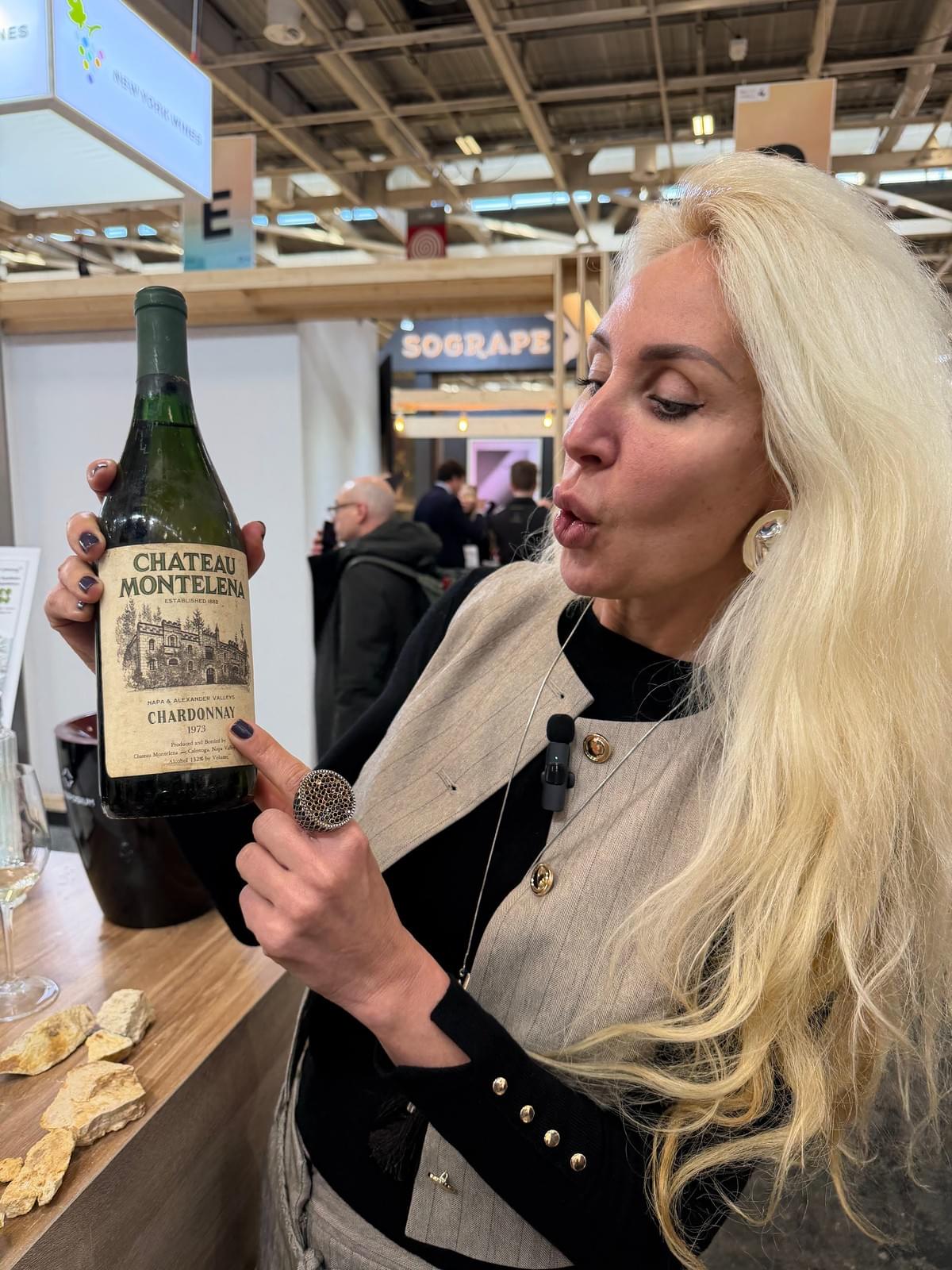
These are not just historical references - they are exactly the wineries revisited in the tasting we are analysing here.
What makes this modern re-tasting particularly compelling is that it does not attempt to recreate 1976. Instead, it traces continuity.
We are not tasting the same wines. We are tasting the same producers across time.
There were originally six red wineries and six white wineries. For this anniversary format, a selection of those estates was invited to provide two wines each: an older vintage from the 1990s and a current release.
The logic behind this structure is precise. Older vintages - often from the early 1990s - capture a moment before several major shifts:
- before the full stylistic impact of the late-1990s “bigger wine” era
- before widespread replanting in Napa Valley was completed
- before modern precision in viticulture and cellar technology became standard
The current vintages, by contrast, reflect a completely different California:
- post-phylloxera replanting
- post-globalisation of style
- post-climate pressure
- and deeply informed by decades of accumulated technical knowledge
And this is where the tasting becomes more than commemorative.
Because instead of asking “who won in 1976,” it asks a far more relevant question: What exactly has changed - and what, surprisingly, has not?
Chateau Montelena - When Necessity Becomes Style
If the Judgement of Paris has a white wine icon, it is Chateau Montelena 1973 Chardonnay.
But what is often remembered as a stylistic triumph was, at the time, largely a result of limitation.
Because of the technology and know-how in the 1970s, white wines in California were made “in kind of the same way.” Even Chardonnay - despite its potential for richness and transformation - was approached simply as white wine.
And that had a very specific implication: It almost never went through malolactic fermentation.
Not as a stylistic choice in the modern sense, but because producers were trying to ensure stability. They used more sulfur. Cellar conditions, often unintentionally, blocked malolactic conversion. In fact, many producers - even for red wines - had to learn how to allow malo to happen, because their environments prevented it.
Montelena’s original wine was no malo.
And what is crucial - they never abandoned that approach.
So what we are tasting today is not a reinvention, but a continuation.
In the glass: a 1991 vintage and a 2023.
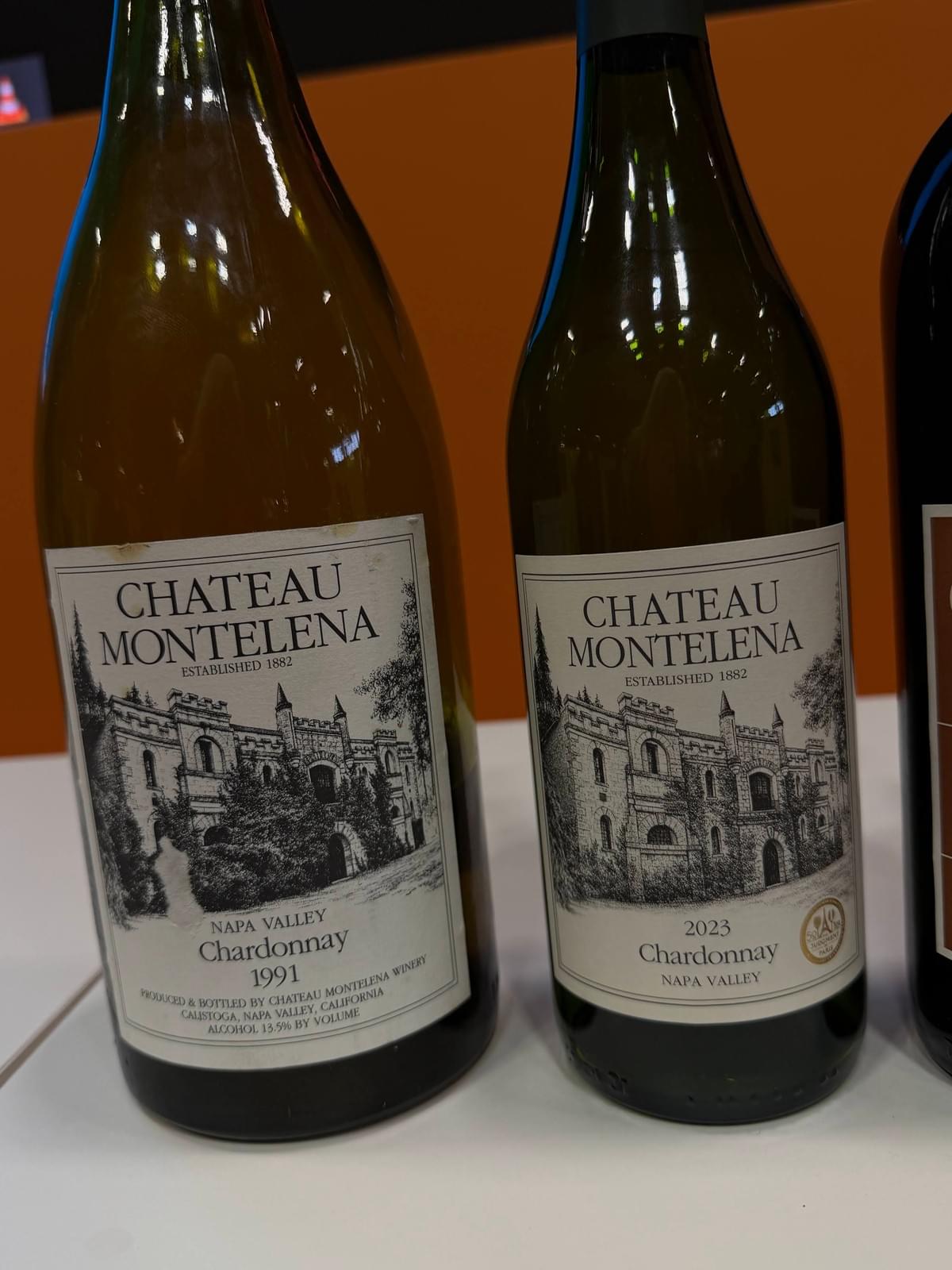
The 1991 was made under Bo Barrett, who had worked closely with Mike Grgich, the winemaker behind the 1973. By 2023, Barrett is working alongside Matt Crafton, who joined in 2008 and became winemaker in 2014, now stepping into broader leadership.
This is not just a generational shift. It is controlled continuity.
Two vintages, decades apart, still anchored in the same fundamental decision: preserve structure, avoid malolactic softness, prioritise clarity over opulence.
And yet, the differences are there - precise, but telling.
By 2023:
- The time in the barrel is slightly longer
- The percentage of new oak is reduced
At first glance, “50% versus 25%” new oak sounds dramatic. But, as noted during the tasting, oak impact cannot be read in isolation. Less time in the barrel reduces extraction, meaning the stylistic shift is more nuanced than the numbers suggest.
Alcohol levels have also increased slightly - but again, not dramatically. California's. This restraint is important.
Because it challenges a simplified narrative of California evolution as a linear move toward power. Even here, in a warmer modern context, Montelena remains calibrated rather than excessive.
What the comparison reveals is something more subtle:
In the 1970s, restraint was imposed by limitation.
In the 2020s, restraint is a decision.
And that is a very different kind of confidence.
A Note on the 1990s - Before the “Big Wine” Era
The 1991 vintage also sits in a transitional moment that is often misunderstood.
Early 1990s California wines were still relatively restrained. The stylistic shift toward more powerful, high-impact wines did not fully take hold until the mid-to-late 1990s.
Robert Parker’s influence is often cited as the driving force - and rightly so - but the timing matters. Broadly speaking, the 1980s were his Bordeaux era. The 1990s became his California era. But he did not begin seriously praising California wines until around 1989.
So 1991 exists in a window where:
- technical understanding is improving
- confidence is growing
- but the stylistic shift is not yet fully formed
Which is exactly why it is such a valuable reference point in this tasting.
Before the Next Glass - What You Are Actually Tasting
There is one more layer to keep in mind before moving forward.
With older wines like these, you are not only tasting the wine - you are tasting the conditions of the time.
You encounter:
- how the wine was packaged
- how it was described
- and what was considered important
In the 1990s, tech sheets barely existed. And when they did, they focused on narrative rather than precision. Today, we expect exact numbers: acidity, sulfur levels, and fermentation details.
That culture of data did not exist in the same way.
And then there is cork. “All-natural cork… highly variable.”
Even in a controlled tasting, you might encounter fragments in the glass. That variability was normal. Accepted. Part of the experience.
So the comparison is not clean in a laboratory sense.
It is historical, which is exactly why it works.
Phylloxera is the hidden engine of Napa’s stylistic pivot
Napa’s late-1990s style change happened so quickly and so widely. In 1982, phylloxera was found again in Napa Valley. People didn’t believe it would matter. But by 1997, more than 80% of vineyards in Napa Valley had been replanted.
Then comes the line that should be printed on a poster for anyone who talks about “Napa’s Cabernet dominance” as if it were eternal:
“Cabernet Sauvignon did not actually become the predominant variety in Napa Valley until 1997.”
So when you taste early-1990s Napa, you are tasting vines that are often 20 years old or older - with more consistent ripening - before the region became a sea of young replants.
Young vines ripen less consistently. Add warm and dry years in the late 1990s, and the “big wine era” suddenly makes more sense. It’s not just fashion. It’s biology, climate, and replant economics.
Even the business structure changes due to pressure from replanting costs. Some heritage wineries closed or were absorbed. Mondavi went public (only the second US winery to do so) to cover replanting costs. That is not “romance.” That is survival finance.
Clos Du Val - Stags Leap District energy, and the blend tells the climate story
Clos Du Val is positioned as part of the 1972 burst - a moment where “young families” bought land, planted, and changed the density of intention in Napa and Sonoma.
The story is anchored in Stags Leap District, where Stags Leap Wine Cellars’ 1973 Cabernet, which topped the reds in Paris, is from. Clos Du Val also falls in love with the land there, and before these arrivals, there was essentially one significant vineyard in the district - Fay Vineyard - the magnet that drew Winiarski.
Then we taste 1992 vs 2022, and the blend shows a global shift.
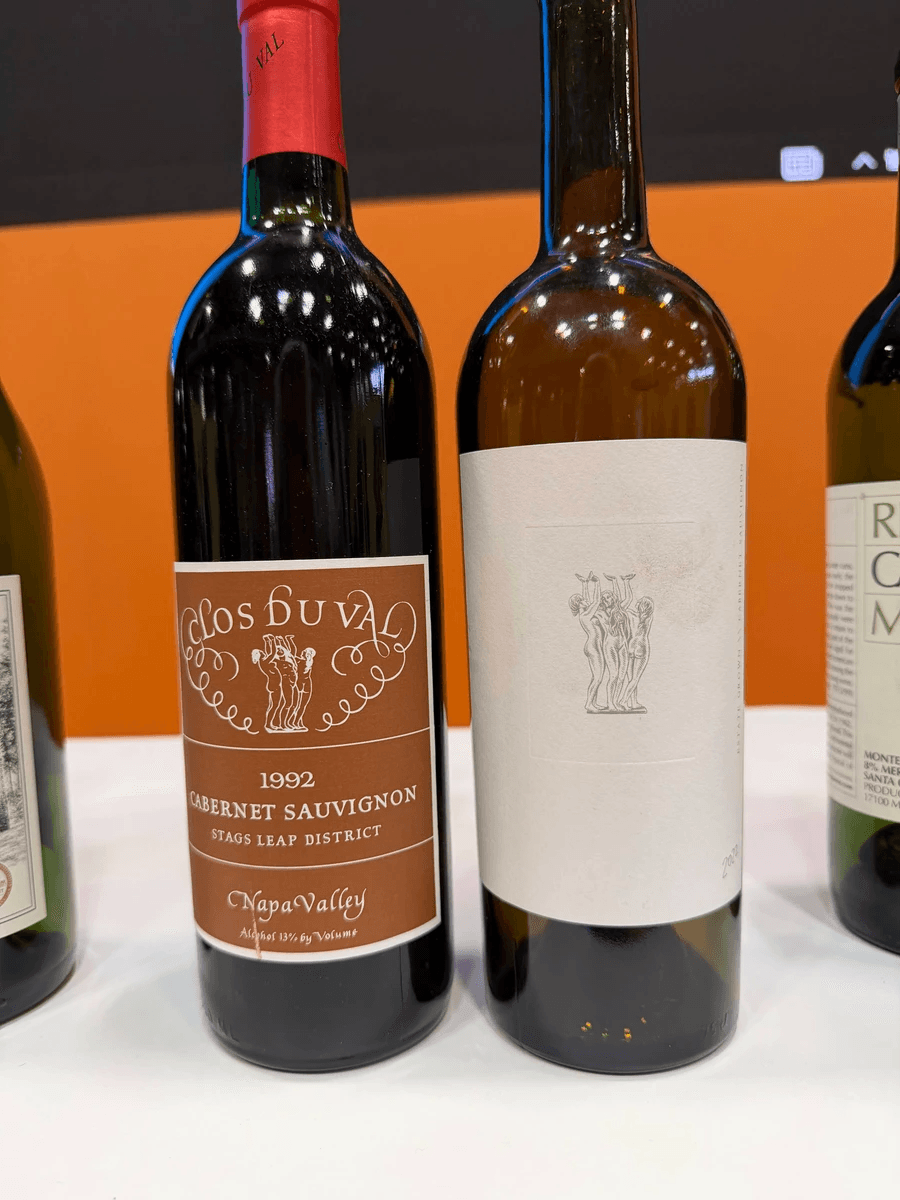
In 1992: Cabernet Sauvignon with Cabernet Franc and Merlot.
In 2022: Cabernet Sauvignon with Cabernet Franc and Petit Verdot.
The point is not to mock Merlot via a 2004 movie reference. The real reason is resilience:
“As climate change is happening and conditions have become less predictable, Merlot has turned out to be less resilient.”
Cabernet Franc, on the other hand, handles a broader range of conditions than previously thought. So producers across regions are turning to Cabernet Franc instead of Merlot, often in concert with Petit Verdot.
Then Petit Verdot is described with unusually useful sensory language: “very structural,” “really vertical,” “tight,” “dark fruit not because of ripeness but because of its character,” and a variety where “one drop” can change a wine.
So what looks like a blending tweak is actually an adaptation strategy. The Cabernet proportion stays similar. The supporting cast changes to match a more volatile climate and a more structural target.
Even the tech-sheet gap becomes part of the story: the speaker couldn’t get the exact new oak percentage for 1992. Ageing time is slightly longer in the newer wine, partly because ripening patterns changed, and the Petit Verdot component encourages longer élevage.
The vineyard continuity is there too: both wines come from the same estate vineyard that Clos Du Val originally planted. But vineyard naming was not a selling point in 1992. “It’d be confusing to have an extra name on a label.” That is another reminder that the modern fixation on single vineyards is historically recent.
The older Clos Du Val had more body, while the recent version is bigger. At first, that sounds like the same thing, but it isn’t.
“Body” here comes from integration. 1992 feels fuller because the elements have settled. Fruit, tannin, acidity - they sit together. Nothing stands out. The wine reads as complete.
“Bigger” in 2022 is different. It shows more intensity up front. The structure is clearer, more defined. You can see the components separately - especially the influence of Petit Verdot. The tannins are firmer, the frame is tighter, and the wine feels more shaped than blended.
This is where ageing becomes the key question.
The older wine shows what happens when structure resolves. The newer wine shows structure before that process is complete. So the comparison is slightly unfair if taken at face value. One wine is already integrated. The other is still in that process.
Older vines and a Merlot component tend to give a softer, more immediate sense of volume. A blend with Petit Verdot and younger vines can feel more linear and structured early on, even as it opens with time.
So the real question is not which wine is bigger or better.
It is how each wine is expected to age - and whether the structure you see today will resolve into the same kind of balance over time.
Ridge Monte Bello - the other California in the Paris story
People forget that Paris was not only Napa.
On the Chardonnay side, David Bruce from the Santa Cruz Mountains was included.
On the red side, Ridge Monte Bello from the Santa Cruz Mountains was included, and it serves as a major case study in how terroir and philosophy can remain steady while the world shifts around them.
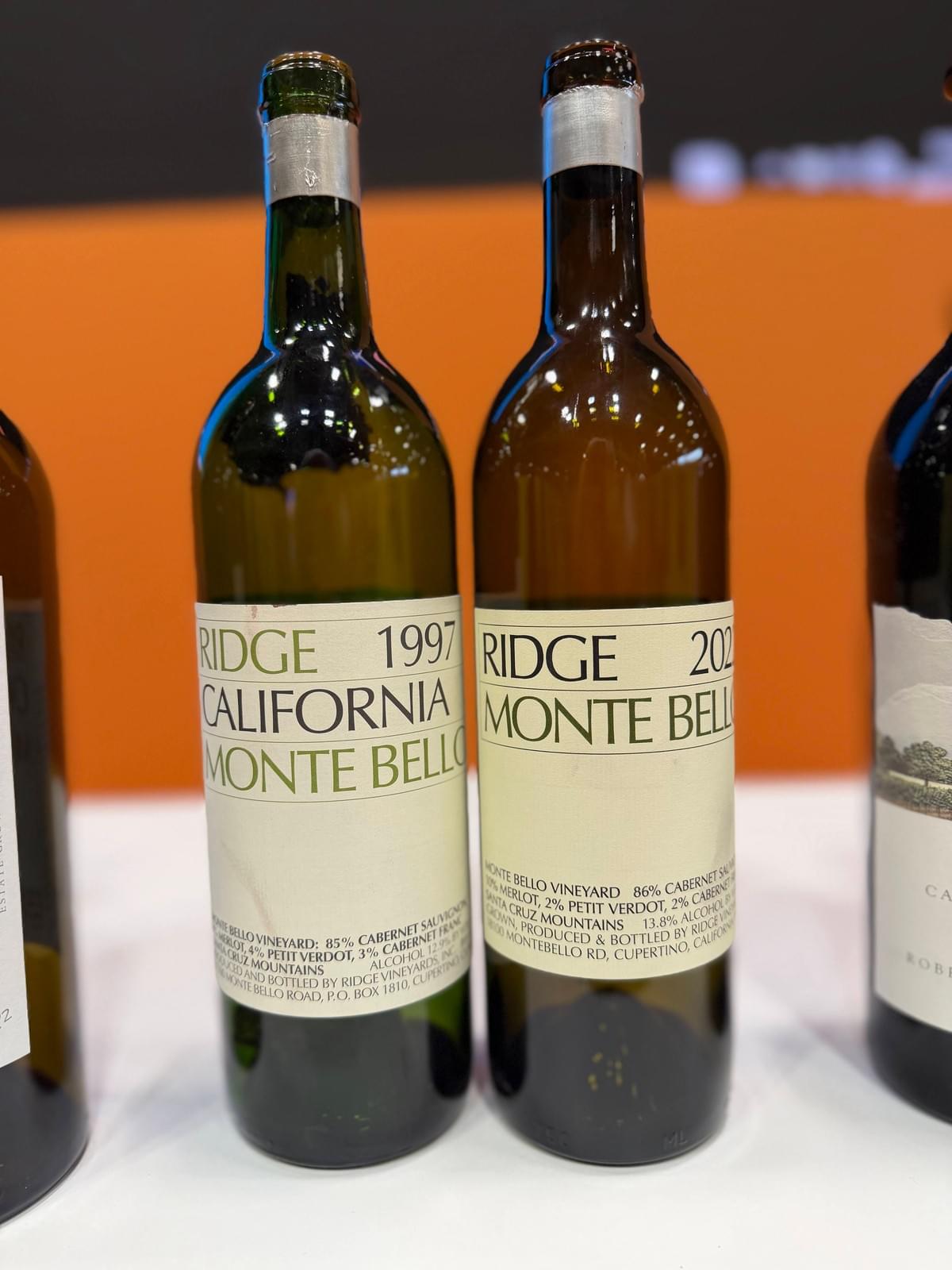
The 1997 Monte Bello is poured as an older vintage because it is more delicate. 1997 is called iconic - one of the best vintages still to this day in decades for California, especially in Napa Valley. But the key is that the Santa Cruz Mountains did not go through Napa’s massive replant. Monte Bello’s site was established in 1886 at a high elevation (roughly 350 to 650 meters). The original replanting was mid-1940s. The 1997 includes some vines from that 1940s replanting.
So the “big 1997” is not just about sunshine and fashion. At Ridge, it is also old-vine material, carrying the consistency that Napa had just ripped out and replaced.
The human continuity matters too. Paul Draper oversaw both wines. Eric Baugher’s first vintage as an assistant was around 1997, and he remained through 2022 as his last year. You taste “a bookend of his career.” And Baugher with refining tannin extraction - making it more refined - with early stages visible in 1997 and fully practised by 2022.
Then comes the American oak point - one of the most quietly provocative statements in the whole tasting.
The wine poured in Paris was the 1971 Monte Bello, the first Ridge vintage done entirely in American oak. In the 30-year anniversary retasting, Monte Bello was rated top red. Again at the 40-year.
So yes, there is a history of disparaging remarks about American oak. But in blind tastings, it was consistently Ridge Monte Bello in American oak that stood out.
That is not an argument that American oak is “better.” It is an argument that material prejudice collapses when the site and the discipline are strong enough.
California geology is shaped by plate interactions. Ridge sits on what is called “exotic terrain,” unlike anything around it. The soils are part of the Franciscan complex, with high magnesium - difficult to grow in, naturally lowering yields and increasing concentration. Under the Franciscan soil series is fractured limestone.
And then the sensory payoff:
With Monte Bello, there is a textural element at the back of the palate that matches that of limestone-grown wines elsewhere. It’s easier to believe limestone matters when you taste Chardonnay or Pinot in it, because we’re trained to expect it. Monte Bello makes the limestone argument in Cabernet.
Then the climate lens: Santa Cruz Mountains has influence from two bodies of water - the Pacific Ocean and San Francisco Bay. California has a profoundly cold ocean current. Ridge, in the northern part of the AVA, gets influence from both directions. The fog cools, adds moisture in the air, and limestone helps hold water unless the environment is completely dry. So multiple conditions converge to create something unusual.
This is California as complexity, not stereotype.
2022 - the year that forces honesty
If 1997 is the emblem of “iconic,” 2022 is framed as the opposite: “one of the most difficult… in half a century in California.”
The hottest heat spikes on record, a heat spell over 40°C for more than five days, in some places more than a week, right around harvest. Nights still almost 30°C. Even with a diurnal shift, the baseline is too hot for the old “open windows at night, close in the morning” model to work. Wine country houses without AC became an emblem of how quickly climate reality outruns lifestyle assumptions.
The most important line here is methodological:
“If you want to know how good the farming and winemaking of a place is, go taste only their difficult vintages.”
Plenty of people can make great wine in a perfect year. The question is, who can make a good wine in a challenging one? Ridge is positioned as an example of that competence.
This is exactly the same kind of confidence story as 1976, but under new pressure. In 1976, confidence was social - the belief that California could even compete. In 2022, confidence is technical - belief that California can still deliver freshness, shape, and age-worthiness when heat is trying to erase nuance.
Robert Mondavi - the missing link in the Paris story
Robert Mondavi is rarely placed at the centre of the Judgement of Paris, but it sits behind it in a very direct way. Many of the people who shaped the wines in that tasting passed through Mondavi first.
In 1966, when the winery was founded, Warren Winiarski was the first winemaker. He later left, spent a short period experimenting outside California, and then returned to Napa to found Stag’s Leap Wine Cellars. His first vintage there was 1973 - the same wine that went on to top the red flight in Paris.
After Winiarski left Mondavi, Mike Grgich became the winemaker. He worked there before moving to Chateau Montelena, where he made the 1973 Chardonnay that led the white flight.
So Mondavi connects both sides of the Paris tasting. It is not in the lineup, but it is in the background of the two most important wines.
There is also a detail that often gets overlooked. The first wine released by Chateau Montelena was not Chardonnay, but Riesling. It is a reminder that the region was still searching for direction. What later became iconic was not obvious at the time.
In the tasting, the comparison is 1995 versus 2021.
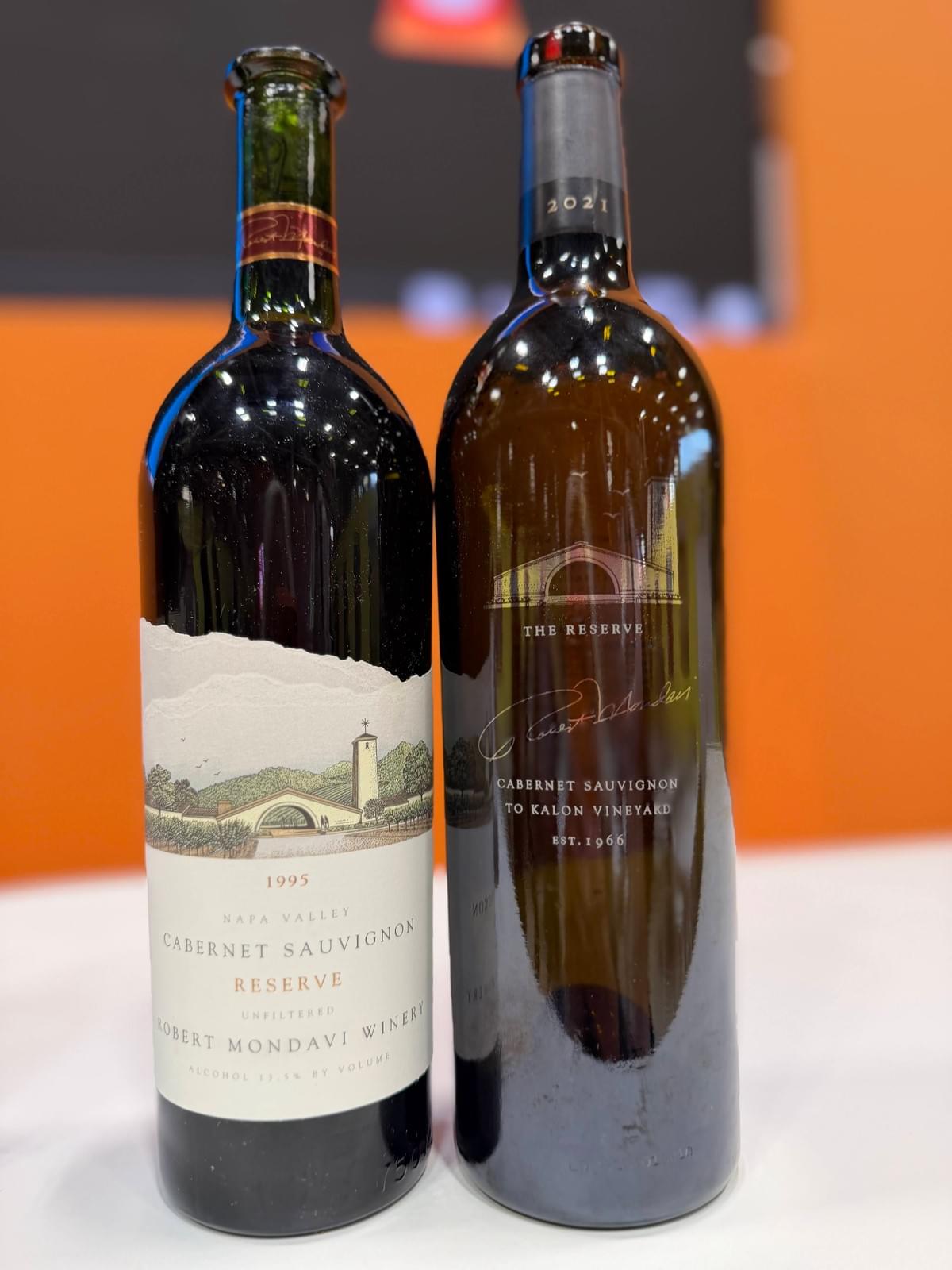
The 1995 comes from a period when Mondavi was still fully independent. Replanting in Napa had begun but was still ongoing. At that point, Cabernet Sauvignon had not yet fully taken over the region. Varieties like Zinfandel and Petite Sirah were still widely planted, with Cabernet increasing but not yet dominant.
By 2022, the context is completely different. Mondavi is part of a large global group, and the vineyard base reflects decades of replanting and selection. Cabernet Sauvignon is firmly established as the core variety.
The blend shows the same shift seen elsewhere. In 1995, Merlot was part of the composition. In 2022, it was replaced by Petit Verdot. Again, this reflects adaptation rather than fashion - moving toward varieties that offer more structural stability under changing conditions.
The ageing regime also changes significantly. The 1995 uses a high proportion of new oak, but the 2022 extends both the percentage and the time in barrel. This reflects both stylistic evolution and the need to integrate a more structured wine.
At the same time, there is continuity. Geneviève Janssens, who joined Mondavi in 1978 and worked across both Mondavi and Opus One, provides a link between generations. Even as ownership and scale change, there is still a thread of internal knowledge connecting past and present.
Finally, Mondavi’s role is not only about people, but about place. The winery is built around the To Kalon vineyard, one of the most significant sites in Napa Valley. The importance of this site was not initially framed in terms of prestige, but in terms of farming. Mondavi identified it by the quality of its fruit and the distinctiveness of its rocky soils, and built his project around it.
So while Mondavi is not usually listed among the “winners” of 1976, it played a key role in making that moment possible. It trained the people, shaped the approach, and helped define what Napa could become.
To Kalon - recognising quality before the language existed
To Kalon appears in the tasting not as a concept of prestige, but as a practical discovery.
As described, in the mid-20th century, vineyard management in Napa Valley was not yet focused on quality as we understand it today. Farmers were maintaining vines, but there was no systematic approach to identifying and isolating the best sites. The idea of “great vineyards” was not clearly articulated.
Robert Mondavi approached this differently. While still working with his brother at Charles Krug, he focused on fruit quality as it came into the winery. He began to notice that one source consistently stood out. The fruit was better, more distinct.
He went to see the site.
What he found was not framed in terms of reputation, but in physical terms - rocky soils, clearly different from the rest of Napa Valley. This was the historic To Kalon vineyard.
When Mondavi later founded his own winery in 1966, he built it around this site, acquiring as much of To Kalon as possible. The vineyard remains central to the identity of the winery, and the fruit for the wine discussed in this tasting comes from there.
There are other parts of To Kalon, including parcels owned by Andy Beckstoffer, often labelled separately. But the key point here is not ownership structure. It is recognition.
At the time, To Kalon was not “famous.”
It was simply better.
And it was identified through observation rather than classification.
This matters in the context of the Judgement of Paris. Because it shows that what later appears as a breakthrough moment is built on earlier decisions - in this case, the ability to recognise site quality before there was a language to describe it.
In other words, the result in Paris did not come from nowhere. It was rooted in vineyards like To Kalon, where the difference was already visible, even if it was not yet fully understood or communicated.
What the 50-year comparison actually proves
If you strip away the mythology, the tasting is making a sharp, contemporary argument about California’s evolution:
- The technique used to be about stability first.
No malo Chardonnay was not “aesthetic minimalism.” It was the result of sulfur regimes and cellar conditions designed for sterile stability. Some houses, like Montelena, turned that necessity into identity. - The 1990s are not one thing.
Early 1990s Napa can be restrained, even before the full market momentum of Parker’s California era kicks in. Meanwhile, the region is heading toward a total replant that will change vine age distribution and style. - Phylloxera rewired the valley.
By 1997, the replant was so widespread that it became a plausible driver behind ripeness patterns, stylistic “oomph,” and the market narrative of late-1990s Napa. - Blend components are climate signals.
Merlot’s retreat and Cabernet Franc's plus Petit Verdot’s rise are framed as resilience decisions, not movie jokes. Petit Verdot’s structural intensity is incorporated into modern élevage decisions. - Santa Cruz Mountains complicates the “Napa equals California” shortcut.
Monte Bello shows how elevation, dual-water influence, magnesium-rich soils, and fractured limestone can create a Cabernet that behaves texturally like limestone wines elsewhere - and maintains restraint even when the world heats up. - Difficult vintages are the real exam.
2022 becomes the modern mirror of 1976. Not “can California win,” but “can California still deliver under extremes.”
Throughout the tasting, what stood out was not just the information, but the way it was framed. Chukan Brown is not simply one of the leading experts on California - they are one of the people actively shaping how the region is understood today. Not by simplifying it, but by holding together its contradictions: history and change, confidence and uncertainty, place and decision. And that is why the Judgement of Paris still matters. Not as a trophy, but as an origin story of confidence - and as a reminder that confidence must be re-earned as conditions change.
Fifty years later, the most useful way to commemorate Paris is not to repeat the headline. It is to taste the lineage and ask a harder question:
When the easy years disappear, who still makes wines worth believing in?
California, at its best, has been answering that question since 1976 - and, as this tasting shows, it is still answering it now.