

There are wine trends that arrive as aesthetic - and then there are trends that arrive because the market finally catches up with a grape’s actual capabilities. Furmint is firmly in the second camp.
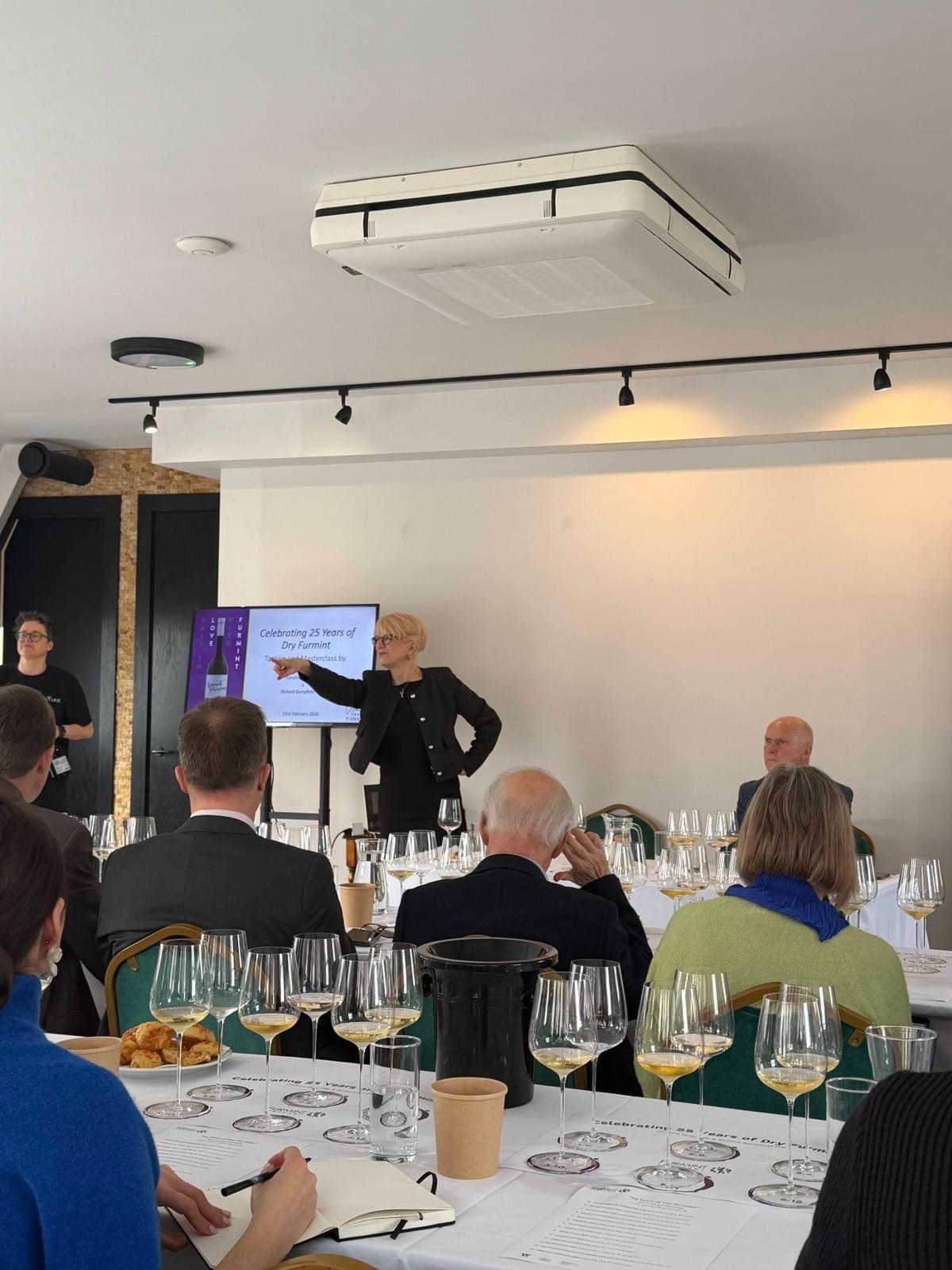
At the Liszt Institute - Hungarian Cultural Centre London, Caroline Gilby MW and Richard Bampfield MW framed Furmint not as a “Tokaj sweet-wine grape” (the category it has been politely trapped in for decades), but as something much larger: a noble, terroir-responsive variety with a rare combination of tension, versatility, and serious ageability.
And that word - ageability - was the master key. Not as a nerdy flex, but as the most commercial, credibility-building argument you can make for a grape that wants to be taken seriously in premium white-wine conversations.
The diplomat’s version of the Furmint problem
Hungary’s Ambassador to the UK, Dr Ferenc Kumin, opened with a disarmingly strategic point: Hungary is hard to “explain” as a wine country because it does too much - too many grapes, too many regional stories, too much complexity for a foreign market that wants a clean entry point.
So the diplomatic focus becomes a smart simplification:
- Tokaj is the one Hungarian region that’s already globally anchored in consumer memory (via sweet wines).
- Furmint is pronounceable, brandable, and already associated with Tokaj.
- The challenge - and opportunity - is expanding the mental map: Furmint is not only sweet Tokaj.
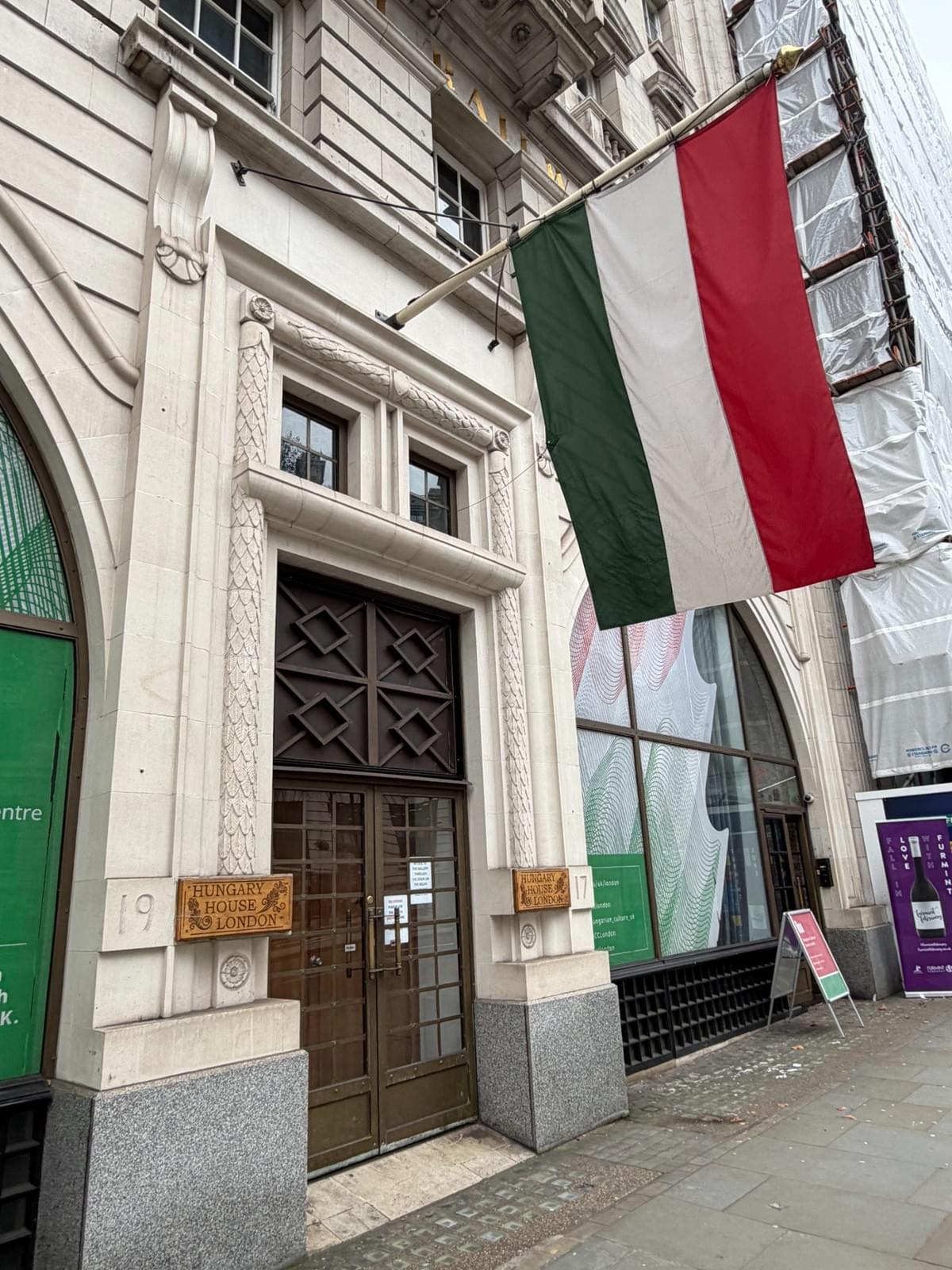
“Soft diplomacy” was the phrase, but the subtext was sharper: wine is one of the few cultural products where a country can build prestige fast - if the message is coherent. Furmint is that coherent message.
Caroline Gilby MW brought the scaffolding: geography, history, volcanic context, production stats, and - crucially - how Tokaj’s modern dry-wine revolution actually happened (it didn’t “always exist,” it was a deliberate shift post-2000s toward healthy fruit and intention, not accident).
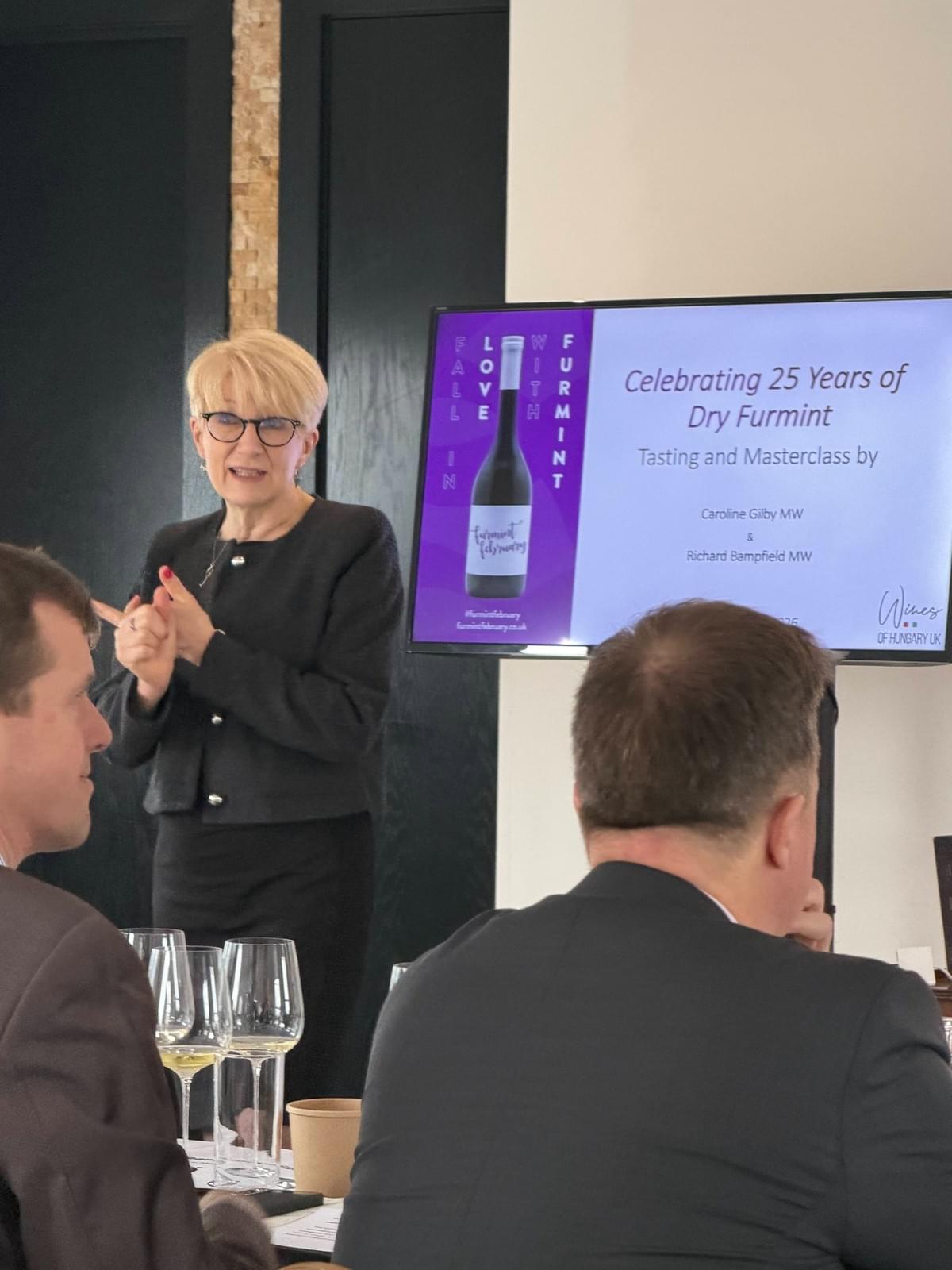
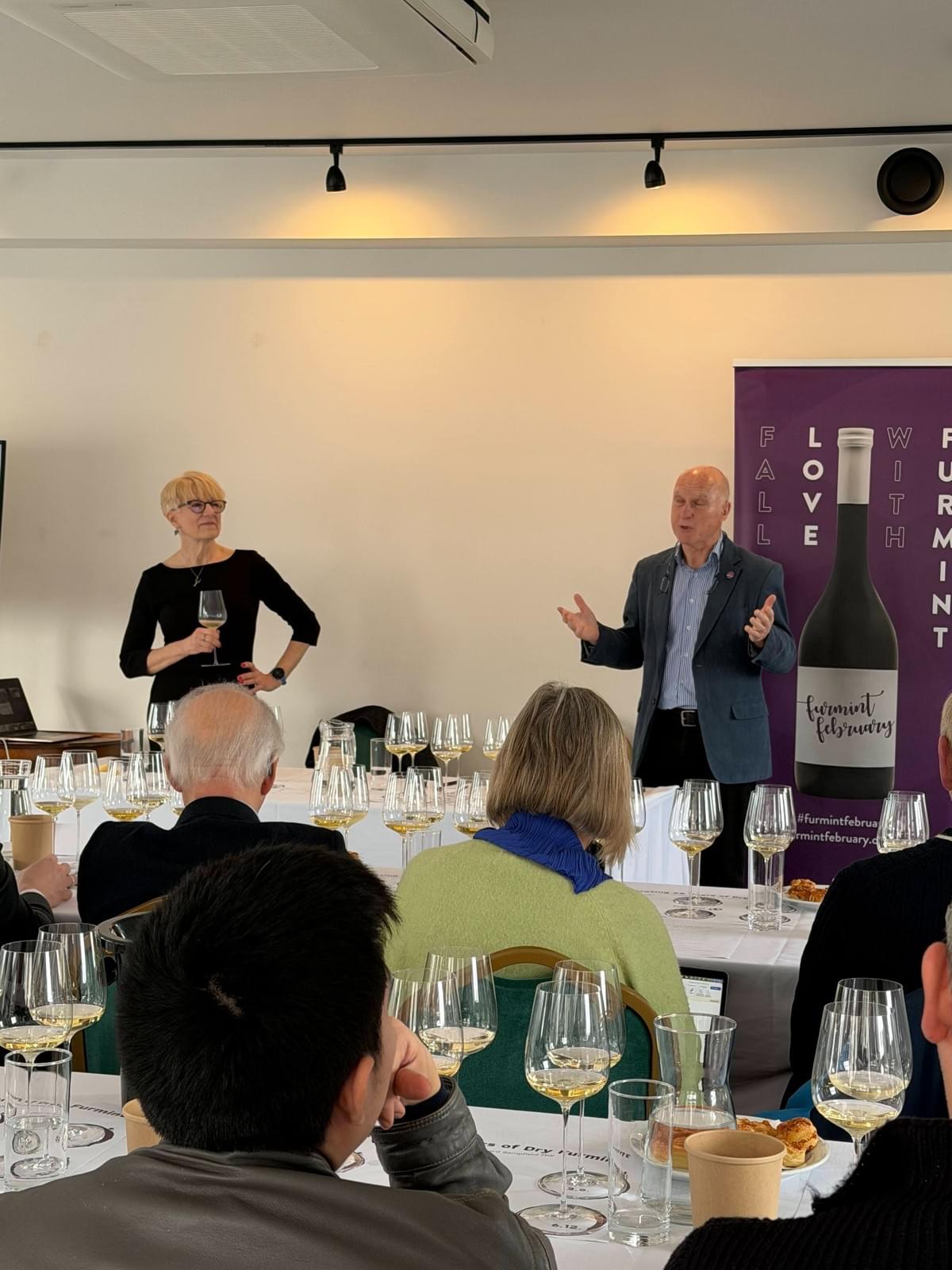
Richard Bampfield MW brought the sensory truth-testing: what the wines actually do on the palate, how they balance alcohol, acidity and sweetness, and whether the ageability claim survives contact with reality. He was particularly strong on refusing lazy descriptors when they weren’t accurate - a very MW way of saying: if vocabulary fails, the wine is probably interesting.
Why Furmint is so on-trend right now (and not just because it’s “different”)
This tasting landed in the sweet spot of multiple trade currents:
- White wine demand is structurally strong; red is harder to move in many markets.
- Volcanic terroir is a consumer-facing story people actively buy into right now - and Hungary has it in depth (Tokaj’s extinct volcanoes; Somló’s basalt heritage; North Balaton volcanic spine).
- High-acid whites with gastronomic grip are winning lists: sommeliers want tension, saltiness, texture, and longevity.
- The premium category is hungry for “new classics”: grapes that can play in the same mental territory as Chardonnay and Riesling without pretending to be them.
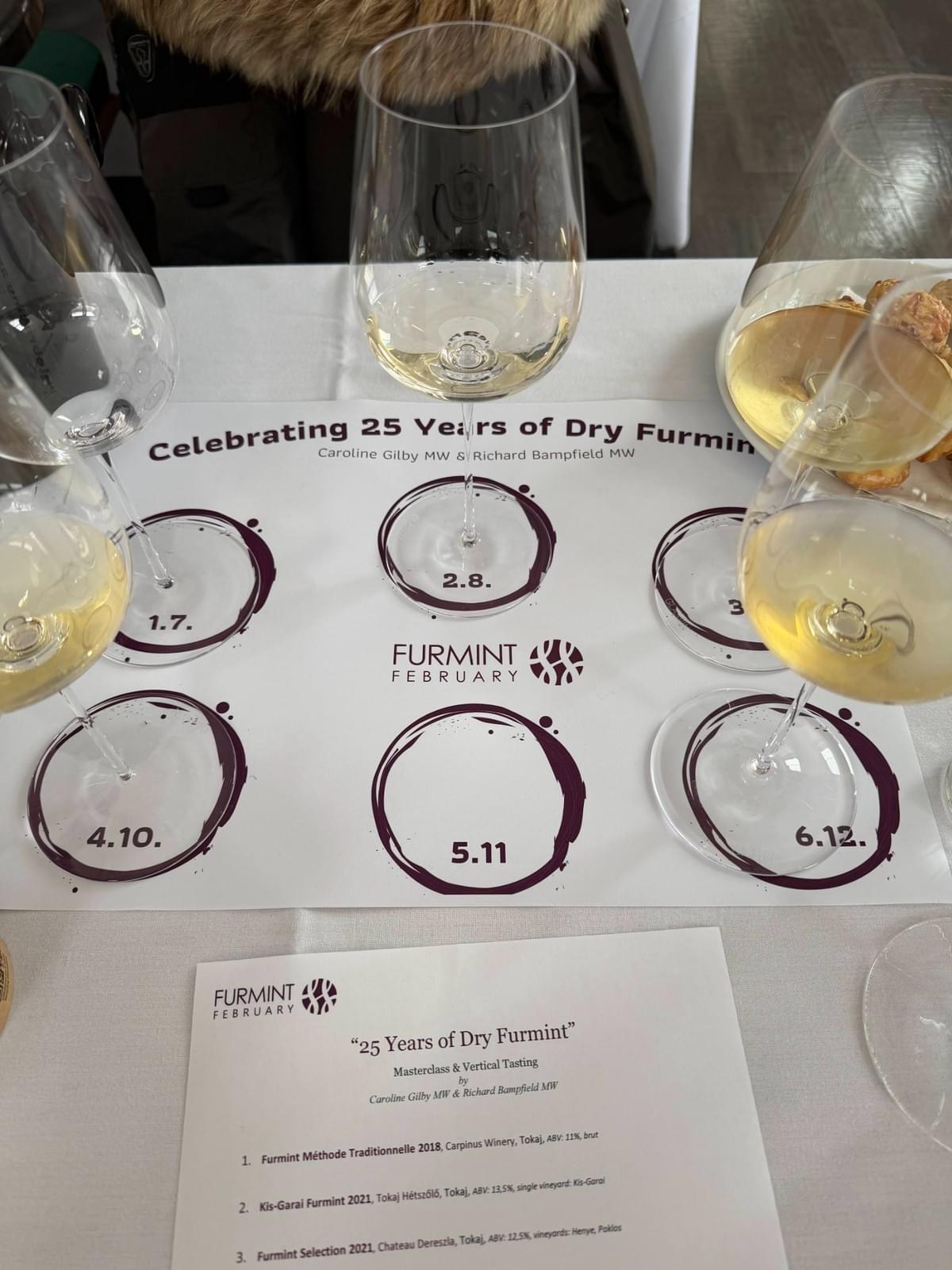
Caroline made a particularly useful bridge: Furmint can channel something Riesling-like (vibrancy, long-lived sweet wines, stony acid line) and something Chardonnay-like (capacity for oak, malolactic choices, and strong site expression). Not as imitation, as range.
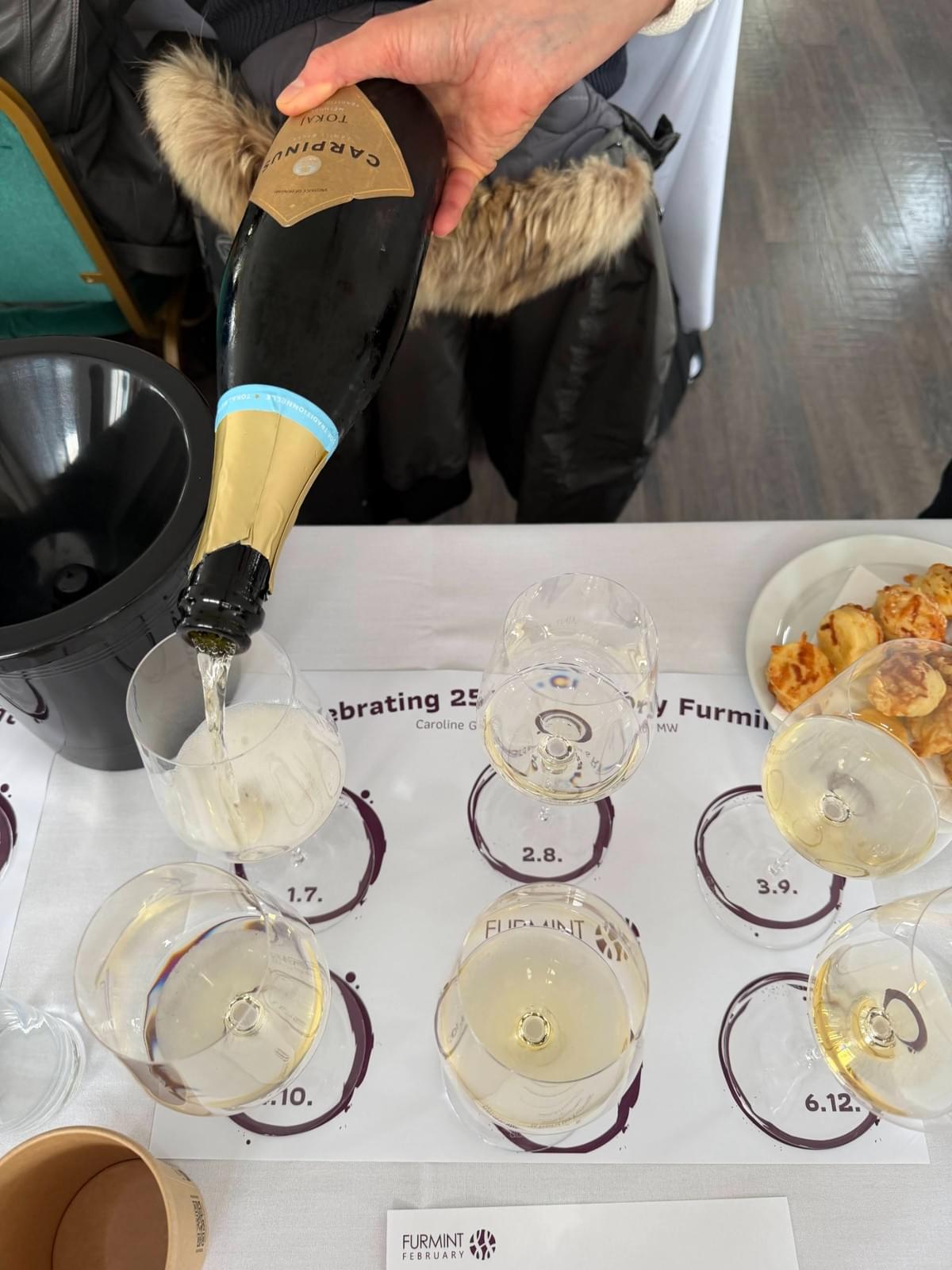
Opening a serious Furmint masterclass with a traditional-method sparkling wine is not stylistic decoration - it’s a strategic statement.
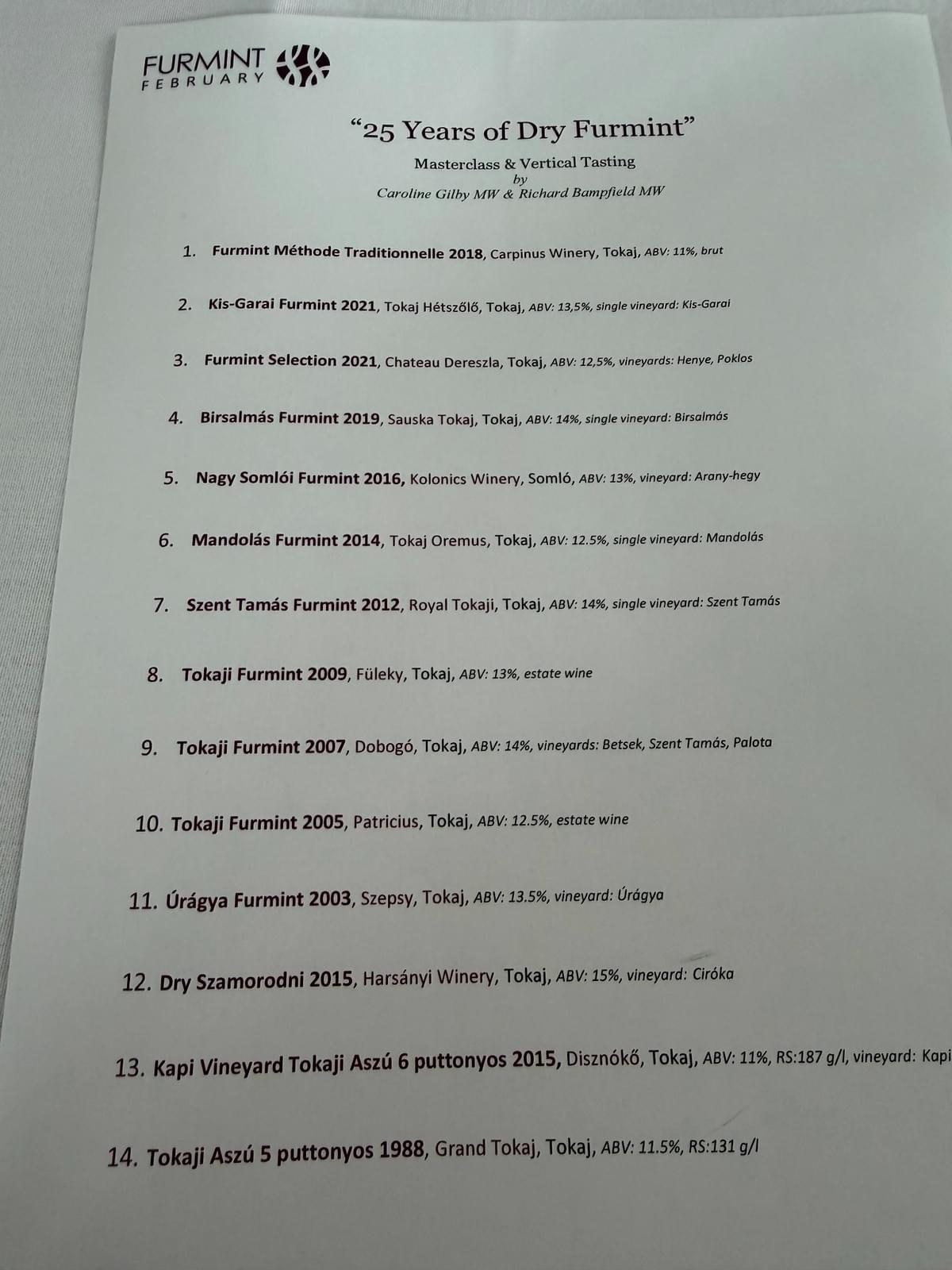
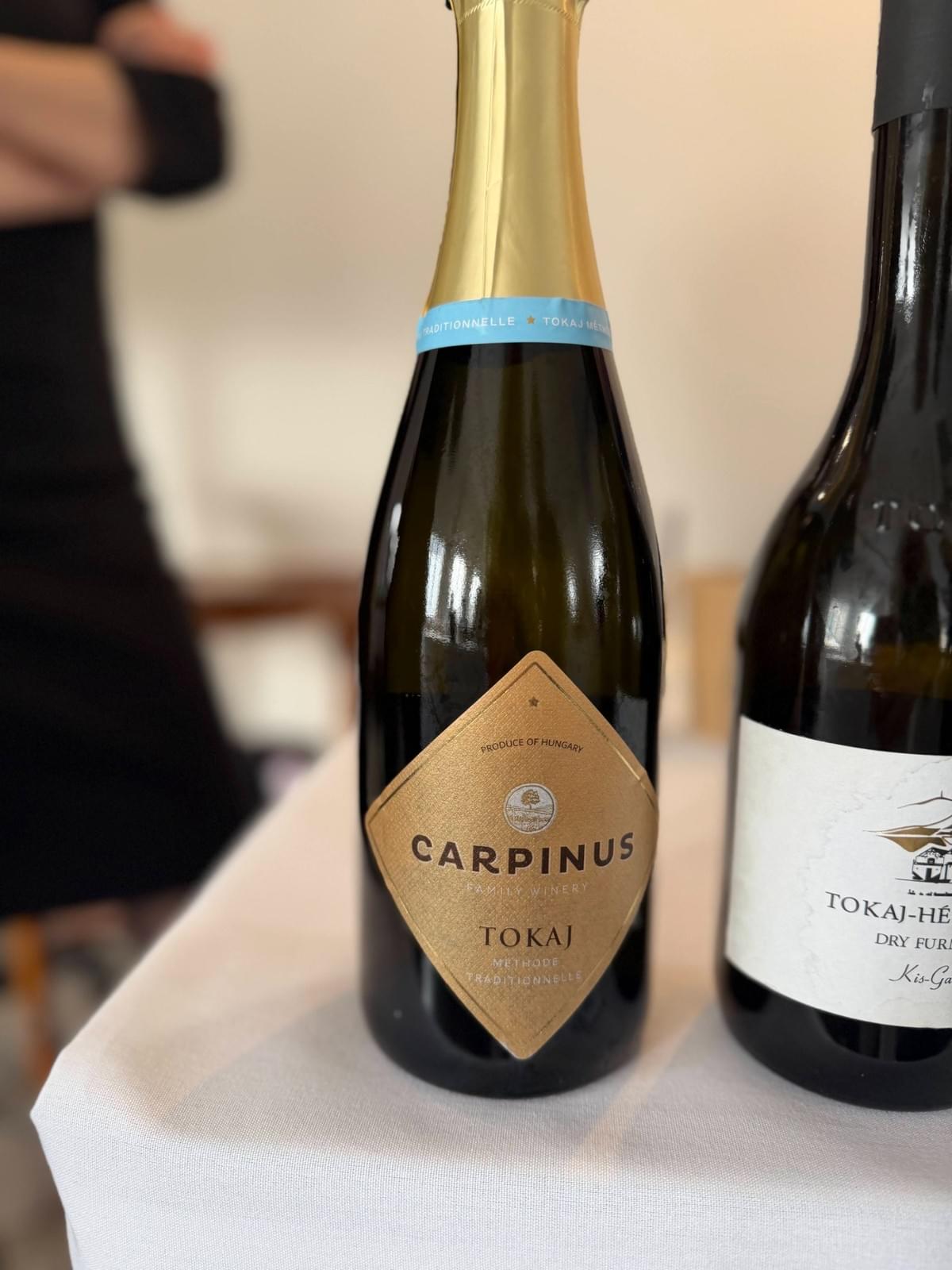
Furmint Méthode Traditionnelle 2018
Carpinus Winery, Tokaj - ABV 11% - Brut
This wine immediately reframes Furmint not as a “Tokaj sweet grape”, not even primarily as a still white, but as a high-acid, structurally precise variety capable of playing in the same space as Champagne base varieties.
In other words, this is not an introduction. It’s a repositioning.
Furmint’s natural profile includes: high total acidity, thick skins (phenolic potential), late ripening capacity. But here, it is harvested earlier, shifting the grape’s role from “complex still/sweet architecture” to precision, linearity, and freshness. Even without formal tasting notes provided, structurally this style of Furmint typically delivers:
Primary spectrum: green apple, sharp pear, lemon zest, citrus pith, quince (signature Furmint marker, even in sparkling form).
Secondary (from lees ageing): bread crust, light brioche, subtle almond, yeast complexity.
Texture: fine to medium mousse (depending on producer style), high acidity drives the palate, often a slightly saline/mineral finish - Tokaj volcanic influence.
What matters more than descriptors that this is not soft sparkling; it’s angular, energetic, tension-driven
Compared to Champagne - less creamy, more linear, more phenolic grip from Furmint skins, often slightly more rustic edge - but in a good, “textural” sense.Compared to English sparkling: similar acidity, but more structure and extract, less purely citrus, more quince/apple complexity.
Compared to Prosecco: completely different category - this is structural, gastronomic, age-worthy.
This wine quietly establishes three key points:
1. Acidity is not just present - it is functional; it supports sparkling production naturally, without correction
2. Furmint is not locked into one identity - same grape sweet Aszú, dry single-vineyard, AND sparkling
3. Tokaj can move beyond sweetness commercially- sparkling is one of the easiest entry points for new consumers
Market and positioning insight
Sparkling Furmint can work as a good on-trade by-the-glass premium alternative, a “discovery Champagne” for sommeliers, a bridge product to bring consumers into Tokaj before they encounter dry or sweet styles
If marketed correctly, this category can do what Prosecco did, but at a higher quality and gastronomic level
Food pairing logic (not generic)
This is not just “aperitif sparkling”.
Because of structure and acidity, it works best with:
- oysters, yes - but also fatty seafood (scallops, crab)
- fried textures (tempura, schnitzel)
- salty dishes - anchovies, cured fish
- even light meat dishes (chicken, veal) because of its grip.
My critical take:
This wine is more important conceptually than emotionally. It may not be the most “wow” wine in the lineup - but it is arguably one of the most important. Because it answers a fundamental question:
Can Furmint compete structurally outside of Tokaj sweetness?
And the answer is clearly: yes.
Kis-Garai Furmint 2021
Tokaj Hétszőlő, Tokaj - ABV 13.5% - single vineyard: Kis-Garai
After the opening sparkling wine, this is where the tasting begins to settle into its real direction. If the first glass was about proving structure, this one starts to show how that structure translates into place. Caroline Gilby’s point about Furmint’s ability to transmit a sense of origin becomes much more tangible here, because we are already in single-vineyard territory.
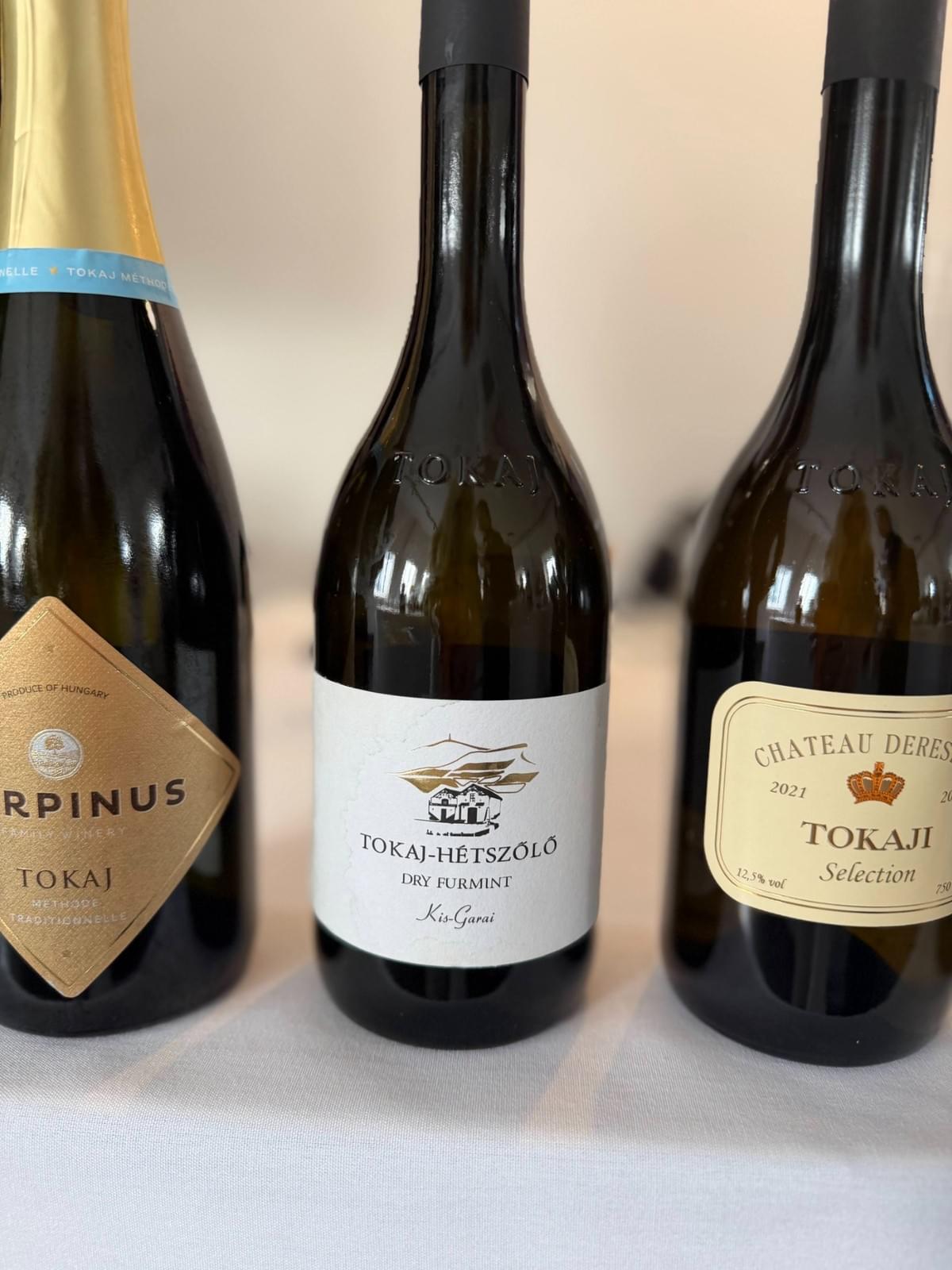
Tokaj Hétszőlő is a historically important estate, but what matters more in this context is the clarity of the expression. Kis-Garai is not presented as a powerful or heavily worked wine; instead, it feels precise, controlled, and deliberately transparent. There is no sense of oak or winemaking dominating the profile, which aligns closely with the idea that dry Furmint today is no longer a by-product of unsuccessful botrytis years, but a conscious, vineyard-driven style that requires different decisions in the vineyard from the outset.
The structural shift from the first wine is immediate but subtle. The acidity is still clearly there, but it has moved from being sharp and leading to being integrated into a broader frame. The fruit opens slightly - from green apple and citrus into riper tones of yellow apple, lemon, and quince, which remains a consistent marker for the variety. There is also a faintly saline, stony finish that ties back to the volcanic context of Tokaj, something Caroline emphasised as a recurring advantage for Furmint.
What this wine does particularly well is establish proportion. It is not about intensity or weight, despite the 13.5% alcohol, but about balance - enough mid-palate presence to carry flavour, while keeping a clear, linear line through the finish. In that sense, it sits in an interesting position stylistically: more textural than Riesling, but more restrained than Chardonnay, which is exactly the kind of profile that works well in the current market.
As the second wine in the line-up, it plays a quiet but important role. It confirms that dry Furmint can express site with clarity and that its acidity evolves rather than dominates. Most importantly, it builds confidence in the idea that what follows is not a stylistic experiment, but a category with real depth
Furmint Selection 2021
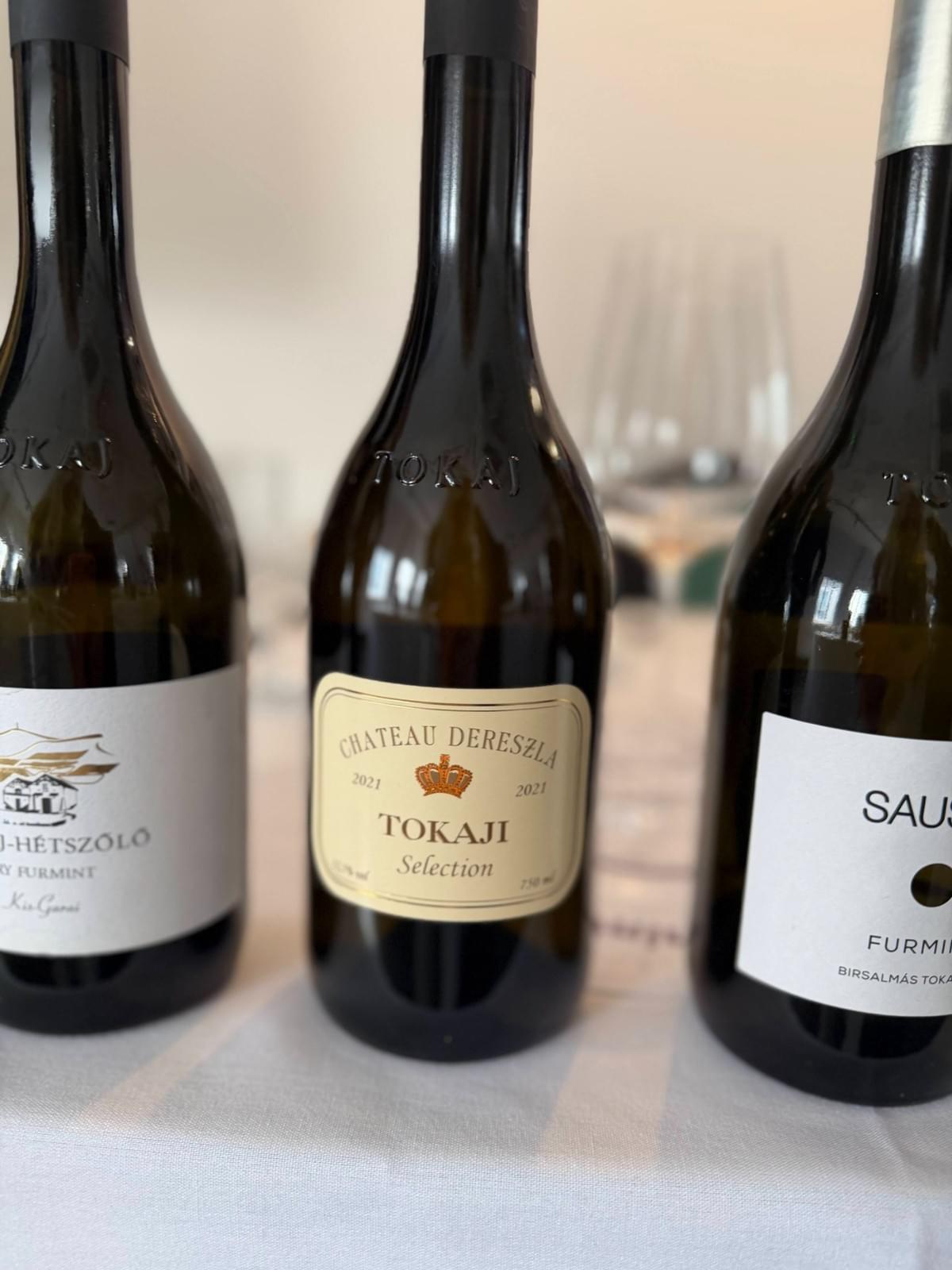
Chateau Dereszla, Tokaj - ABV 12.5% - vineyards: Henye, Poklos
The third wine subtly shifts the perspective again, but this time not through age or winemaking, rather through composition. After a single-vineyard expression, this is a wine built from multiple sites, and that difference matters more than it might seem at first glance. If Kis-Garai was about precision and focus, this is about assembling a broader picture of Tokaj through Furmint.
Chateau Dereszla draws on vineyards such as Henye and Poklos, and while the tasting sheet keeps the technical detail minimal, the intent is clear: this is not about isolating one voice, but about creating balance through blending. In that sense, it follows a logic more familiar from regions where blending is used to build completeness rather than dilute identity.
Structurally, the wine feels slightly lighter on paper at 12.5% alcohol, and that often translates into a more lifted, open profile. The fruit spectrum remains within the Furmint framework - apple, citrus, quince - but tends to feel a touch more expressive and immediate. There is less of the strict, linear feel of a single-site wine and more of a rounded, accessible shape, while still maintaining the acidity that defines the variety.
What is important here is not complexity in the sense of layers, but coherence. The acidity is still driving the wine, but in a softer, more integrated way, and the finish retains that familiar mineral edge without becoming severe. This aligns closely with the broader point made earlier in the tasting: Furmint does not rely on one stylistic pathway. It can be focused and site-specific, or it can be blended and complete, without losing its core identity.
In a market context, this style is particularly relevant. It sits comfortably between precision and approachability, making it easier to place on a wine list or introduce to consumers who may not yet be ready for more structured or age-driven expressions. At the same time, it still carries enough definition to remain clearly within the Tokaj and Furmint framework.
As the third wine in the sequence, it rounds out the initial argument. We have already seen structure and site; here we see how Furmint performs when those elements are combined. It reinforces the idea that dry Tokaj is not a single style, but a spectrum, and that the grape is capable of maintaining clarity across that spectrum.
Birsalmás Furmint 2019
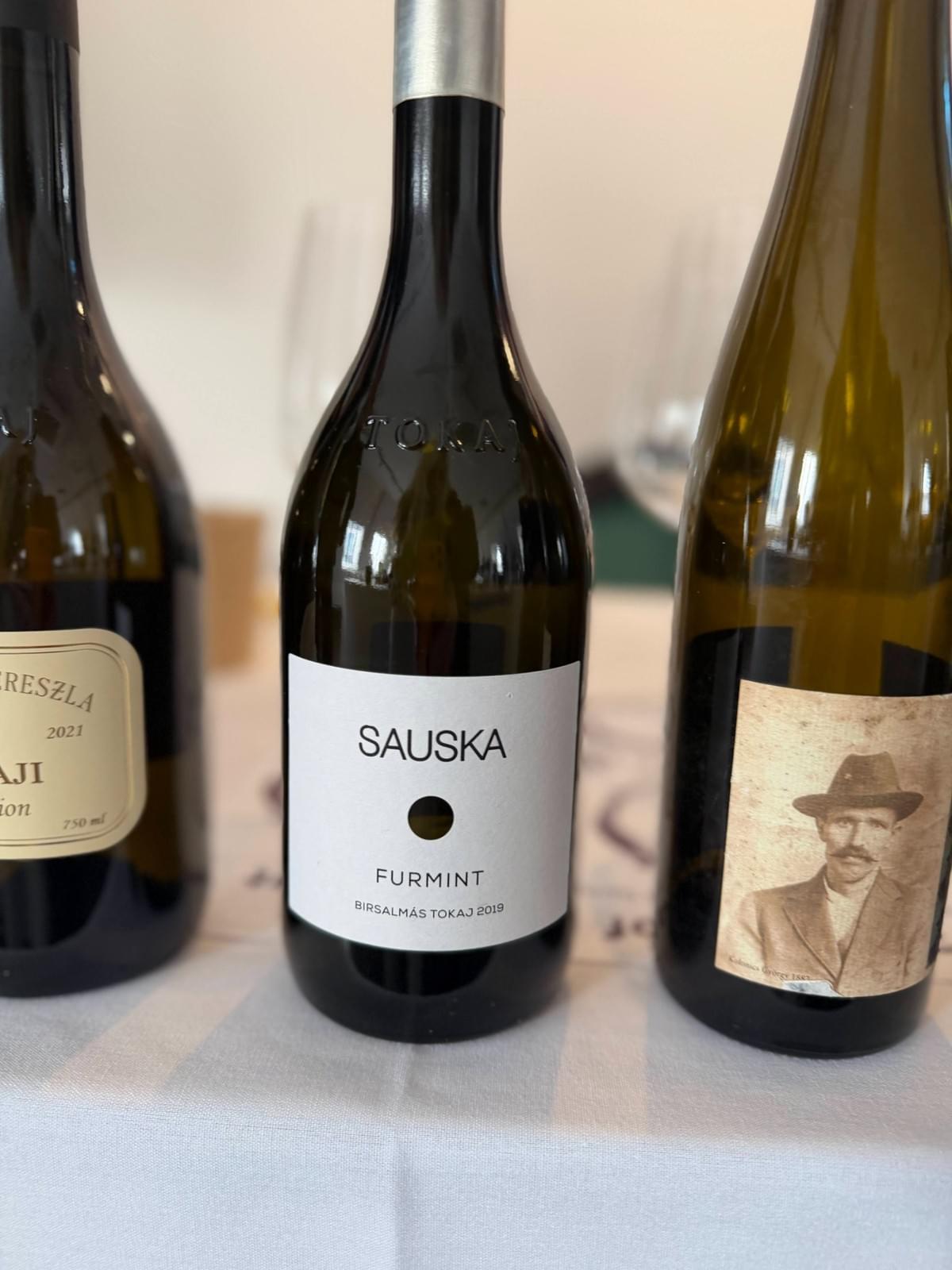
Sauska Tokaj, Tokaj - ABV 14% - single vineyard: Birsalmás
With the fourth wine, the tasting begins to expand in scale. Up to this point, the focus has been on clarity, balance, and the dry Furmint framework. Here, the conversation moves toward ripeness, texture, and weight without losing the structural discipline established from the start.
Sauska’s Birsalmás is again a single-vineyard wine, but stylistically it sits in a different register compared to Kis-Garai. The alcohol level at 14% already signals a shift toward a riper expression, and the wine follows through on that expectation. The fruit profile moves further along the spectrum, from fresh apple and citrus into more concentrated tones - quince, baked apple, and a broader, slightly richer mid-palate presence.
What is important, and very much in line with Caroline Gilby’s broader argument about Furmint, is that this increase in ripeness does not translate into heaviness. The acidity remains central, not aggressive, but clearly structures the wine and keeps the palate in balance. This is where Furmint starts to show one of its key strengths: the ability to carry higher levels of ripeness while maintaining definition.
There is also a noticeable shift in texture. Compared to the previous wines, this feels more layered, with a fuller mouthfeel and a longer, more enveloping finish. At the same time, the volcanic context still comes through, not as a sharp mineral edge, but as a grounding element that prevents the wine from becoming overly broad or diffuse.
In stylistic terms, this is probably the first wine in the line-up that moves closer to what many would associate with a more “international” premium white, yet it does so without losing its identity. It does not become Chardonnay, nor does it try to imitate it. Instead, it uses ripeness and structure in a way that remains distinctly Furmint.
As the tasting progresses, this wine plays a crucial role. It demonstrates that Furmint is not limited to linear, high-acid expressions, but can also operate in a richer, more textural space while still retaining balance. This widens the perception of the grape and prepares the ground for the more complex and age-driven wines that follow.
Nagy Somlói Furmint 2016
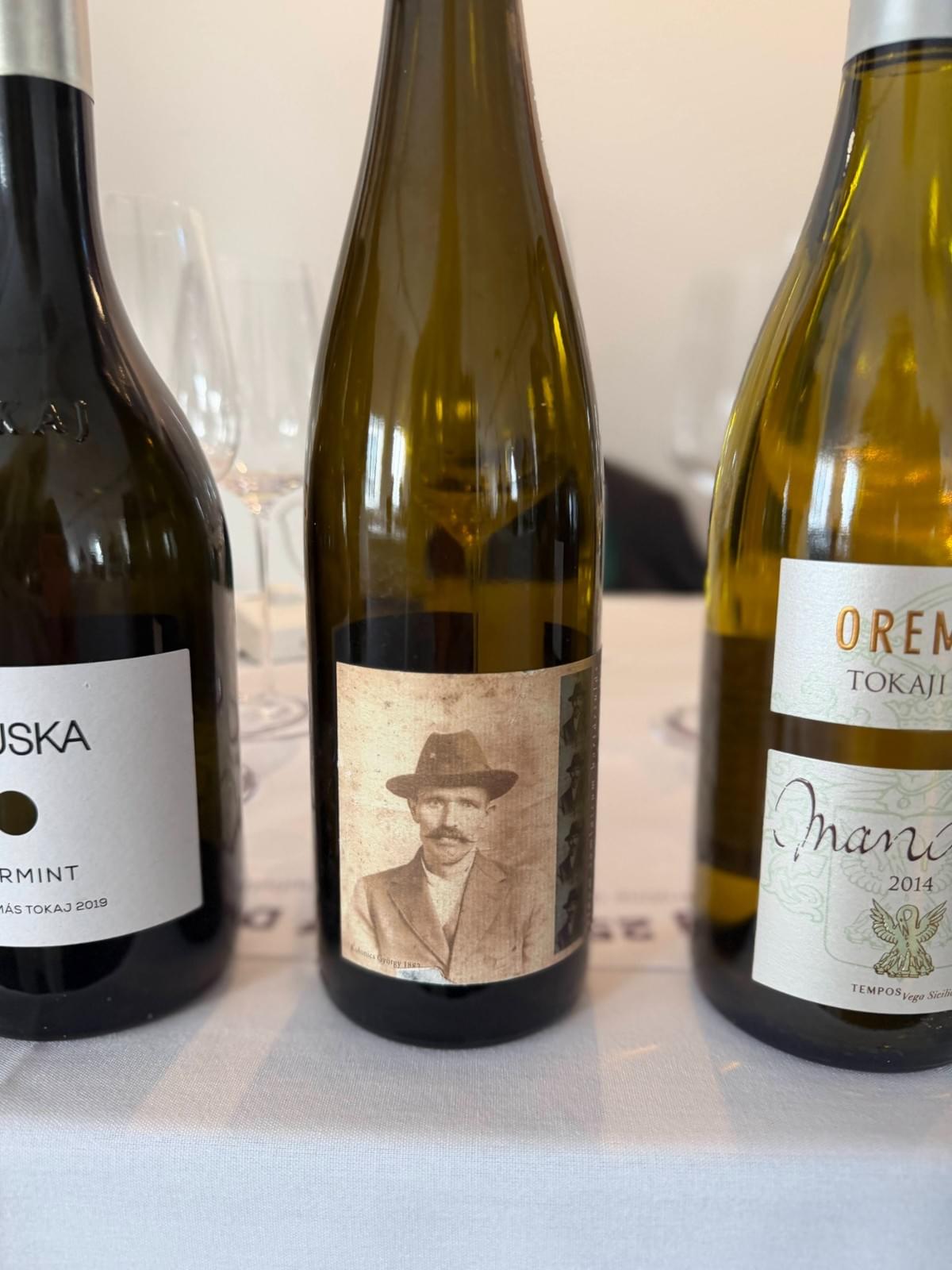
Kolonics Winery, Somló - ABV 13% - vineyard: Arany-hegy
This is the moment where the tasting deliberately steps outside Tokaj, and that shift is more than geographic. It introduces a different expression of Furmint that reinforces one of Caroline Gilby’s key themes: the relationship between the grape and volcanic terroir is not limited to one region.
Somló is a singular place in Hungary. A small, isolated volcanic hill rising from the plain, with basalt-based soils and a long-standing reputation for producing wines with structure, salinity, and longevity. Moving to Somló at this point in the tasting is a precise decision, because it strips away the Tokaj narrative and asks a more fundamental question: what does Furmint look like when the context changes, but the geological backbone remains volcanic?
The answer is immediately apparent in the style. Compared to the previous wine, this is less about fruit and more about structure and mineral expression. The aromatic profile tends to feel more restrained, with citrus, apple, and quince still present but less dominant, while savoury and stony notes come forward. There is often a subtle smokiness or a sense of crushed rock, which aligns with the basalt origin of the soils.
On the palate, the wine feels tighter and more compact. The acidity is firm and linear again, but not sharp; instead, it creates a sense of tension that carries through to a distinctly saline finish. The texture is slightly more austere, less generous than the Sauska, but more architectural in its shape.
What this wine demonstrates very clearly is that Furmint does not rely on one regional identity to express itself convincingly. It adapts, but it does not lose coherence. The volcanic element becomes a connecting thread rather than a limiting factor, linking Tokaj and Somló through structure rather than style.
In the context of the tasting, this is a crucial pivot. After showing that Furmint can handle ripeness and texture, this wine pulls the focus back to precision and mineral tension, but in a different dialect. It reinforces the idea that the grape’s strength lies not in a single profile, but in its ability to remain recognisable across very different expressions.
Mandolás Furmint 2014
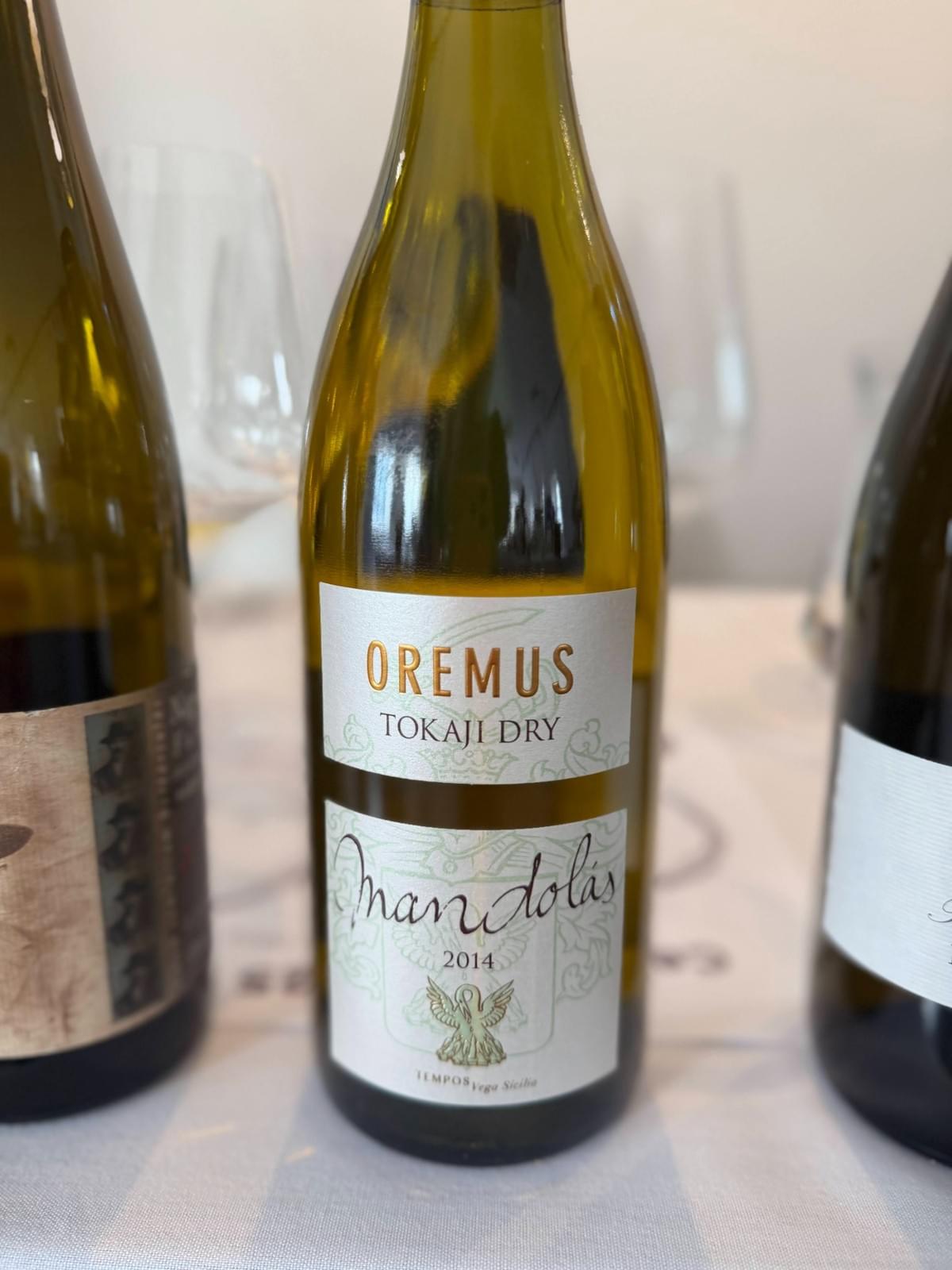
Tokaj Oremus, Tokaj - ABV 12.5% - single vineyard: Mandolás
With this wine, the tasting moves into a different dimension altogether - time. Up to this point, the discussion has been about style, site, and structure in relatively young wines. Here, the focus shifts to one of the defining attributes of a noble grape variety: the ability to age and evolve without losing identity.
Mandolás from Oremus is an established reference point for dry Furmint, and presenting it with a decade of age is a deliberate move. It allows the conversation to move beyond potential and into evidence. This is no longer about what Furmint can do, but what it does over time.
The transformation is clear, but controlled. The primary fruit has moved away from fresh apple and citrus into a more developed spectrum - dried apple, quince paste, subtle honeyed tones, perhaps a hint of chamomile or tea-like complexity. What is important is that these are not signs of decline, but of evolution. The wine remains dry, but the aromatic profile gains depth and nuance.
Structurally, the acidity continues to play a central role, but in a quieter, more integrated way. It no longer defines the wine in a sharp or linear sense; instead, it supports the entire structure, allowing the flavours to expand while keeping the wine balanced. The texture becomes more layered, slightly waxy, with a longer, more sustained finish.
This is exactly the point Caroline was making when she spoke about ageability as part of a grape variety's credibility. It is not just about surviving in a bottle, but about developing complexity while maintaining balance. Mandolás demonstrates that dry Furmint can follow that trajectory in a way that is comparable to other established fine wine categories.
In the context of the tasting, this wine marks a transition. It confirms that everything shown earlier - acidity, structure, site expression - is not only relevant in youth, but forms the foundation for long-term evolution. It also shifts the perception of dry Tokaj from something contemporary and emerging to something with a track record.
Szent Tamás Furmint 2012
Royal Tokaji, Tokaj - ABV 14% - single vineyard: Szent Tamás
If the previous wine introduced the idea of age, this one reinforces it with more authority. Moving from 2014 to 2012 may not seem like a large step numerically, but in terms of expression, the shift is noticeable. The wine is no longer simply evolving - it is beginning to show what maturity looks like when it is fully integrated.
Szent Tamás is one of the most respected vineyard names in Tokaj, and placing it here adds another layer to the argument. This is not just aged Furmint, but aged Furmint from a site that already carries recognition and expectation. It allows the tasting to move closer to the language of fine wine, where vineyard names matter as much as grape varieties.
The profile is deeper than Mandolás'. The fruit has moved decisively into a more mature register - dried apple, quince, and more complex, slightly savoury nuances. There may be hints of spice or a subtle nuttiness developing, depending on how the wine has evolved, but what remains consistent is the clarity of the structure underneath.
At 14% alcohol, this is also one of the more powerful wines in the line-up, yet it does not feel heavy. This is where Furmint’s balance becomes particularly convincing. The acidity is still present and precise, but now fully woven into the wine's texture, allowing it to carry both weight and freshness at the same time.
What stands out here is the sense of completeness. The wine no longer feels like a composition of elements - fruit, acidity, texture - but as a single, resolved structure. This is exactly what defines maturity in a serious white wine, and it aligns closely with the broader point made during the tasting: ageability is not an abstract concept, but something that can be clearly demonstrated in the glass.
In the context of the sequence, this wine strengthens the argument that dry Furmint is capable of long-term development, placing it comfortably alongside more established categories. It also reinforces the importance of site, showing that when vineyard identity and time come together, the result is not just complexity, but coherence.
Tokaji Furmint 2009
Füleky, Tokaj - ABV 13%
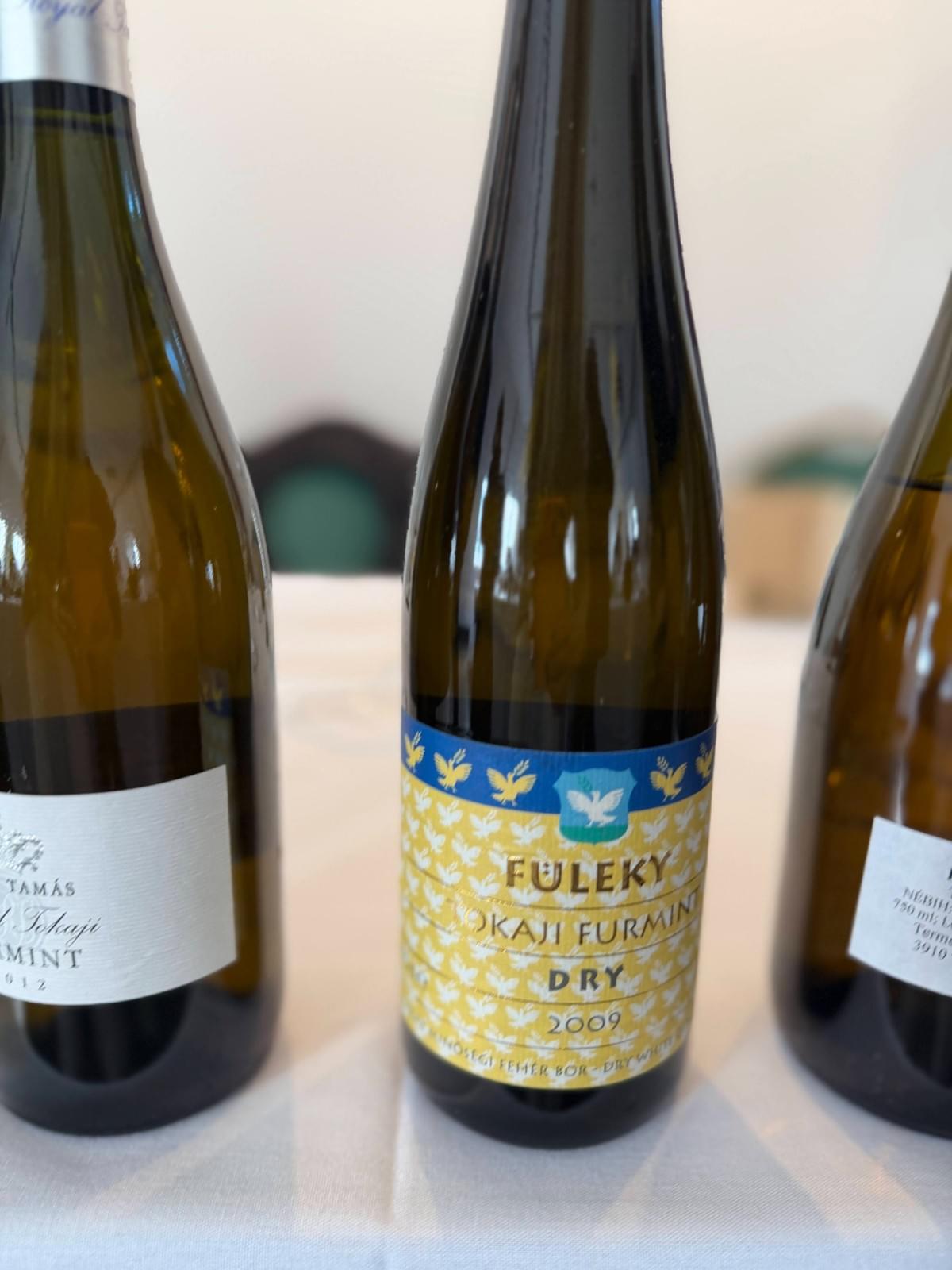
At this stage, the tasting moves beyond the idea of maturity and into something more definitive. A wine from 2009 is no longer in the process of developing; it has already settled into its evolution, and the question is no longer how it will age, but how it holds itself after more than a decade in the bottle.
Unlike the previous wines, this is not a single-vineyard expression, and that distinction is important. It removes part of the narrative around the site and focuses attention more directly on the grape itself and on how Furmint behaves over time in a broader, estate-level context. In a way, this makes the wine even more revealing, because it shows that longevity is not limited to the most prestigious plots.
The aromatic profile shifts further away from primary fruit. Fresh apple and citrus are no longer central; instead, the wine moves into a more tertiary register, with dried fruit, waxy notes, and a more complex, slightly savoury character. There may be elements that suggest tea, dried herbs, or a gentle nuttiness, depending on how the wine has evolved. What is notable is that these characteristics feel integrated rather than oxidative or tired.
Structurally, the acidity remains the key to everything. It is no longer sharp or even particularly noticeable as a separate component, but it continues to hold the wine together, maintaining clarity and length. This is exactly the point that both Caroline Gilby and Richard Bampfield emphasised throughout the tasting: Furmint’s acidity is not simply high; it is inherently balanced, and that balance is what allows the wines to age without losing shape.
There is also a certain calmness to this wine. Compared to the more energetic, younger examples earlier in the line-up, this feels more settled, more resolved. The flavours are less about contrast and more about continuity, with a smooth transition from the mid-palate into a long, composed finish.
In the context of the tasting, this wine plays a crucial role. It demonstrates that ageability is not dependent on prestige or intensity, but is a structural characteristic of the grape. It also reinforces the idea that dry Furmint is not only capable of ageing, but of doing so gracefully, developing complexity without losing balance or identity.
Tokaji Furmint 2007
Dobogó, Tokaj - ABV 14% - vineyards: Betsek, Szent Tamás, Palota
With the 2007 Dobogó, the tasting moves further into maturity, but with a slightly different perspective again. Unlike the previous wine, this is not a single estate expression in a general sense, nor a single-vineyard wine. Instead, it brings together several well-known sites - Betsek, Szent Tamás, and Palota - and that changes how the wine should be read.
Rather than focusing on precision or purity of one place, this becomes a composition. It reflects a more layered approach, where different vineyard characteristics are combined to build complexity. In that sense, it follows a logic similar to top blends in other classic regions, where the goal is not to simplify, but to deepen the overall expression.
At nearly two decades of age, the wine sits firmly in a mature phase. The fruit has moved well beyond its primary form, into a spectrum dominated by dried apple, quince, and more pronounced tertiary notes. There is often a development of savoury elements - hints of spice, tea, perhaps a touch of nuttiness - but what stands out is that these characteristics remain clear rather than diffuse.
The alcohol at 14% suggests a certain level of richness, yet, as with the previous wines, the balance is maintained. The acidity continues to provide structure, preventing the wine from becoming heavy or overly broad. Instead, it creates a sense of direction, guiding the palate through a more complex and layered profile.
There is also a noticeable depth here that differs from the 2009. Where the Füleky felt composed and settled, this wine feels more expansive, with multiple elements unfolding gradually. It is less about calm resolution and more about layered complexity, which is consistent with its multi-vineyard origin.
In the context of the tasting, this wine reinforces two important ideas. First, that Furmint can sustain complexity over long periods of aging, not just maintain balance. Second, that blending across sites can add dimension rather than dilute identity. It shows that even at this stage of evolution, the grape retains enough structure to carry multiple layers without losing coherence.
Tokaji Furmint 2005
Patricius, Tokaj - ABV 12.5%
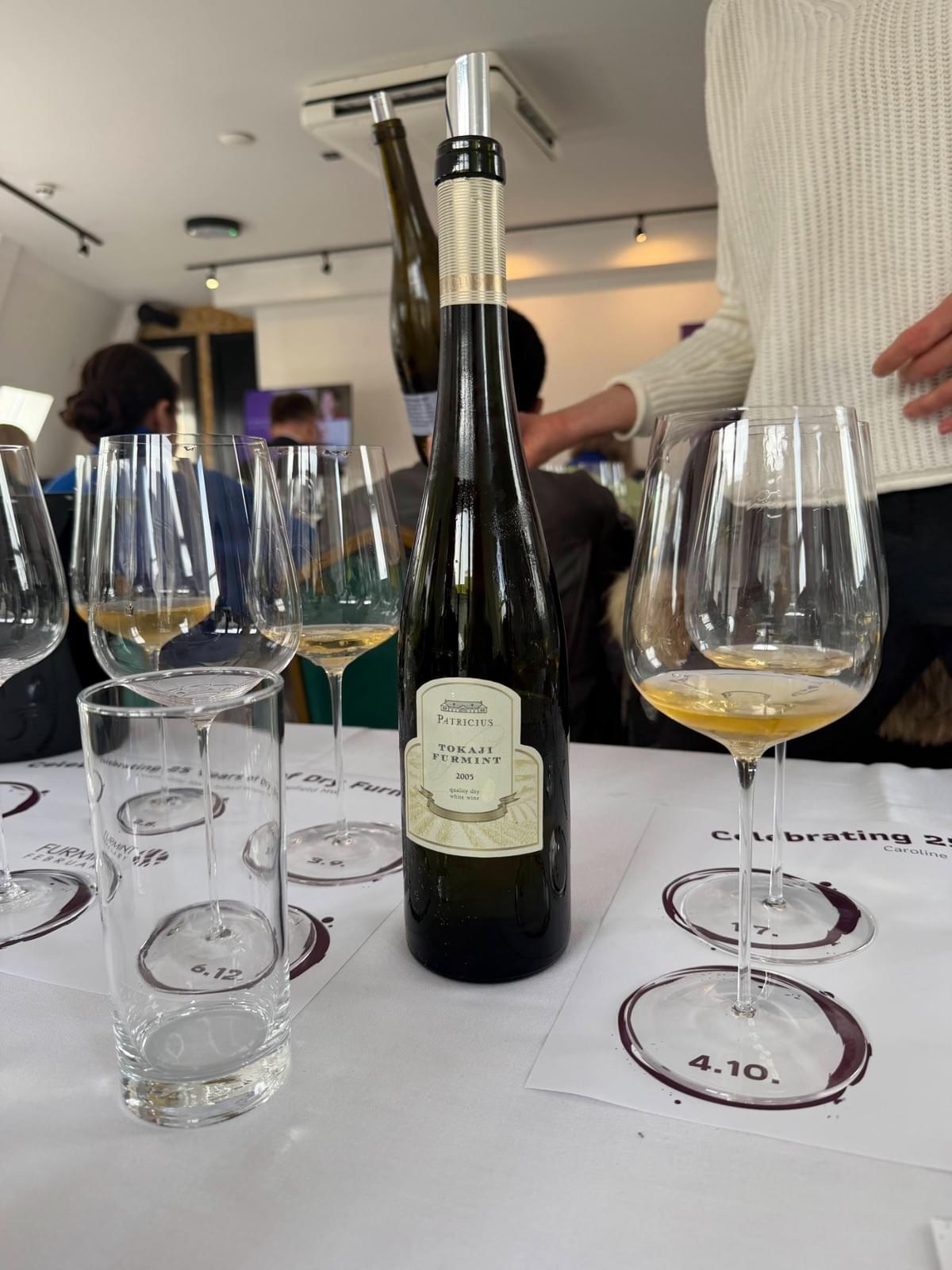
With the 2005 Patricius, the tasting reaches a point where the question of ageability is no longer theoretical. At around twenty years of evolution, this is where many dry white wines would begin to fade or lose definition. Here, the focus shifts to whether Furmint can sustain not just structure, but clarity and identity over a long period of time.
Unlike some of the previous wines, this is again an estate-level expression rather than a single vineyard or a clearly defined blend of named sites. That makes it particularly revealing, because it shows how Furmint behaves outside of the most tightly controlled or prestigious contexts. If a wine like this holds, it suggests that longevity is not an exception, but a broader characteristic of the grape.
The aromatic profile is now fully in the tertiary spectrum. Fresh fruit is no longer present as such; instead, the wine expresses dried apple, quince, and more developed notes that may suggest tea, wax, or a gentle nuttiness. What is important is that these elements feel integrated and stable, rather than oxidative or declining. The wine has moved forward, but it has not fallen apart.
Structurally, the alcohol is slightly lower at 12.5%, which may contribute to a lighter overall frame, but the defining element remains the acidity. Even at this stage, it continues to provide shape and length, allowing the wine to retain focus. This is precisely the type of balance that both Caroline Gilby and Richard Bampfield highlighted as essential to Furmint’s identity: acidity that supports rather than dominates, and that persists over time.
There is also a certain refinement in the way the wine presents itself. Compared to the 2007, which showed more layering and breadth, this feels more streamlined and resolved. The components are fully integrated, and the wine moves seamlessly from the mid-palate into a long, composed finish.
In the context of the tasting, this is a critical point. It demonstrates that dry Furmint can comfortably reach two decades of age while maintaining coherence and drinkability. It also reinforces the idea that longevity is not dependent on power or concentration alone, but on balance. At this stage, the argument for Furmint as a serious, age-worthy white variety becomes difficult to question.
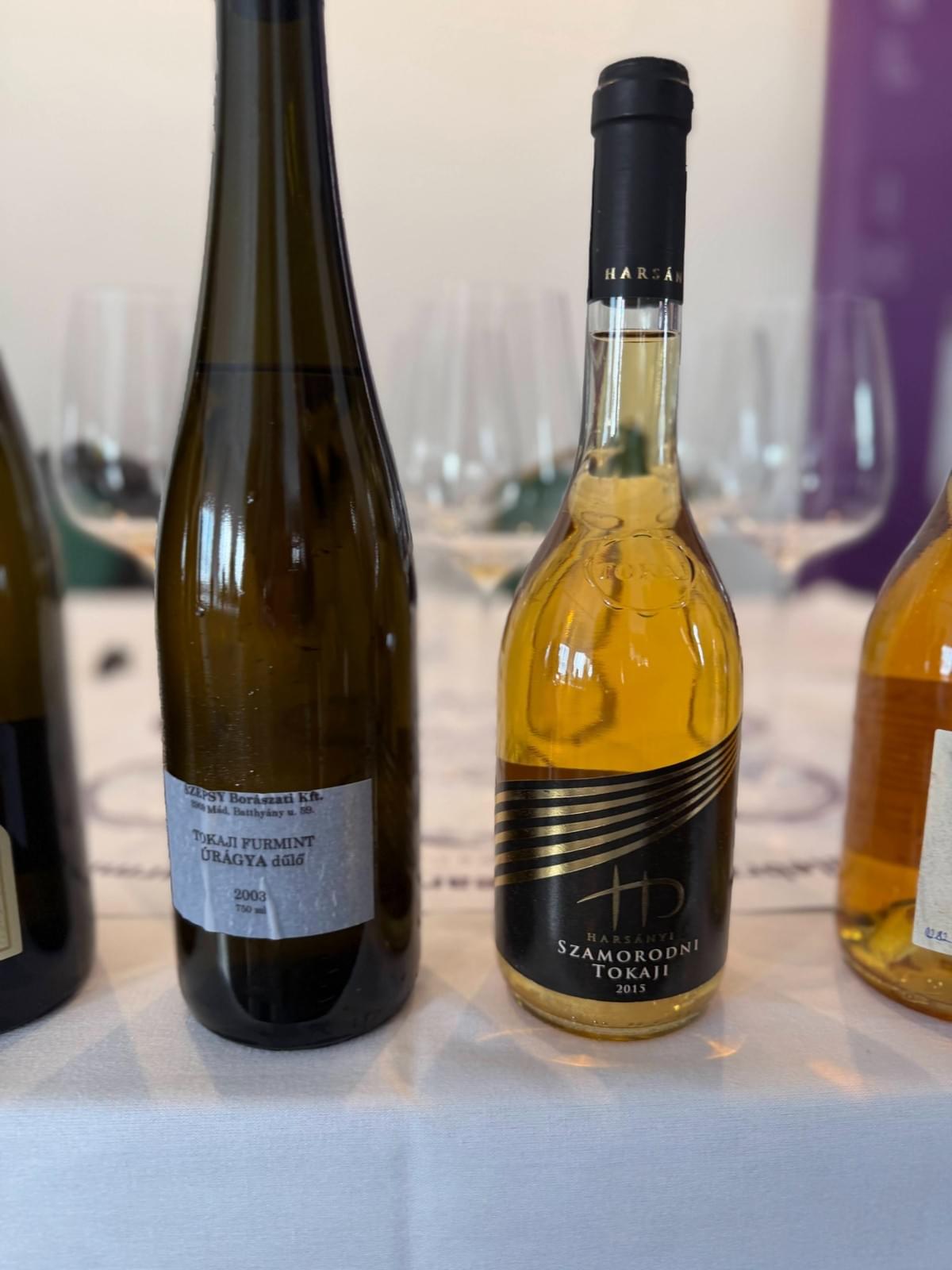
Úrágy Furmint 2003
Szepsy, Tokaj - ABV 13.5% - single vineyard: Úrágy
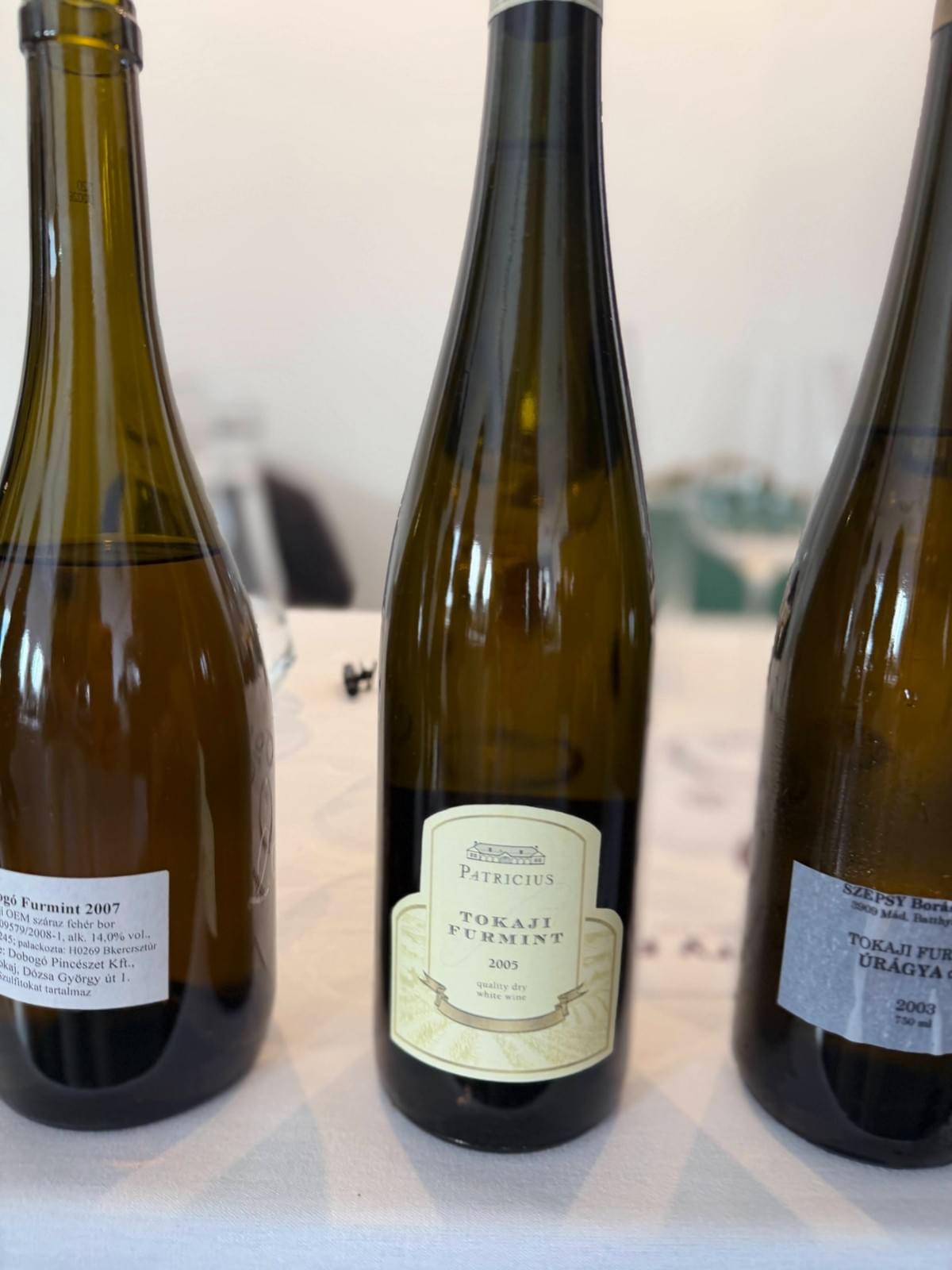
This is the point in the tasting where the discussion moves from evidence to authority. Up to now, the wines have demonstrated that Furmint can age, that it can hold structure, and that it can evolve with coherence. With Szepsy, the argument becomes more definitive, because the name itself carries weight within Tokaj.
Úrágy is a single vineyard, and in the hands of Szepsy, it represents a very deliberate approach to both site and grape. By the time we reach 2003, the wine is no longer simply mature; it has entered a stage where everything depends on balance. A vintage like 2003, known across Europe for heat, makes that balance even more significant, because it tests whether the grape can retain freshness under more extreme conditions.
What is striking here is that, despite the age and the vintage profile, the wine does not feel heavy or overly developed. The fruit has moved fully into tertiary expression - dried apple, quince, deeper, more complex notes that can suggest spice, tea, or a subtle savoury character. But these elements remain defined, not blurred, which is critical at this stage.
The structure is what carries the wine. The acidity, while no longer pronounced as a separate component, continues to underpin everything, maintaining tension and preventing the wine from collapsing into richness. At 13.5% alcohol, there is weight, but it is controlled, integrated into a broader, cohesive whole.
What sets this wine apart from the previous ones is not just its age, but its sense of precision at that age. It does not feel like a wine that has simply lasted; it feels like a wine that has been shaped to age. This aligns closely with the idea that Furmint, in the right hands, is not just capable of longevity, but can be directed toward it in a very intentional way.
In the context of the tasting, this is a defining moment. It elevates the conversation from capability to credibility. At this level, Furmint is no longer being compared to other varieties for validation; it stands on its own, supported by both site and time.
Dry Szamorodni 2015
Harsányi Winery, Tokaj - ABV 15% - vineyard: Círóka
After a long sequence of dry wines focused on site and age, this is where the tasting shifts again - not forward, but sideways into tradition. Caroline Gilby framed this style very clearly: Szamorodni is made from whole bunches, rather than individually selected Aszú berries, and in this case includes around 20% botrytis. What makes this wine particularly distinctive is the additional layer of flor ageing, with two years in barrel under a film of yeast.
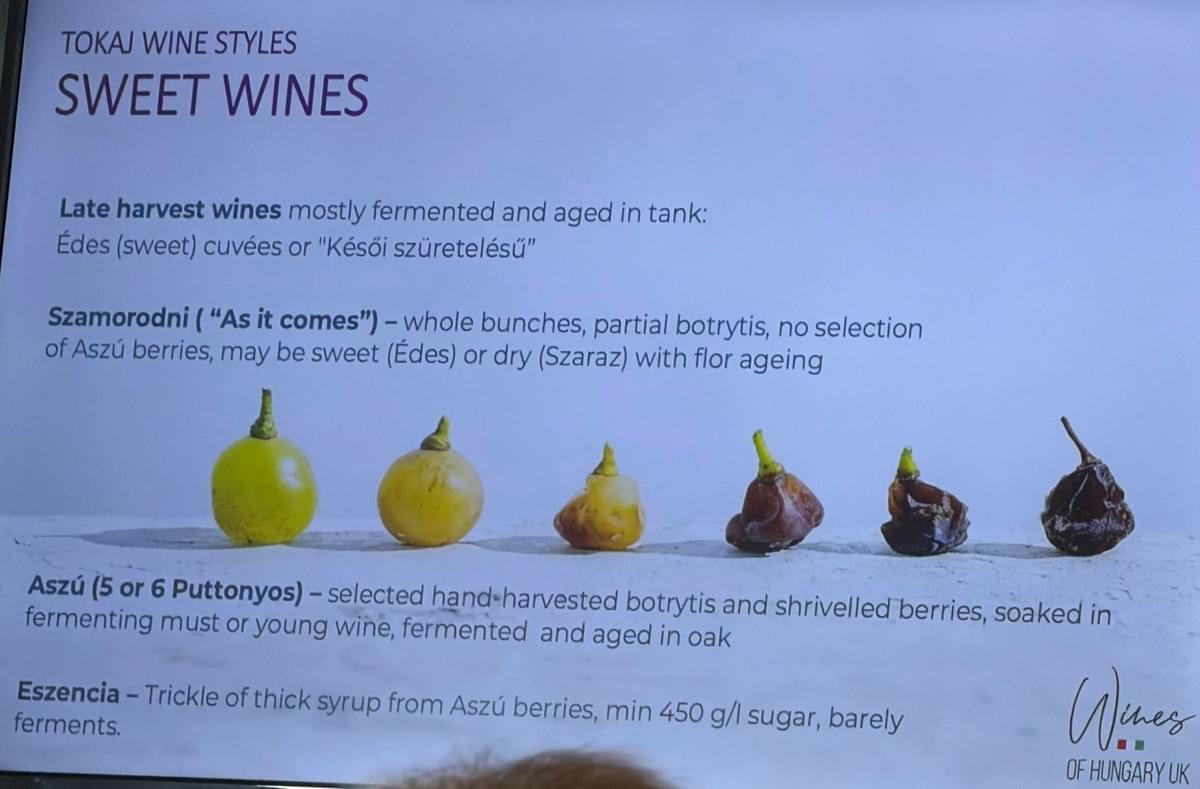
That combination - botrytis and flor - immediately places the wine outside conventional categories. It is neither a clean dry wine nor a classic sweet Tokaj, but something that sits between styles, rooted in historical practice. Caroline also noted that this style had largely fallen out of favour before beginning to return, which makes its inclusion here both relevant and intentional.
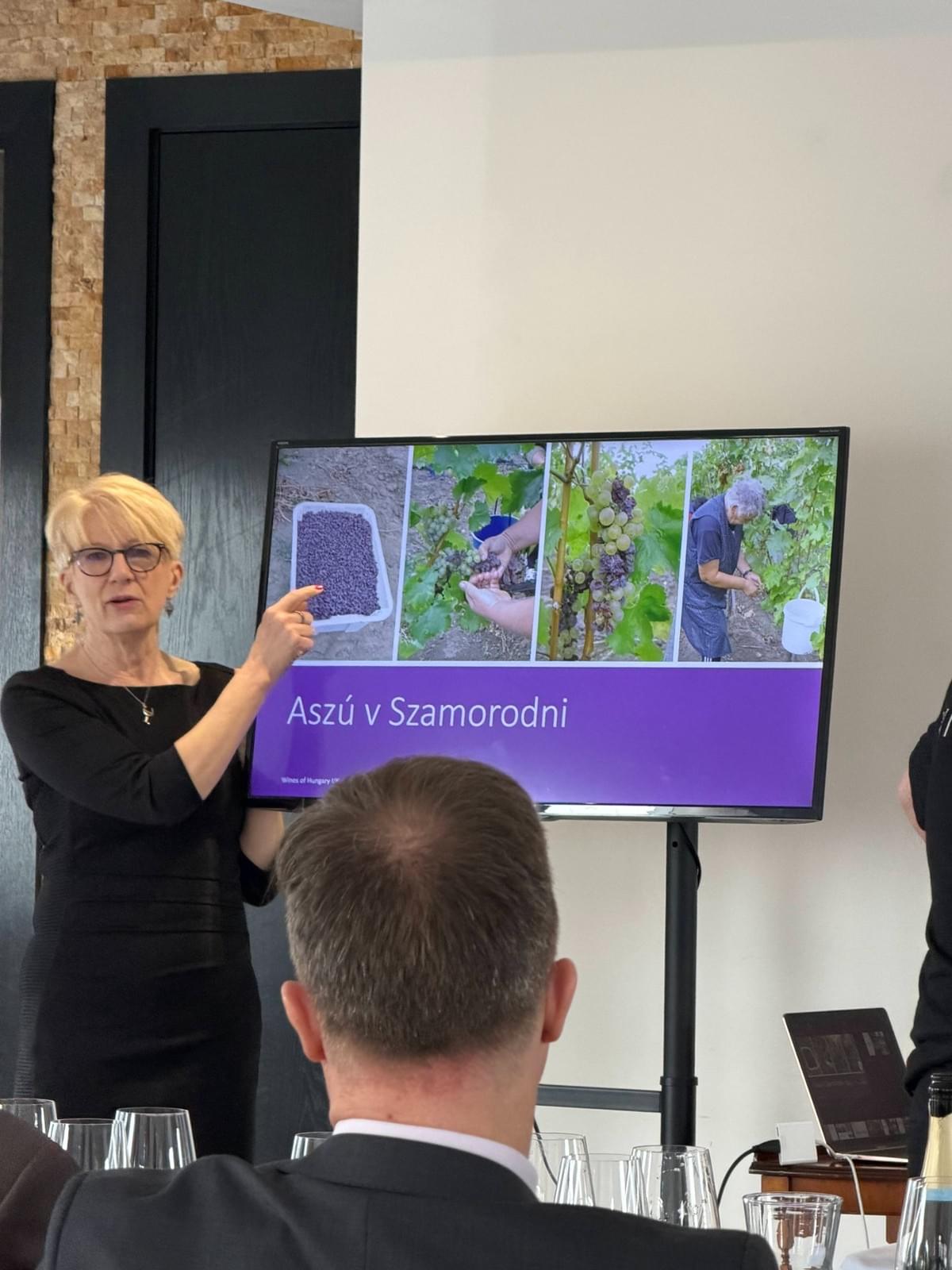
From a structural point of view, the wine is markedly different from the previous examples. The alcohol is high at 15%, yet, as Richard Bampfield pointed out, it does not feel heavy. Instead, the balance comes from the interplay between the grape’s natural acidity, the concentration from botrytis, and the savoury influence of flor. On the palate, this creates a complex profile that moves beyond simple fruit descriptors.
Richard’s reference to umami is particularly useful here. Rather than focusing on individual aromas, the wine is better understood through its overall impression: a mix of savoury, slightly saline, and gently yeasty notes, layered with underlying fruit. There may be hints that recall dried apple or quince, but they are integrated into a broader, more complex structure. The finish is long and textured, with a combination of freshness and depth that feels both unusual and coherent.
What is especially important, and emphasised by both speakers, is that the wine still clearly expresses Furmint despite the strong influence of winemaking. Even after ten years, it remains fresh and defined, which reinforces the central argument about the grape’s structural resilience.
In the context of the tasting, this wine serves as a reminder that Tokaj’s identity is not limited to modern interpretations of dry and sweet styles. It reconnects the discussion to historical practices while showing that these approaches can still produce wines of precision and balance. At the same time, it highlights just how adaptable Furmint is, capable of supporting even complex, hybrid styles without losing its core character.
Kapi Vineyard Tokaji Aszú 6 Puttonyos 2015
Disznókő, Tokaj - ABV 11% - RS 187 g/l - single vineyard: Kapi
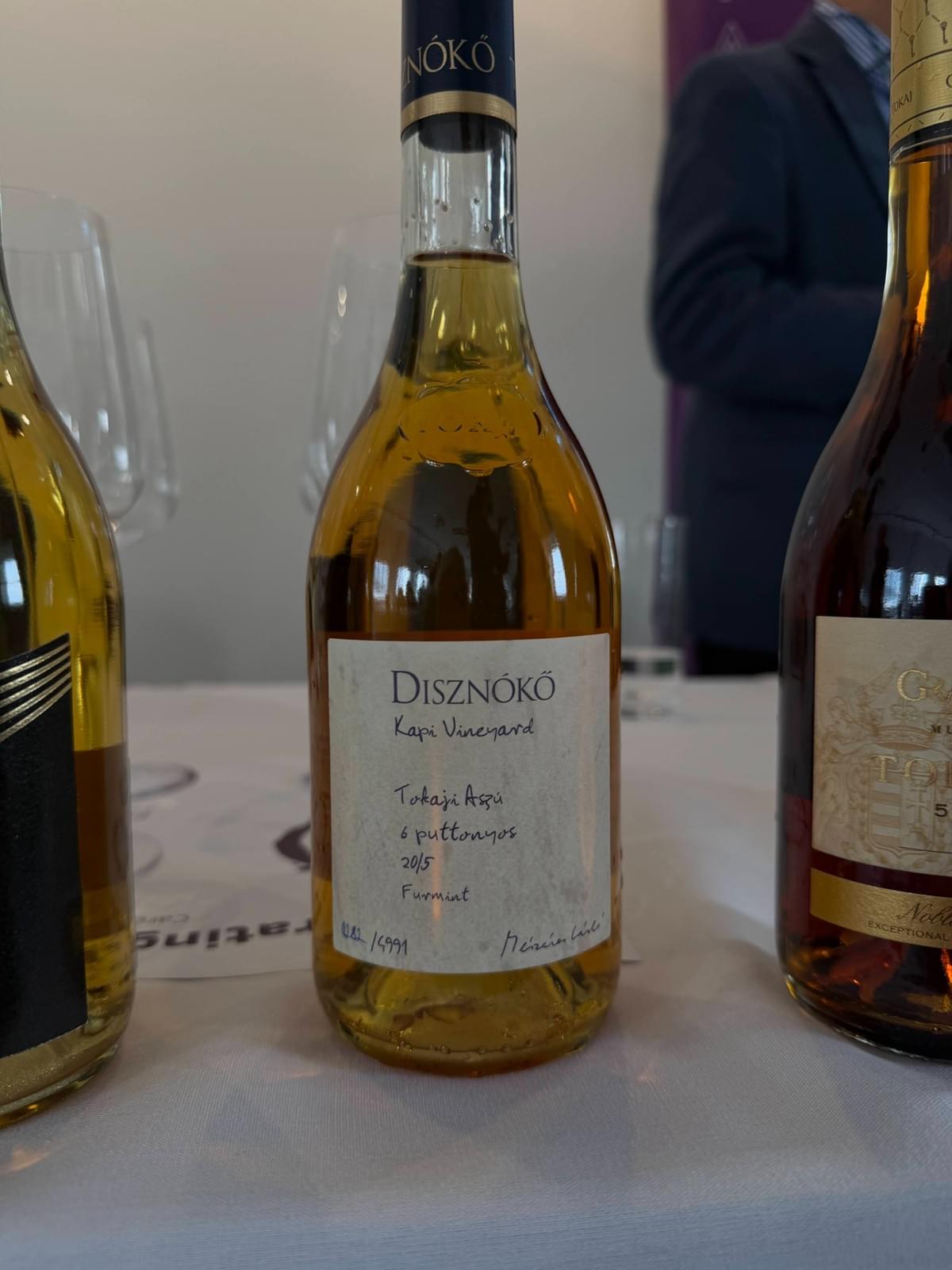
From the hybrid complexity of Szamorodni, the tasting moves into the core of Tokaj’s historical identity: Aszú. This is where Furmint is most widely recognised, but also where it is often misunderstood. As Caroline Gilby pointed out, the challenge today is not to explain what Tokaj is, but to show how much more there is beyond the traditional perception of sweet wine.
The Kapi vineyard provides a strong framework for that argument. It is a historically classified site, located on upper slopes, with rhyolite tuff and lighter clay, and known for consistently developing botrytis. In this wine, both the base wine and the Aszú berries are Furmint, which reinforces the idea that the grape itself is at the centre of Tokaj’s identity, not just the winemaking method.
Caroline’s explanation of the production process is key to understanding the structure. Because Aszú berries are highly shrivelled, they are not pressed in the conventional sense, but instead soaked in must, fermenting must, or wine to extract their concentration. In modern practice, fermenting must is often used, with timing adjusted based on the quality of the botrytis. This allows for more controlled extraction and, importantly, greater precision in the final wine.
Despite the high residual sugar at 187 grams per litre, the wine does not read as heavy. This is where Furmint’s acidity becomes critical. Caroline highlighted the relatively low pH, which contributes to a perception of freshness even when total acidity is not extreme. The result is a wine that feels balanced rather than dense, with a sense of lift that carries through the palate.
Richard Bampfield’s reaction to the wine captures an important point. He began with familiar descriptors - honey, marmalade, crème brûlée - and then rejected them, recognising that they did not fully describe what was in the glass. This reflects the difficulty of applying standard language to a wine that combines intensity, precision, and complexity in a way that goes beyond typical sweet wine categories.
At ten years of age, the wine still appears remarkably youthful, with brightness and clarity intact. This directly addresses one of the long-standing debates around modern Tokaj, particularly in relation to producers like Disznókő, whose cleaner, less oxidative style was once seen as potentially less age-worthy. As Richard noted, this wine demonstrates that the ability to age remains fully intact.
In the context of the tasting, this is a pivotal moment. It reconnects Furmint to its most iconic expression while aligning with the broader narrative of balance, precision, and longevity. It shows that sweetness in Tokaj is not a question of weight, but of structure, and that Furmint provides the framework that makes that balance possible.
Tokaji Aszú 5 Puttonyos 1988
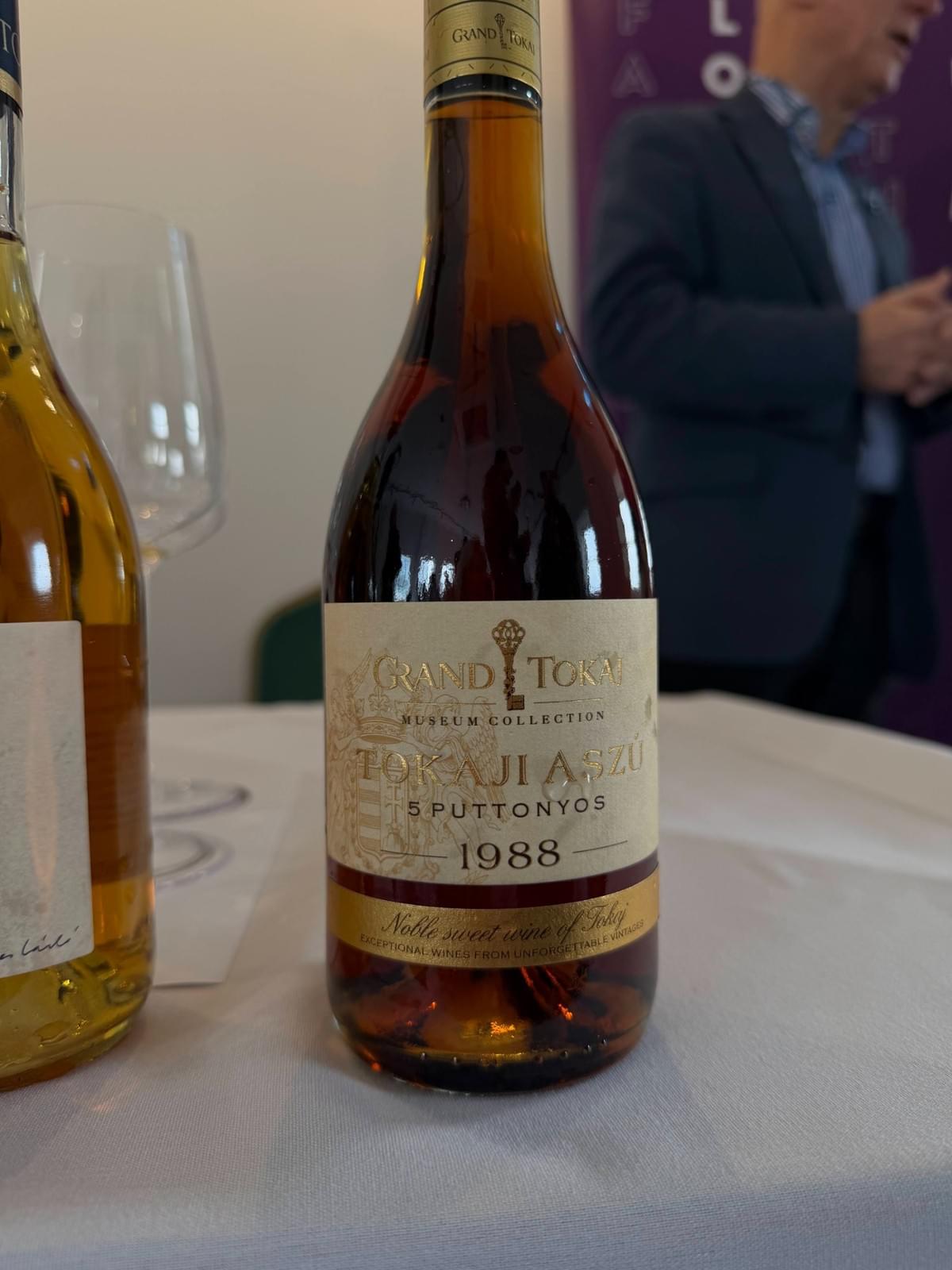
Grand Tokaj, Tokaj - ABV 11.5% - RS 131 g/l
The final wine closes the tasting not with a statement of style, but with a statement of time. Moving from a 2015 Aszú to a wine from 1988 shifts the discussion into a completely different register. This is no longer about potential or even maturity in the conventional sense, but about longevity across decades and across different eras of winemaking.
Caroline Gilby positioned this wine as a snapshot of a previous approach to Tokaj. Before the more precise, modern methods seen in recent decades, wines were often made with longer maceration, extended ageing in older barrels, and less intervention overall. The cellars themselves, carved deep into volcanic rock and lined with Cladosporium cellare, form part of that traditional environment, contributing to the slow evolution of the wines.
The conditions of the 1988 vintage, with a hot summer followed by a rainy autumn, were favourable for botrytis, and the wine reflects that in its concentration. However, compared to the 6 puttonyos 2015, this wine sits at a slightly lower sweetness level, which also influences its balance and expression.
With age, the profile has moved decisively into a more developed spectrum. Dried fruits, raisins, and deeper, more caramelised notes come forward, along with the kind of flavours Richard Bampfield described as reminiscent of black treacle or dark toffee. These are characteristic of both age and the more oxidative handling typical of the period. Yet, despite these richer tones, the wine retains clarity.
That clarity is again supported by acidity. Even after several decades, the structure remains intact, allowing the wine to feel balanced rather than heavy. Richard’s observation is particularly relevant here: although the wine clearly shows its age in colour and flavour, it is still bright and in very good condition, with no sense of decline.
What makes this wine especially important in the context of the tasting is that it connects past and present. After seeing modern expressions of both dry and sweet Furmint, this bottle demonstrates that the core characteristics of the grape - its acidity, its ability to carry sweetness, and its capacity to age - were already present in earlier generations of Tokaj.
As a closing wine, it reinforces the central argument of the entire tasting. Furmint’s ability to age is not a recent discovery or a result of modern winemaking. It is an inherent quality of the grape and the region. What has changed is not the potential, but the way that potential is understood and expressed today.
Conclusion - Furmint beyond expectation
What this tasting ultimately demonstrated is not just versatility, but consistency across that versatility. From sparkling to single-vineyard dry wines, from blended expressions to decades-old bottles, and finally to both traditional and modern interpretations of Aszú, the common thread was never style. It was structured.
Throughout the line-up, Caroline Gilby repeatedly returned to the idea of what defines a truly great grape variety: the ability to transmit place, to sustain complexity, and to age with integrity. Richard Bampfield, from a tasting perspective, reinforced the same point in a more immediate way - by showing that, regardless of style or age, the wines remained balanced, coherent, and very much alive.
What becomes clear when you see all of these wines together is that Furmint does not rely on one expression to justify itself. It does not need sweetness to demonstrate depth, nor oak to create texture, nor extreme ripeness to achieve impact. Its defining feature is the way its acidity underpins everything, not as a sharp or dominant element, but as a structural constant that allows the wines to evolve without losing clarity.
The progression from the youngest wines to those with twenty or even thirty years of age makes this particularly evident. At no point does the grape lose its line. It changes, it develops, it becomes more complex, but it does not collapse. That continuity is what allows Furmint to move confidently between categories, from contemporary dry wines to historically rooted styles like Szamorodni and Aszú.
There is also a broader implication here for how Tokaj is understood today. For a long time, the region has been defined almost exclusively through its sweet wines. This tasting shows that this definition is no longer sufficient. Tokaj is not abandoning its heritage, but expanding it, and dry Furmint is central to that expansion.
At the same time, the final wines in the line-up serve as a reminder that the foundations of that reputation were built long ago. The ability to age for decades, to maintain balance at high sugar levels, and to express both site and style with precision is not new. What has changed is the level of control, the clarity of intent, and the way these wines are presented to the world.
In that sense, Furmint is not emerging. It is being reinterpreted.
And once you see it across this full spectrum - from tension to texture, from youth to maturity, from dry to sweet - it becomes difficult to think of it as anything other than what it is: a noble grape, with a range that is still, even now, slightly underestimated.
Special thanks to Wines of Hungary for a beautifully organised event. A thoughtful line-up, a great atmosphere, and a very clear story told through the wines.