

In every mature wine culture, there comes a time when the question shifts from what we drink to how often, how much and why we drink it.
The rise of non-alcoholic wine and spirits does not fit the usual trend definition. It is neither aesthetic nor generational branding, nor is it purely health-driven. It is structural. What we are witnessing is a recalibration of consumption rather than a rejection of wine itself.
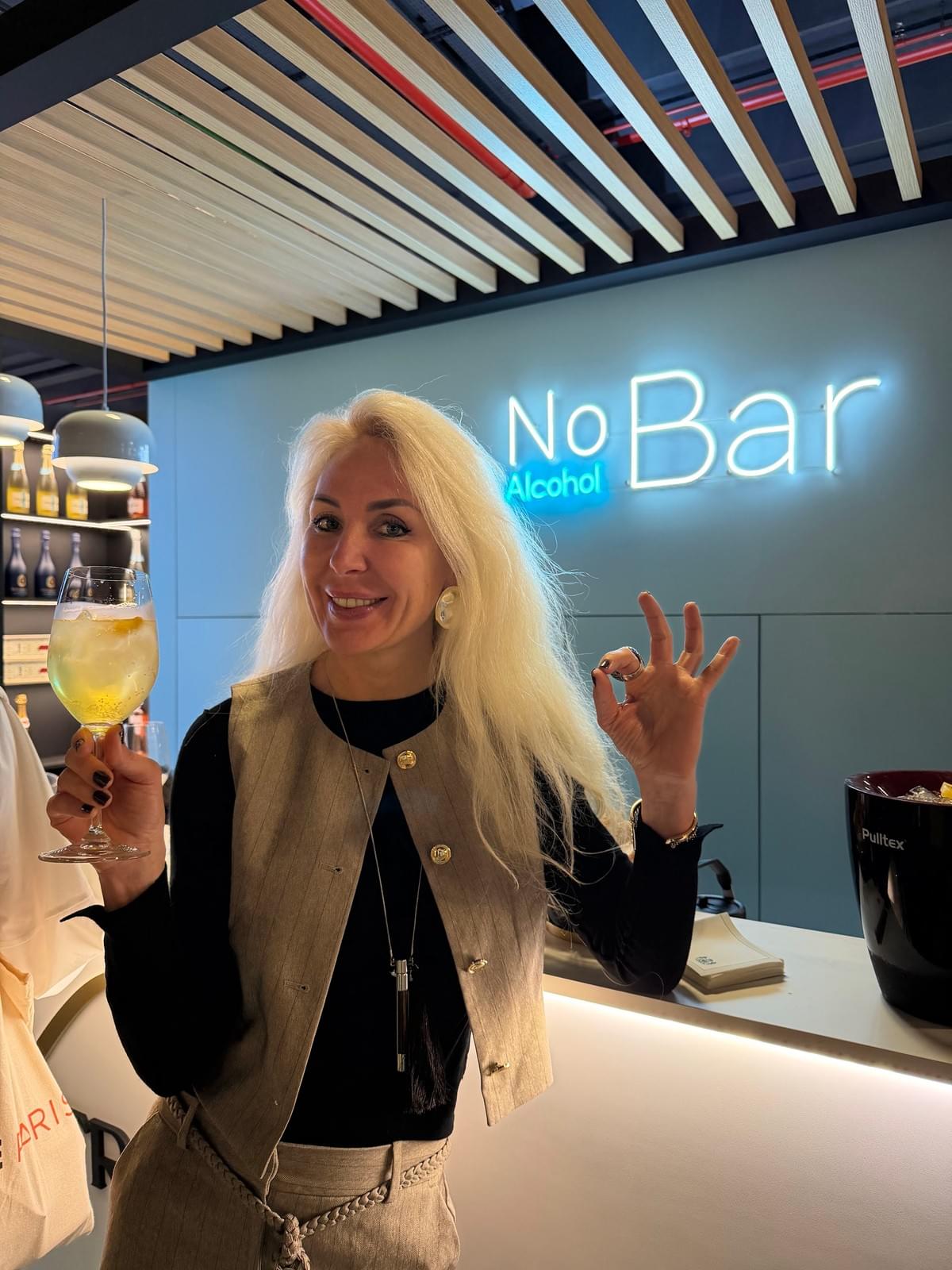
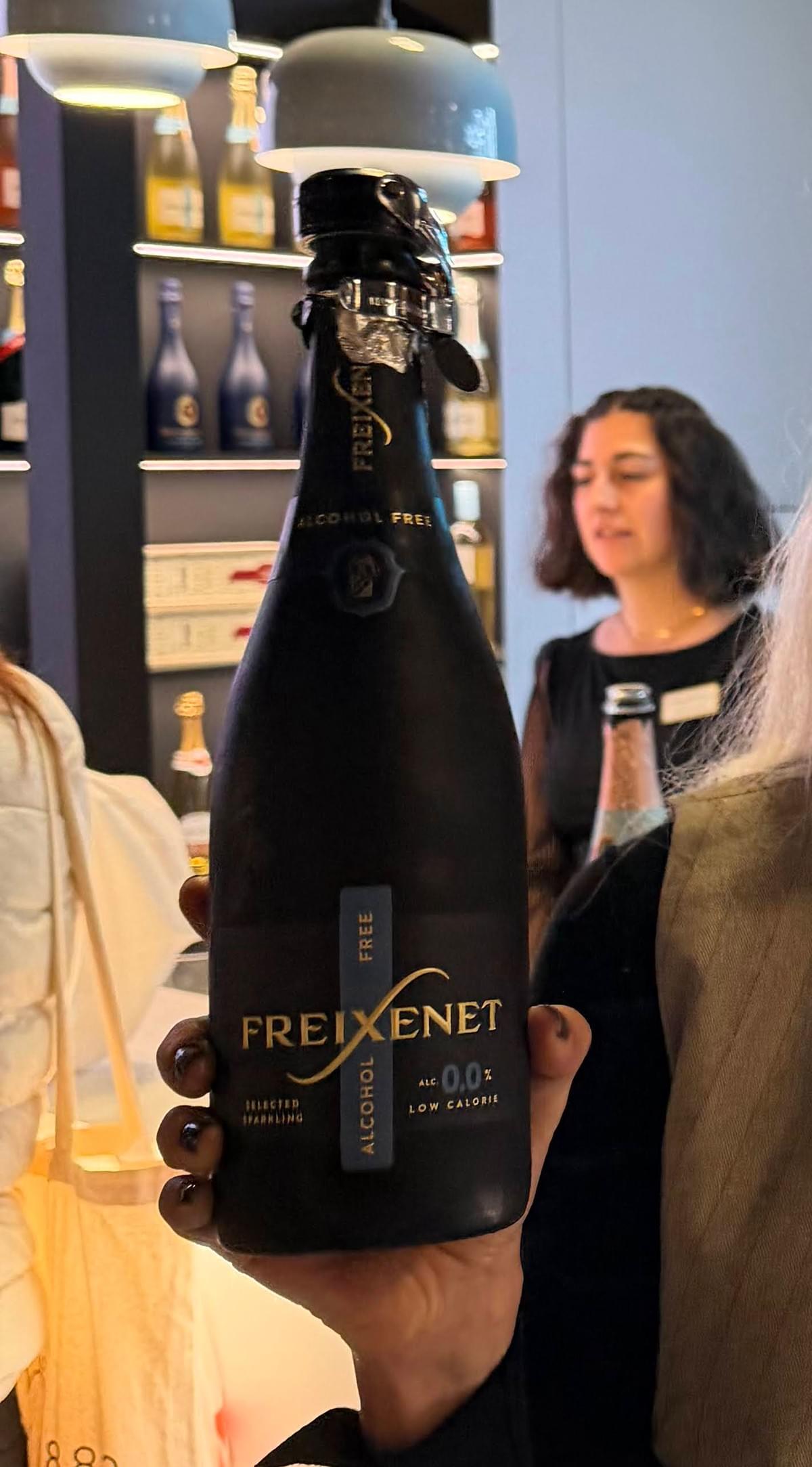
At Wine Paris, this shift was no longer just theoretical. It was visible and physical — impossible to ignore. With dedicated spaces, serious producers and an increasingly confident positioning, the category is no longer asking for attention. It already has it.

And yet, the logic behind it is surprisingly simple.
The shift often begins in an unromantic place: sleep, recovery and performance. Two or three glasses of wine, a disrupted night and measurable fatigue the next day – and suddenly, the daily wine-drinking ritual is no longer frictionless. What follows is not abstinence, but substitution. First come water, juice and sparkling alternatives, and eventually, non-alcoholic wine.
It is at this point that the category becomes economically and culturally interesting.
Paradoxically, moderation does not reduce consumption. It merely redistributes it.
Rather than drinking wine three times a week, consumers spread the ritual over more occasions, alternating between alcoholic and non-alcoholic options. The structure of consumption changes, but the desire for the experience itself remains.
And that distinction is critical.
People are not replacing alcohol. They are replacing a part of their lifestyle:
The glass of wine with dinner.
The pairing.
The sense of occasion.
The small rituals that mark the end of the day.
Non-alcoholic wine can fill that role.
This is the first uncomfortable truth for the traditional wine industry: non-alcoholic wine is not the enemy of wine; it extends the range of occasions on which wine is consumed.
In many cases, it is increasing total engagement with the category rather than reducing it.
Production reality: Removing alcohol without removing identity?
At the core of this process are three key considerations: how alcohol is removed, how aroma is preserved, and how structure is rebuilt.
Dealcoholisation is the first step and where technology matters most. Currently, the industry primarily relies on low-temperature vacuum distillation and reverse osmosis, as well as increasingly advanced membrane-based systems. The principle is simple: remove the ethanol while keeping everything else intact. In practice, however, each method involves compromises. Vacuum distillation is currently the most effective method of full dealcoholisation, particularly when operating at lower temperatures, as this helps to limit damage to delicate aromas. Reverse osmosis is effective at reducing alcohol content, but becomes less efficient at achieving zero alcohol content, often requiring multiple cycles and resulting in a loss of character. Newer systems focus on precision, but they are still evolving.
Whatever the method, something is always lost.
This leads to the second layer: aroma recovery. Producers now try to capture volatile compounds during or before the process and reintroduce them afterwards. This is one of the most important technical advances in the category, and it does make a difference. Aromatics can be rebuilt to a certain extent. However, they are never identical to the original. What comes back is often cleaner and simpler, and occasionally slightly disjointed.
The third layer is structure, where technology becomes less decisive and winemaking decisions take over.
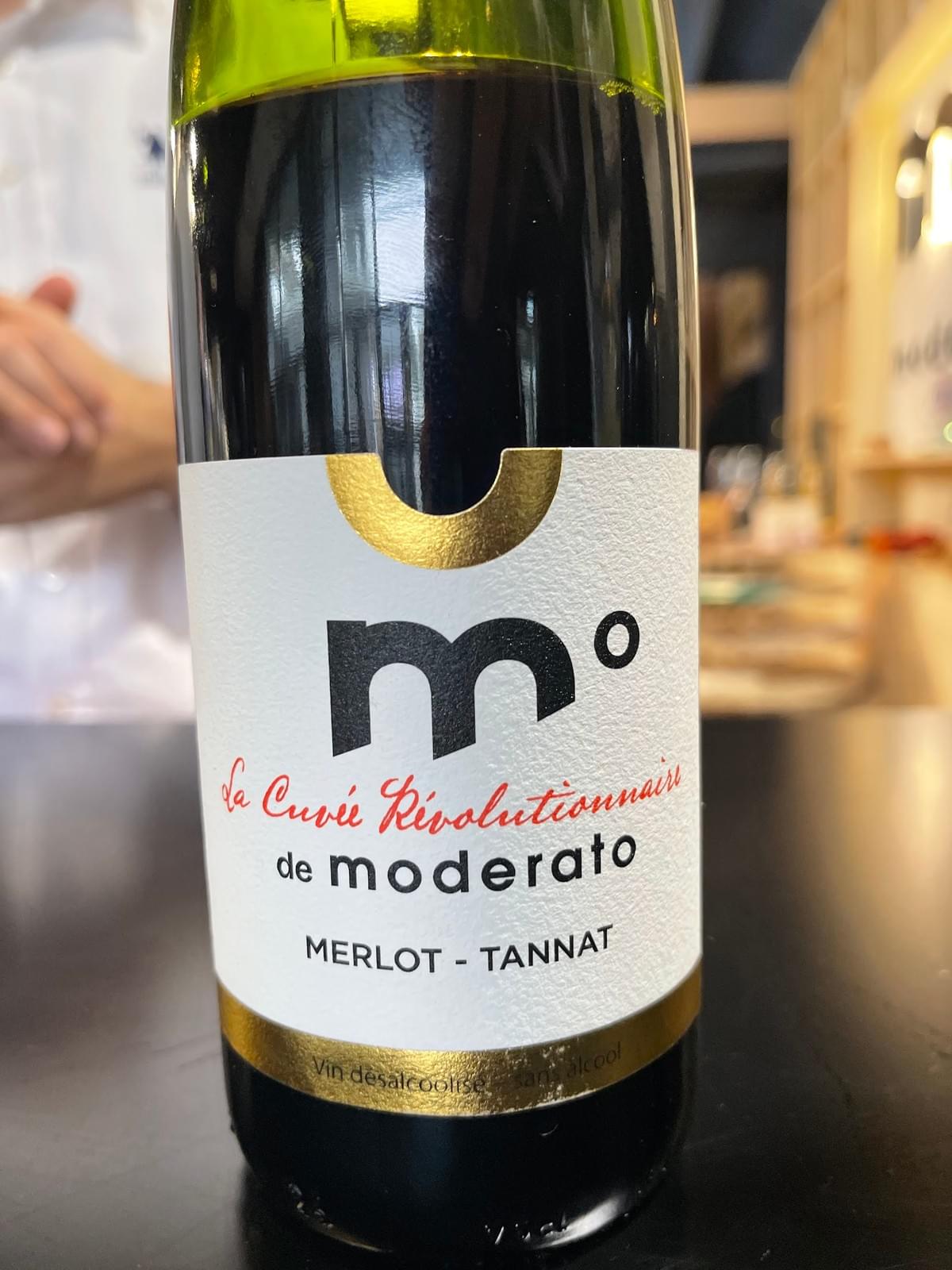
Without alcohol, texture decreases, tannins become more noticeable, and the overall balance changes. This is why the choice of base wine is critical. Highly aromatic varieties tend to perform better because they have more to lose yet still remain expressive. Red wines are more sensitive: once alcohol is removed, tannins can become more angular, especially if they were not fully integrated initially.
At this point, producers either compensate or reinterpret.
Compensation usually involves adding elements back into the wine, most commonly sugar or glycerin, to rebuild body and smoothness. This improves the wine's immediate drinkability and makes it feel more 'complete'. However, over time, especially when drinking a full glass, this approach can feel heavy and less precise, often struggling in a gastronomic context.
Reinterpretation takes a different approach. Rather than trying to replace what is missing, it works with what remains: acidity, freshness and aromatic clarity. In this approach, lightness is not a flaw, but a feature. The wine does not attempt to mimic the weight of alcohol; rather, it seeks a new balance without it.
This distinction is important because it determines how the product performs beyond the first sip. A non-alcoholic wine may be convincing at a tasting, but the real question is whether it remains so throughout a meal, whether it pairs well with food and whether it entices you to have another glass.
This is where expectations need to be adjusted.
Non-alcoholic wine cannot replicate traditional wine exactly. But it does not need to. A more interesting approach is to adapt to the new structure while finding a style that works within the same cultural and gastronomic space.
The structural gap: where the category still struggles
From a sensory perspective, the category is still negotiating its identity, and this is evident in almost every glass.
Aromatics are the least problematic aspect. Highly expressive varieties tend to retain enough character even after dealcoholisation, which is why styles built on naturally intense profiles are often the most convincing. However, the result is usually cleaner and sometimes simpler, and occasionally slightly detached from the depth of the original wine.
Structure is where the real gap appears. Once alcohol is removed, the balance shifts immediately. Tannins, especially in red wines, can become more pronounced and sometimes harsher, particularly in cooler-climate varieties where they were already more angular. Without the buffering effect of alcohol, acidity can feel sharper, and the mid-palate often lacks the weight that holds everything together.
Stability is another less visible but equally important issue. Alcohol plays a protective role in wine, and without it, the product becomes more vulnerable. This increases reliance on precise processing, filtration and, in some cases, preservatives. The margin for error becomes smaller, particularly in styles that aim to be more 'natural' or minimally interfered with.
This directly leads to the most controversial and revealing tool in the category: sugar.
Despite the growing narrative around dry, gastronomic and 'serious' non-alcoholic wines, a significant proportion of the market still falls within the 20–50 g/L range of residual sugar. This is not primarily a stylistic choice. It is a structural correction. Sugar compensates for the absence of alcohol by adding body, softening edges and creating an immediate sense of balance.
And it works — but only up to a point.
In short tastings, sweeter profiles tend to perform better. They feel rounder, more complete and more accessible. However, over the course of a full glass, this perception often shifts. The sweetness builds up, the wine loses its precision and its potential for pairing becomes limited. What is appealing in the first sip does not necessarily sustain the entire drinking experience.
This creates a clear internal tension within the category.
On the one hand, there is short-term palatability, which is driven by softness, sweetness and instant appeal. On the other hand, long-term drinkability is defined by dryness, structure, and the ability to complement food. These two qualities do not always align, and producers are still trying to decide where to position themselves.
There has been a noticeable movement towards drier styles, but this is gradual and not without risk. Drier wines can initially seem more austere and less rewarding, requiring a different kind of consumer adaptation. In a category that is still gaining acceptance, this is as much a strategic decision as a stylistic one.
At the same time, the market itself is not entirely ready to abandon sweetness. The market is not yet ready to abandon sweetness entirely. The preference for softer, more approachable flavours remains strong, which is why many products continue to strike a balance between technical refinement and attempts to appear 'wine-like'.
This is perhaps the most honest reflection of where the category stands today.
It is not yet fully resolved or consistent, but it is clearly evolving — somewhere between compensation and a more confident, structurally coherent identity.
A category defined by what it is not
One of the most conceptually revealing tensions in this category is linguistic.
'Non-alcoholic' is, by definition, a negative term. It describes the product in terms of absence rather than presence. This may seem like a minor issue, but it actually shapes the entire perception of the category. A product defined by what it lacks enters the market with an inherent limitation: it invites comparison, and almost always on unequal terms.
At the same time, there is no better word for it — at least for now. The term is precise and transparent, and it would be difficult to replace it without causing confusion. Thus, the category is trapped in a paradox: it needs clarity, but that clarity reinforces the very comparison it is trying to escape.
This linguistic constraint translates directly into positioning.
On one level, separation is essential. Consumers need to understand exactly what they are buying. The label must clearly signal that this is not a traditional wine; otherwise, expectations become unrealistic, leading to disappointment. In that sense, distance from the core category is a necessity, not a weakness.
However, complete separation is not effective either.
The value of non-alcoholic wine does not lie in its status as a new beverage category. It comes from its proximity to wine — from its ability to replicate the context rather than the composition. The glass, the ritual, the pairing and the narrative of origin and craftsmanship all remain relevant, even if the liquid itself has changed.
This creates a delicate balance.
The product needs to stay close enough to wine to be meaningful, but also far enough away to be understood on its own terms. If it is too close, it risks being perceived as a failed imitation. If it strays too far, however, it loses the cultural and emotional framework that gives it value in the first place.
This dual positioning is inherently unstable yet also defining.
It forces the category to evolve, not just technically, but also conceptually, moving away from comparison as its primary logic and towards a clearer articulation of its own identity. This is not a replacement, but a parallel expression shaped by different constraints and, increasingly, different expectations.
Where the category actually works: Distribution, on-trade and control.
If production defines what the product is, distribution defines what it becomes.
One of the most underestimated questions in the non-alcoholic category is not how the product is made, but where it is placed. This is because, in this case, placement is strategic rather than logistical.
Early on, many producers chose to enter the market through wine merchants and specialist retailers. This was not because it guaranteed volume, but because it provided something more valuable at this stage: credibility. Being positioned next to wine rather than soft drinks signals intent. It positions the product as part of a broader culture rather than merely as a functional alternative.
At the same time, the on-trade is becoming increasingly important.
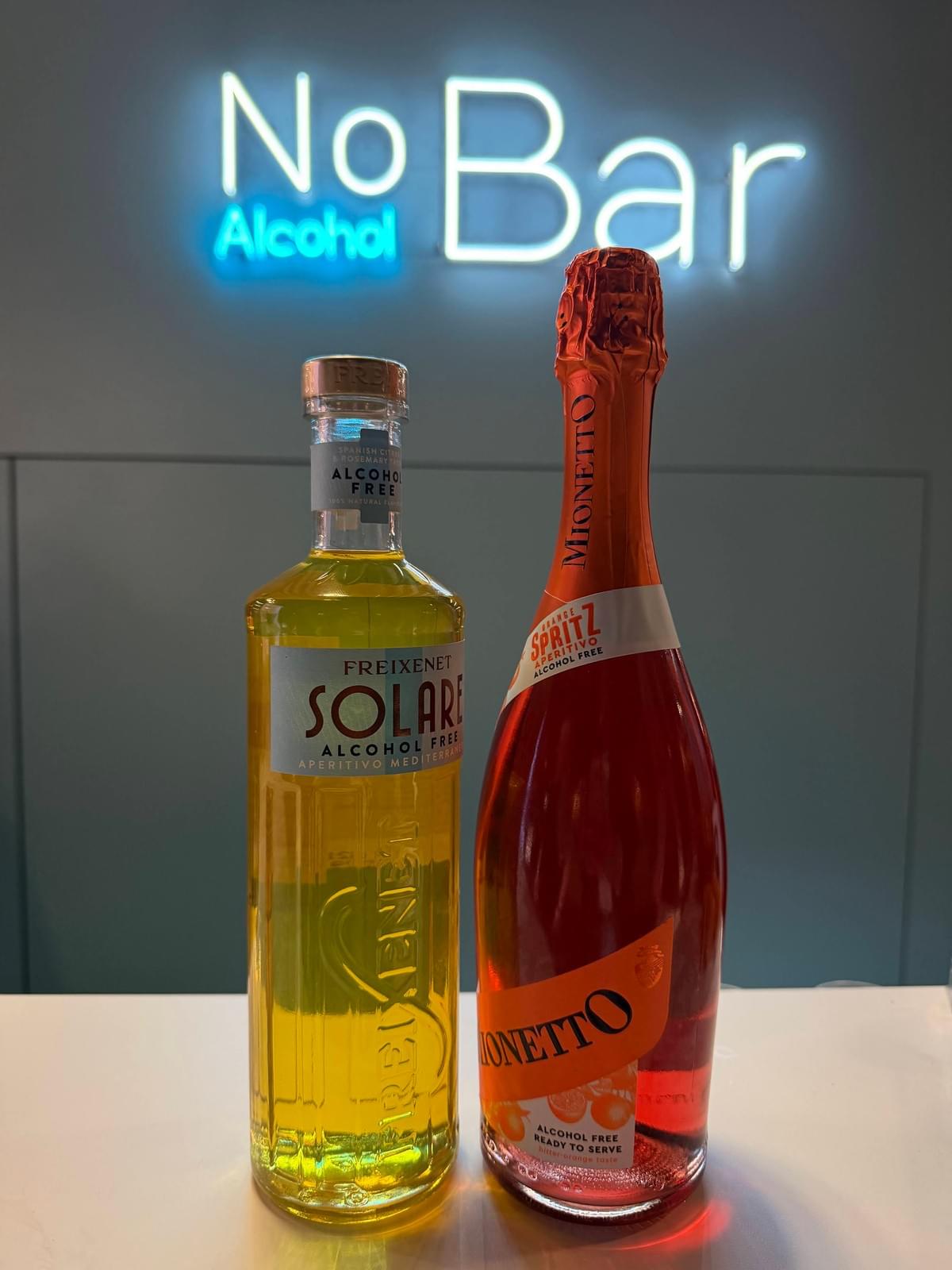
Restaurants, bars and hotels are where the category begins to make the most sense. This is where context matters — where the absence of alcohol is not the only factor and where experience can compensate for structural limitations. A well-considered non-alcoholic pairing, thoughtful by-the-glass options or a carefully curated cocktail list can seamlessly integrate these products into the service.
And this is where a shift is already visible.
For a long time, the on-trade was hesitant. The category was considered underdeveloped, inconsistent and challenging to market. But that is changing. As quality improves and demand becomes more apparent, non-alcoholic options are evolving from an afterthought into a deliberate part of the offering.
However, control remains critical.
This includes not only where the product is sold, but also how it is presented. Shelf placement, menu positioning and proximity to wine or spirits all shape perception. Being placed next to soft drinks reduces the product to a substitute. Being placed next to wine or spirits elevates it to the same level.
This is why many producers are selective about where they distribute their products.
While mass retail offers scale, it also risks diluting positioning. In a category that is still evolving, visibility without context can be counterproductive. The challenge is not just to be available, but to be understood.
This is an area in which the category still requires curation.
Unlike established wine categories, where consumers bring prior knowledge, the non-alcoholic wine category still depends heavily on guidance — from sommeliers, retailers and the environment in which the wine is presented. Without this framework, the product often loses clarity.
Premiumisation: Real step forward or rebranding exercise?
While the initial stage of the non-alcoholic category focused on demonstrating the feasibility of the product, the current stage centres on justifying a higher price.
Premiumisation is already happening quite visibly. This is evident in better packaging, more refined branding, stronger narratives around origin and production, and, importantly, a clear move towards higher-quality base wines. The ambition is no longer to offer an alternative to soft drinks, but rather to position non-alcoholic wine as an equal to traditional wine, particularly within the hospitality industry.
This is where the logic becomes interesting.
In restaurants and hotels, non-alcoholic options are no longer just an afterthought. They are increasingly seen as part of the overall experience. Guests who are not drinking alcohol are no longer expected to settle for water or juice; instead, they are offered something that still has structure, intention and pairing potential. In this context, a premium non-alcoholic wine makes sense — not as a substitute, but as a fully fledged menu option.
However, premiumisation raises a more critical question: what exactly is being valued?
Because while quality is improving, structural limitations remain. The product is still lighter and less complex in terms of texture, and still dependent on technological reconstruction. This creates a certain tension between price and perception. Consumers are comparing the product not only to other non-alcoholic options, but also, inevitably, to wine itself.
This is where premiumisation can feel ambiguous.
On the one hand, higher-quality base wines and better technology do make a difference. The wines become cleaner, more precise, more stable and more consistent throughout the glass. However, part of the premium signal still comes from external factors, such as design, positioning and storytelling, rather than from an equivalent sensory experience.
This does not invalidate the strategy, but it does make it fragile.
For premiumisation to be effective, the product must deliver in context as well as in isolation. It must work at the table, justify its place on a wine list and appear intentional rather than compensatory. In other words, it must behave like a serious option, not just appear to be one.
The most convincing examples do not try to compete directly with fine wine on its own terms, but instead define their value differently. They are less concerned with power and ageing potential and more concerned with precision, versatility and the ability to enhance the dining experience without alcohol.
This is where the category has real potential.
However, this also requires discipline.
If premiumisation becomes primarily a question of branding rather than substance, the gap between expectation and experience will reappear — and this time at a higher price point.
Sommelier problem: the real bottleneck
If there is one place where the future of the category will be decided, it is neither in production nor in branding. It lies with those who present and sell it.
The biggest barrier to the development of non-alcoholic wine is not technology. It is scepticism.
Sommeliers, wine merchants and buyers remain the key gatekeepers of the category, and many of them are still unconvinced. This is not surprising. Their reference point is traditional wine, with all its depth, evolution and complexity. Against this benchmark, non-alcoholic wine can seem inadequate, and sometimes even irrelevant.
However, this resistance creates a contradiction.
The same professionals who question the category are also in the best position to make it work.
In a restaurant setting, the lack of a decent non-alcoholic option is no longer neutral. It is a missed opportunity. Guests who choose not to drink alcohol are often limited to water, soft drinks or overly sweet alternatives, none of which complement the food. From both a service and commercial perspective, this represents a gap.
Carefully selected non-alcoholic wine can fill that space.
It offers acidity, structure and flavour that interact with dishes in ways that other non-alcoholic beverages cannot. It also adds a new dimension to pairings, ensuring a coherent dining experience even without alcohol. Importantly, it introduces a higher-margin product into an area otherwise dominated by low-value options.
Yet adoption remains uneven.
Part of the issue is education. This category requires a different approach, both in terms of tasting and positioning. It cannot be evaluated through a single sip or compared directly to traditional wine. It needs to be understood in context, alongside food and over time.
Mindset is also part of it.
Recognising non-alcoholic wine as a serious addition to a wine programme requires a shift in mindset from purity to pragmatism. This means acknowledging that a sommelier's role is not only to defend the category as it was, but also to respond to its evolution.
This does not mean lowering standards.
It means applying them differently.
The question is no longer whether non-alcoholic wine is as good as traditional wine. Rather, the question is whether it performs its function well enough to deserve a place on the list.
In many cases, it already does.
The challenge now is whether the gatekeepers are ready to recognise this.
Note on ageing and raw material
One of the more unexpected aspects of the category is its relationship with ageing.
While alcohol is traditionally considered essential for a wine to develop over time, it is not the only factor. The underlying aromatic compounds, particularly in varieties such as Riesling, can continue to evolve even after dealcoholisation. There are already examples of non-alcoholic wines developing tertiary characteristics over several years, including the classic petrol notes associated with aged Riesling.
However, this development is not identical. Without alcohol, the structural framework is different and the evolution tends to be more aromatic than textural.
The choice of raw material is therefore even more critical in this context.
Highly aromatic varieties tend to perform better as they retain more of their character after processing. Sauvignon Blanc is a typical example. Red wines, on the other hand, remain more challenging. Once alcohol is removed, tannins can become more pronounced and less integrated, particularly if the base wine is imbalanced.
This also explains why certain styles remain difficult to produce within this category.
Natural wines, for instance, present a particular challenge. Without alcohol — and especially without added sulphites — achieving microbial stability becomes a significant issue. To avoid refermentation or spoilage, producers must work with extremely dry wines and exercise strict control over the bottling process. In practice, this limits how far the 'natural' approach can be applied.
In conclusion, non-alcoholic wine is no longer a matter of possibility. It exists, it works in certain contexts, and it is improving.
However, it is also clear that the category will not succeed through imitation alone.
In the early days, the focus was on how closely it could resemble wine, how much of the original structure could be preserved and how convincingly it could replicate the experience. This phase is still evident, but it is no longer sufficient. The more the category develops, the more obvious it becomes that direct comparison has its limits.
Instead, a more pragmatic understanding is emerging.
Non-alcoholic wine does not need to be identical to wine to be relevant. It needs to function. At the table, throughout a meal and across an evening. It needs to offer coherence rather than illusion and consistency rather than a strong first impression.
This shift also redefines the industry's role.
Producers must decide whether to compensate for absence or to build something with its own logic. Sommeliers and buyers must move from scepticism to evaluation in the appropriate context. Most importantly of all, consumers need to adjust their expectations — not downwards, but sideways.
This is not wine with something removed.
It is a reinterpreted wine under constraint.
Like any constrained system, its value will not be defined by what it lacks, but by how intelligently it uses what remains.